
The Voice and Pedal Steel as Exotic Instruments, with BJ Cole
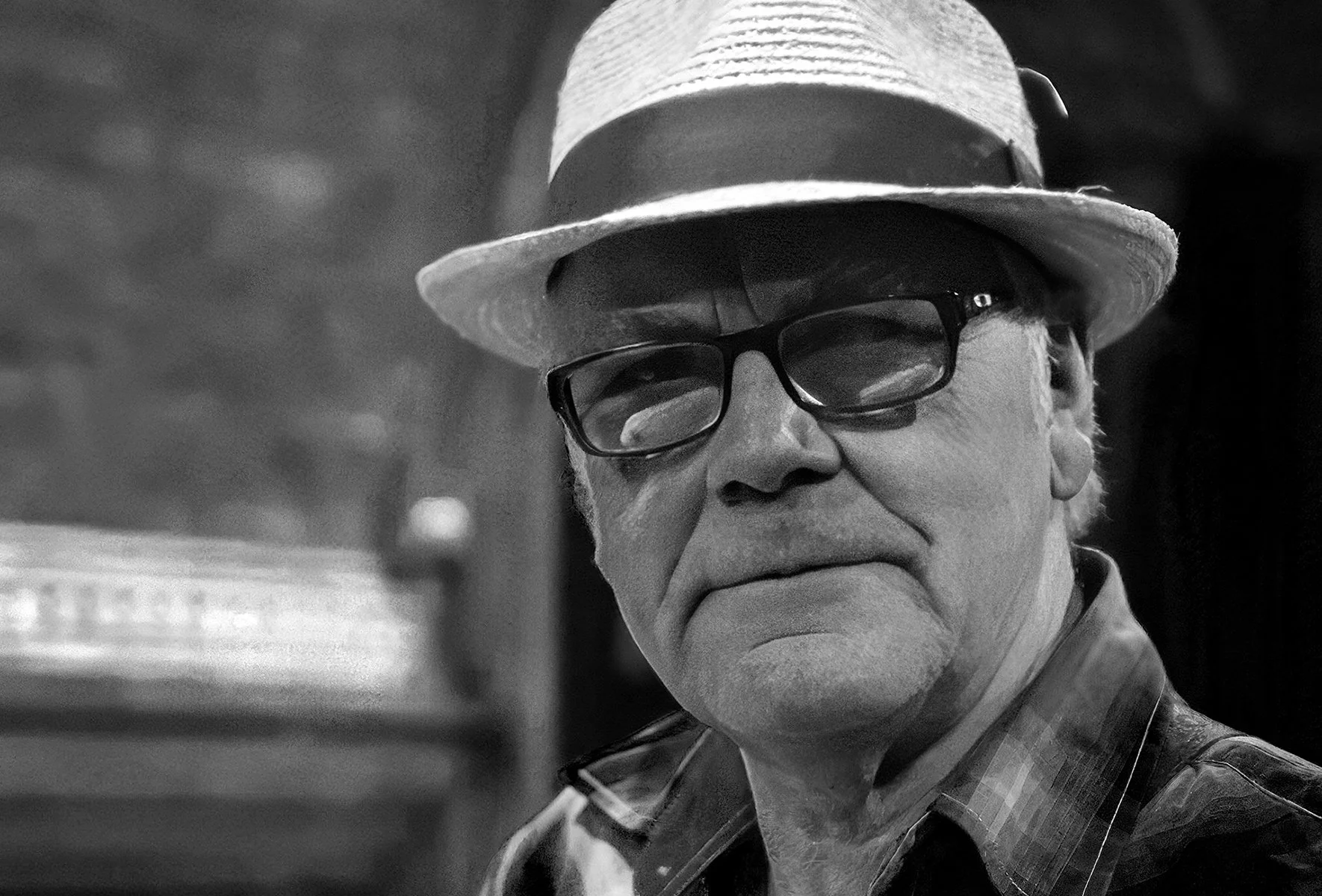
Audio Transcript
Peter Walsh in conversation with BJ Cole
Peter Walsh So you’ve played Lap steel and Dobro on a number of Scott Walker’s recordings. But let’s start at the beginning. How did you first meet Scott and how did you come to play on his albums?
BJ Cole Okay, well, I came to meet him when I was booked by Del Newman, the arranger, who was doing all the arrangements and organising it all, getting the musicians and everything, in ’73. In 1973, I’d been doing a lot of sessions for Del on various projects and he asked me to come and work with Scott at Nova Studios.
PW Right, in Marble Arch. Yeah, I remember that.
BJC Yes, yes I did quite a few sessions there, quite often with Del Newman. Lovely guy, he was.
PW Were you actually recording with a room full of musicians or were you overdubbing?
BJC Yes. We were recording.
PW So it was basically live?
BJC Yes. It was. On both albums.
PW On both albums. So that was Stretch and...
BJC Stretch in ‘73 and We Had It All in ‘74. I checked this out yesterday.
PW Me too! Ha ha. Do you remember who else was in the room whilst you were recording?
BJC If you look at the record cover, it’s got all the guys – Del, a quite well-known set of session musicians for the time, Barry D’Souza on drums. I’ve forgotten all the others now, but you can just look at that record cover and it’ll tell you.
PW Okay. Have you got it here?
BJC It’s right there!
PW Great! Oh, look at this! That’s it! Amazing. Mike Moran, Ronnie Leahy …
BJC Yep. He was everywhere at that time.
PW Ray Cooper on percussion.
BJC Yes, when he was still doing sessions.
PW Richard Dodd. And I remember Barry D’Souza and Terry Cox, yeah. So Del had sort of scored it all out. And you were basically just, you had parts and...
BJC Yes. Pretty much. You know, most people leave the details to me - Most arrangers, well, the vast majority of arrangers in this country don’t really know how to arrange for a pedal steel.
PW How to write, how to notate it.
BJC I’m used to being left to do what a pedal steel does. But he did more than that, actually. And obviously, Scott’s quite sussed about how a steel guitar should be on a country record.
PW Sure. And how was Scott back then? Did you find, was he like active or was he sort of sitting in the background or... was he directing the session?
BJC To be quite honest, every time I’ve met Scott, he’s been the same, which is super friendly and nice.
PW Lovely.
BJC That’s it. Irrespective of what other people say he’s doing or not, at any particular time, he’s always been very nice to me.
PW I agree. I agree with that.
BJC It’s amazing. You know, whatever he has going on in his head, he doesn’t show it.
PW Right.
BJC Because he’s just, you know, he sings like he is.
PW Right, right. They were his last two solo albums before the Walker Brothers reformed.
BJC Yes. And they were for CBS.
PW Right. Exactly.
BJC Who I don’t think knew quite what to do with him. They could have done very well with those records if they’d been done properly, because you could have sold him in any genre.
PW Yeah, yeah.
BJC If they’d decided to do it properly.
PW Right.
BJC In the country market, for instance, for America.
PW Right.
BJC I think they could have done really well listening to those records now. But I just think there was a lot of enthusiasm and not a lot of knowledge about how to market him.
PW Do you think that the direction of the those two albums heading off into that sort of country …
BJC Sort of Kenny Rogers-y direction.
PW Yeah. Do you think he was comfortable with that? Because as you say, they…
BJC Whether he personally would be comfortable with it. No, I think it would have sold. If it was done properly. I don’t think those records would necessarily have sold because they just weren’t good enough. I mean, although the first one, Stretch, is very, very well recorded because it was engineered by Richard Dodd, who subsequently moved to Nashville.
PW Right.
BJC And he is extremely good. So Stretch is a particularly good sounding record. It was probably Muff Winwood who signed him. Because he was in A&R at CBS at that point.
PW Right. So you did like 73, 74, 75 - the three years.
BJC Yeah, three years! Yeah.
PW You’re probably one of the few musicians that I can talk to now who actually worked with him as a solo artist and with the Walker Brothers.
BJC Yeah.
PW So when you were working on the No Regrets album.
BJC Air Studios. Oxford Circus. Top Studio, up top.
PW Okay. With the Neve desk and everything.
BJC Yes.
PW Scott was producing then, was he?
BJC As far as I remember.
PW I think I’ve read that. And it was a Walker Brothers session. So were they there as well?
BJC As far as I remember, they were.
PW Would you have all, once again - same question - would you have all been playing at the same time on that session?
BJC Yes, I think we were. I tended to be used as part of the rhythm section in sessions in those days. When it was possible. As I did on Tiny Dancer.
PW Yeah that was with Elton John, yeah? Very successful record you played on in the ‘70s.
BJC I was part of the rhythm section. And contributing ideas, as were the rest of the rhythm section. Which I much prefer, to be quite honest.
PW Do you remember who was engineering at Air?
BJC Oh gosh, no. I don’t.
PW Because it says Geoff Calver? Could it have been…? Does that name ring a bell?
BJC Yes, I know that name.
PW There’s also credited Marquee, and Kingsway.
BJC Oh, was Kingsway still going then? I only did one session, for No Regrets and I think one other track – as I say, I was on it, probably sitting in the control room with it DI’d into the board. I played pretty much throughout the track. And it’s only apparent right at the beginning, the first verse when it comes in. And the run out where the orchestra is playing over and over. I played through the middle of it, but all the strings came in and they were overdubbed. You know, as they usually are.
With a record like that. I was just at the beginning of the end, which is still great.
PW I think it sounds amazing. And I mean, it’s a real, it’s a real sort of announcement when it comes in.
BJC Yes. God, I’m always in awe of Scott. I just think this man is just, there’s everybody else, and then there’s him up there somewhere. He opens his mouth and it’s class instantly. You know, I think that’s where a lot of his problems came from. He’s just too good. And he had to justify himself to himself. That’s how I see it. He had to try and make it feel like it was work, you know, but he didn’t. It wasn’t. Anyway, I’ve come up with all sorts of thoughts about that.
PW Yeah, he was certainly – probably, back then, searching for … Like, he’d been on the stage from a very early age. And I think that a lot of people didn’t quite realise that, when they saw him.
BJC On the stage?
PW Yeah, he was Scotty Engel. He was a child star, in the States.
BJC Was he? I didn’t know much about that.
PW Yes, I didn’t really either.
BJC Isn’t that funny.
PW: I knew that there was this “Scotty Engel” Yes, Cathy has been telling me about it. And seeing pictures of him, when he was like eight years old. And he’s doing sort of …
BJC: Well he looks great, doesn’t he. Looks great, sounds great…
PW: No he sounds the same! You can find … yeah, Scotty Engel, and you can actually hear the voice, before it’s broken. And then he was doing sessions. So when he was over here, after the Walker Brothers’ success, and then suddenly he’s doing solo records, with a bunch of London session players. He was changing styles, changing genres. And I think that also shows to me that he was possibly just, searching for somewhere that he felt comfortable, you know, maybe the sort of crooner songs he didn’t like. And then, you know, he did the country songs. And then he did the Jacques Brel. And you know, yeah …
But anyway, with regards to No Regrets. Can you remember what it was like, how he was on that session? Like, can you remember anything ? If the other Walkers were there?
BJC No, I can’t, actually, not in detail, not any details. He was obviously running around a lot, because he was in charge of it. And everything was happening at once.
PW Right.
BJC You know, there were no moodies or any difficulty or problems with it, far as I remember.
PW Right. And so, and you said that Del had done the arrangements. Is that right?
BJC That - you can check the record, but I’m pretty sure that it was Del who, there was a continuity there, from the first two records that I’d worked on.
PW The credits I saw on that one was, just the guitars on their own, was John Walker. So, one of the other Walkers.
BJC There’s lots of rhythm guitars on it.
PW Len Walker.
BJC Okay.
PW Scott Walker.
BJC Yeah.
PW Alan Parker.
BJC Oh, yeah. That’s who I was trying to think of a minute ago.
PW And then I’ve got Daryl Runswick on bass. Steve Gray, acoustic piano, string arrangements conductor. Barry Morgan.
BJC On drums.
PW Might have been, or Dougie Wright.
BJC Barry Morgan sounds more likely. You know, he was everywhere at that time. And starting Morgan Studios as well. So he was, like, everywhere.
PW Yes, I remember. And then Richie Hitchcock: electric guitar, BJ: Pedal steel, and David Katz Orchestra.
BJC Ah, so I was booked by David. Yeah. He was the main booker in town at that time as I’m sure you know.
PW Right. Yes, absolutely.
BJC It was a big session.
PW Absolutely, I can imagine, yeah. But strings would have been done later.
BJC Yes.
PW Okay. And was he singing live?
BJC Ah - I suspect he probably was doing a rough vocal, but he wouldn’t be doing the finished vocal as you wouldn’t. Even him.
I think all the isolation booths would be used either with drums or rhythm guitars.
PW Yep, yeah.
BJC You know, there wouldn’t be anywhere to do a posh vocal.
PW Right. How long do you think it took? Would you have just, you just did like a few takes and that was it?
BJC Yeah! It didn’t take long. You know, a lot of the sessions I did back then working with all sorts of people like that. You were in and you were there for a session, three hours and then maybe a bit longer. But then that was sort of it, really. You know, getting the lift at the bottom and get up, get the lift up to the top of the building. That’s how it was there.
PW Yes, I remember my dad doing sort of like the sort of 10 till 1, 2 till 5, 7 till 10.
BJC Yeah well that’s it, yeah, it would have been one of those.
PW You could have been at many different studios in one day, you know.
And BJ, did you - because No Regrets is a single and the album - so did you play on the whole album?
BJC I think I’m on some other track. I can’t remember. You’d need to listen to it. But it wasn’t anything notable, but I did do work on another track. I’ll check it out for you and let you know.
PW Amazing. So, move on, many years.
BJC Many years!
PW Many many years. And the next time you see him is when we worked together. On Epizootics.
BJC Yes, a whole different kettle of ball games. As they say. Ha ha.
PW Which was a completely, a different artist completely, you know.
BJC Yeah! But I found him not dissimilar to how he was earlier on. I was expecting him to have changed quite radically. But he hadn’t, really. I mean, he was very particular about his ideas. He just happened to be more abstract and advanced than what he was earlier on. His manner was no different, I don’t think. We established a rapport very quickly on that. I think both of us sort of have an unspoken, almost intuitive understanding. We relate to one another because we both have the same problem.
He’s got such a beautiful, rich, lovely voice. And I play an instrument that’s similarly exotic. And the instrument is great when it’s in its own context of playing rich and singing lovely melodies and stuff. But if you want to do something edgier, it’s quite difficult with a voice or an instrument that’s viewed in a certain way that’s not really connected with edgy, atonal, you know. And if you want to do that, it’s quite difficult to do it. Or to, even if you can do it, be accepted in doing that.
Do you understand what I’m saying?
PW I do know exactly what you mean. Yeah.
BJC That occurred to me. And I think that sort of underlies a lot of, you know, his frustration.
PW I see. Yeah.
BJC Which is why what he’s done with you is the opposite.
PW Yes, it’s a real juxtaposition, some of the records we made together. Where you have this beautiful baritone voice singing to the limits and a very kind of abstract backing. It’s almost like two worlds going on at once.
BJC How do you get that voice to fit?
PW Exactly.
BJC Into that sort of context. He needed something to push him to make it work.
PW That’s right.
BJC You know, be insolent and try and be aggressive. But it was very hard for him, you know, because it wasn’t the animal he is. Was.
PW Do you remember the session we did at Kore? Do you remember how it was?
BJC Pretty much. Yeah.
PW Do you remember how it was? How different was it to working with him then back in the 70s? Is there anything you can think of that had changed? Okay, personality was the same?
BJC His personality and his pleasantness to me was the same. Which was delightful to find after all that time. He was much more conceptual. As it’s fashionable to be these days. If you know what I mean.
PW I do.
BJC In terms of his clusters, all those clusters he was talking about and stuff like that, you know. Having to work through processes that he wouldn’t have had to work in, you know, with ordinary song structures.
PW I remember we had, we recorded a lot of stuff, kept it and I can remember going through and compiling different bits of it and actually sort of arranging it and then putting it around the vocal. And I think that is probably, from my perception of how he worked, more sort of … less instant in a way than the music you recorded with him when it was all written out and recorded in three hours, you know. Epizootics was actually a - it’s like a Hawaiian nightmare.
BJC Well, yes, I would agree with that! It’s certainly Hawaiian - it’s got a Hawaiian thing about it. They got it right, you got it right in terms of evoking a sort of fucked up Hawaiian, you know, ‘trouble-in-paradise’ sort of vibe, and I’d agree with that. I did an album, a whole album with tracks that were like that. But obviously, not with Scott on, but, you know, probably for the same reason. With DJs, as it happened. Different DJs I worked with. Groove Armada, and people like that. And I enjoyed that.
PW Yeah, so the premise is, you turn up at the studio…
BJC I think it worked very well, that track actually.
PW I did, me too.
BJC Considering the complexity and problems with it. You know, putting it together, you know, compiling it and I think it worked very well as far as it went.
PW I think you’re right.
BJC But where’s, you know, how do you find ears for that sort of thing? You know, they’ve got to be pretty abstruse and seeking out new things - and I thought it was great.
PW I mean, it was actually one of the, in a way, less abstract songs. It definitely had a direction.
BJC Yes, I think it did.
PW And the whole nightmare side of it.
BJC That’s a good word for it. Hawaiian nightmare.
PW It’s one he kept going back to.
BJC Hula nightmare.
PW Say that again?
PW Hula nightmare. Yes. I mean, he’s even got Hughie Burns to play a little ukulele. Which we kind of buried in the mix and it’s all this sort of, it’s like you’re having this nightmare and you’re not sure whether you’re in it or outside or watching it or being part of it. Yeah, so he was just looking for those elements and I think it works really well, you know. Which is where all the log drums came from as well because Alastair playing the log drums.
But he was always very careful not to go too literal and not to let anybody know that that’s what he was after. It was only afterwards that I sort of found out what was in his head. He kept that quite sort of…
BJC About the Hawaiian influence?
PW Yes, it wasn’t like he said to me at the beginning of the session, “ok we’ve got BJ coming in, and it’s got to sound like a Hawaiian nightmare” – it was only afterwards that you found out.
BJC Right. Okay, well, maybe he didn’t know!
BJC But when you’ve got the steel guitar there and I’m making certain sounds, that’s the problem I have, you know, like he does, you know, as I say. You know, it’s whatever you try and do with the instrument to push it and make it ugly or aggressive or in your face, everybody says, oh, it sounds really nice and Hawaiian.
PW It’s quite sweet.
BJC “It sounds a bit Hawaiian-y!” And it’s just: that’s not really what I meant, you know! And that’s musical psychology. That is, well, musical psychology, yes, that’s what it is, you know, because people don’t hear things literally, they hear it through their associations and what they’re used to responding to as. If you see what I mean. Rather than actually what was intended. They don’t listen to things as things are intended, they listen to them through connections with other things.
In country music, outside America, it’s a bit like that, you know. The standard of musicianship in Nashville, for instance, is astonishing, it’s fully as good as anywhere in any other genre. The musicians that operate there, you know, they just get regarded as being simplistic.
PW Yes.
BJC It’s a cultural thing.
PW Totally, yeah. That’s really valuable, BJ, that observation.
BJC In fact, the quality references in musical styles is more to do with how a way of life is seen by people from another country, for instance, than the actual music itself. You know, people see white trash, sitting, staring at TVs all the time and eating burgers and and yee-hawing all over the place, you know, and - we know that that’s not the case with country music at all. It’s there, but it really isn’t what it’s all about.
PW No.
BJC It’s not what its appeal is. Same in most other genres, you know.
PW Yeah, yeah. Amazing, yeah.
BJC And Hawaiian music too, which is much more difficult to evoke, because it’s a music of another era now, you know, it’s to do with crooning. Bing Crosby, you know. Waving palms, you know.
PW Sure.
BJC Swing, which people are losing the ability to do. It comes from that era.
PW Yeah. Well, in Epizootics there’s swing and jazz references.
BJC Sort of, but it doesn’t come across as swing. No. It comes across as modern.
PW Exactly.
BJC Which is why it works.
PW Well, it will always be a sort of a revamp, won’t it? You can never get back to the … unless it’s a cultural thing.
BJC It’s largely a cultural thing, because it came out of the 20s and, well, Hawaiian music was a major influence in America on the music of the 20s.
PW Yeah, yeah, I agree. So we’ve talked about the tracks you played on, the experiences in the studio with him. I’m just trying to eke out as much as I can about the particular tracks that you played on.
BJC Well, No Regrets is, you know, everybody knows it. It’s just a great production, you know. Outside of Tiny Dancer, I think it’s probably the other most important track I worked on.
PW In your career? Really?
BJC Yeah.
PW Right, yeah.
BJC It’s the one people mention most, who know about my career in any degree. He made it his own so completely, you know, don’t you think?
PW I do, definitely, yeah. I was 15 when it was released. And although I was aware of the big Walker Brothers hits, Sun Ain’t Gonna Shine Anymore, that whole thing …
BJC Well it’s up there with those.
PW … it was a different sound. It wasn’t the big kind of wall of sound anymore. It was more of a tighter sort of rhythm section type thing. And the way it had moved on technically, it felt like his voice was right in the front of the mix. It felt like he was right on the mic. And when I heard it as a 15 year old, that was almost my sort of introduction to the Walker Brothers. And I can remember just playing that record over and over again. Whenever it came on the radio, I’d always listen to it. And I always remember hearing that ‘woooo, hooo-ooo’. It sounded like…
BJC The big little lick I do at the beginning.
PW That little lick you do on the front. And it’s so iconic. And, yes, it is a country kind of lick or country sound, yeah?
BJC Pretty much straight country lick, that one.
PW But the way the track was and the way his voice was working, it didn’t feel like a country song.
BJC I never intended it to be country. I’m not a country player. I play pedal steel as an English person. And that was largely set up by working on Tiny Dancer, actually. Because I was never very good at doing American country licks, copying American pedal steel players who play with an American accent, which is the way I put it. I don’t play with an American accent.
And playing a pedal steel is what you’re meant to do, is play with an American accent, even if you come from another country. And I did that part on Tiny Dancer very much as an English person appreciating American music in the same way as Elton used American music - country or blues or soul or whatever - in his own way as an English person. And he’s always done that.
And that’s how I play, similarly. So that’s why I got so many sessions, I reckon, from that, including No Regrets, is the fact that I don’t play like an American. I play in the context of a British pop record.
PW Okay, okay.
BJC Yeah.
PW Nice, BJ. That’s great. Good. We did squeeze a little bit more out of it. This is all really valuable, it’s these little things.
BJC This is information about myself, about my own career, why I’m still here. Why I’m still here, not playing any other instrument, but having been accepted with an alien instrument in a British setting, British music industry setting. I survived as a pedal steel player, which was unthinkable and probably still is unthinkable.
And I’m still here doing it because I play out of the box. And I can go and play with Icebreaker and play Debussy and play with DJs and do all the other things that I enjoy doing, which is most of my work. I hardly ever play country music, because there’s lots of others that do it quite well, probably better than me, more effectively than me.
But people can put me in an unusual context, like with John Cale. I worked with John Cale, and he knew that I could just play in another context, with a string quartet or with him doing his weird stuff. And there’s a lot of innovative musicians out there, including Scott and John Cale, who are curious and interested about what a pedal steel can do. But there’s no real pedal steel players around that have got the open parameters to be able to follow their idea down into somewhere new, like with Epizootics, for instance.
This is all about me now.
PW No, no, but it’s good, because what I think is, knowing Scott, that’s what he saw in you. He didn’t want the country lick, he didn’t hire you to play the country style.
BJC I wasn’t expecting to be playing country licks, because I don’t.
PW No, exactly.
BJC I use the instrument in the way it should be used, which is as a musical instrument, a tool, to go in whatever direction the artist or the producer wants me to go in. Not to provide comfortable country licks.
PW No, no, it’s a textural thing as well, isn’t it?
BJC Yeah, yeah, the ambient thing, working on that Apollo stuff, with Icebreaker doing the Daniel Lanois stuff, and that was all totally fine. I’m happier when I’m stretching the boundaries of the instrument, which is largely what I do on my own records.
PW There you go, and that’s what you did on Epizootics for Scott, and that’s why it sounds so great.
BJC Thank you.
PW Brilliant.
BJC I think that’s it!
PW I think that’s it, otherwise we’d just have too much. It’s lovely to hear you talk about yourself and talk about your experience with Scott.
BJC I think a lot about that, because as I say, me and Scott relate to one another in a bigger way than just, ‘we get on in the studio’. We have a similar problem.
PW Which you’ve told me about, and I think that’s great. Thank you, BJ.
BJC Pleasure.
PW Done.
BJC Excellent.