
What’s the Score? Remembering Walker’s Duet For One Voice

World Premiere of New Scott Walker Score at the ROH2, London
Cocteau Voices – Duet for One and La Voix Humaine 17-25 June 2011
Linbury Studio Theatre, Royal Opera House
Commissioned by ROH2, ROH Associate Artist Aletta Collins and esteemed director Tom Cairns present two contrasting dramatic pieces in two different artforms: one dance, one opera. Jean Cocteau’s monologues provide the inspiration for an evening of opera and dance in the Linbury Studio Theatre.
In the world premiere of Duet for One, Collins re-imagines Cocteau’s monologue Duet For One Voice for dancers, with an original score by Scott Walker. Speaking of his collaboration with Aletta Collins, Scott Walker has said:
“I must admit to not really being an admirer of Cocteau. I am, however, an admirer of Aletta Collins and her work. So when Aletta asked me to collaborate with the intention of deconstructing the original script for dance, I was grateful for the challenge to help take what is essentially, in my humble opinion, an antiquated piece of misogyny (in this case, woman as willing victim) and try to turn it on its head and use its traces to create something new.”
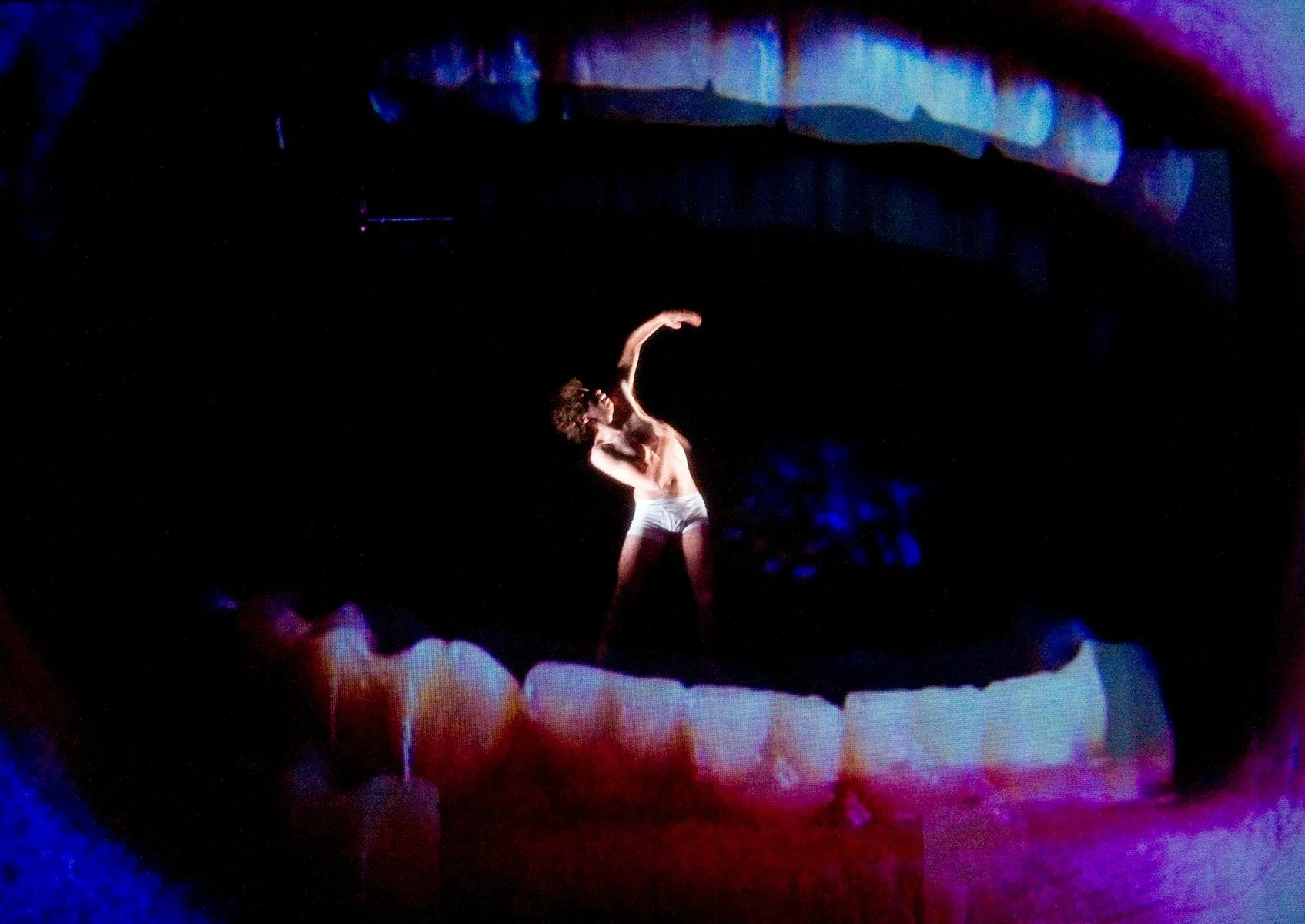
Collins first worked with Walker in 2008, when songs from his albums Drift and Tilt were presented at the Barbican as Drifting and Tilting: The Songs of Scott Walker. “A great range of performers were involved, from Jarvis Cocker to Damon Albarn,” Collins says. “I was asked to choreograph two songs – one was a solo dance and the other was part of a larger piece, Clara (Benito’s Dream), about Clara Mussolini. That was the famous piece with pig-punching: the carcass of a pig is punched and the noise of that becomes the percussion sounds. It was just fantastic to get to know Scott through working on that project.
“Then, when Cocteau Voices came up 18 months later, Scott was the most exciting choice. It was a collaboration from the word go. The score he’s written is absolutely amazing; though it’s in no way related to the Poulenc piece, I think the scale, weight and emotional intensity balances it very strongly.”
Duet for One Voice was inspired, says Collins, by an early draft of the 1932 monologue that eventually evolved into Le Bel Indifférent. Cocteau created the latter for Edith Piaf and worked into it many of her own experiences. The earlier version, though, was a radio play, Lis Ton Journal (“Read Your Newspaper”) written for Cocteau’s male lover, Jean Marais. “That ambiguity, the fact that it can be performed by a man or a woman, was exactly what attracted me to it,” says Collins, whose ballet features six dancers – three men and three women.
There are currently no plans for this score to be released commercially.