
Creating Dealer and Track Three on Climate Of Hunter, with Peter Walsh and Mark Isham
Audio Transcript
Peter Walsh in conversation with Mark Isham
April the 24th, 2025
Peter Walsh
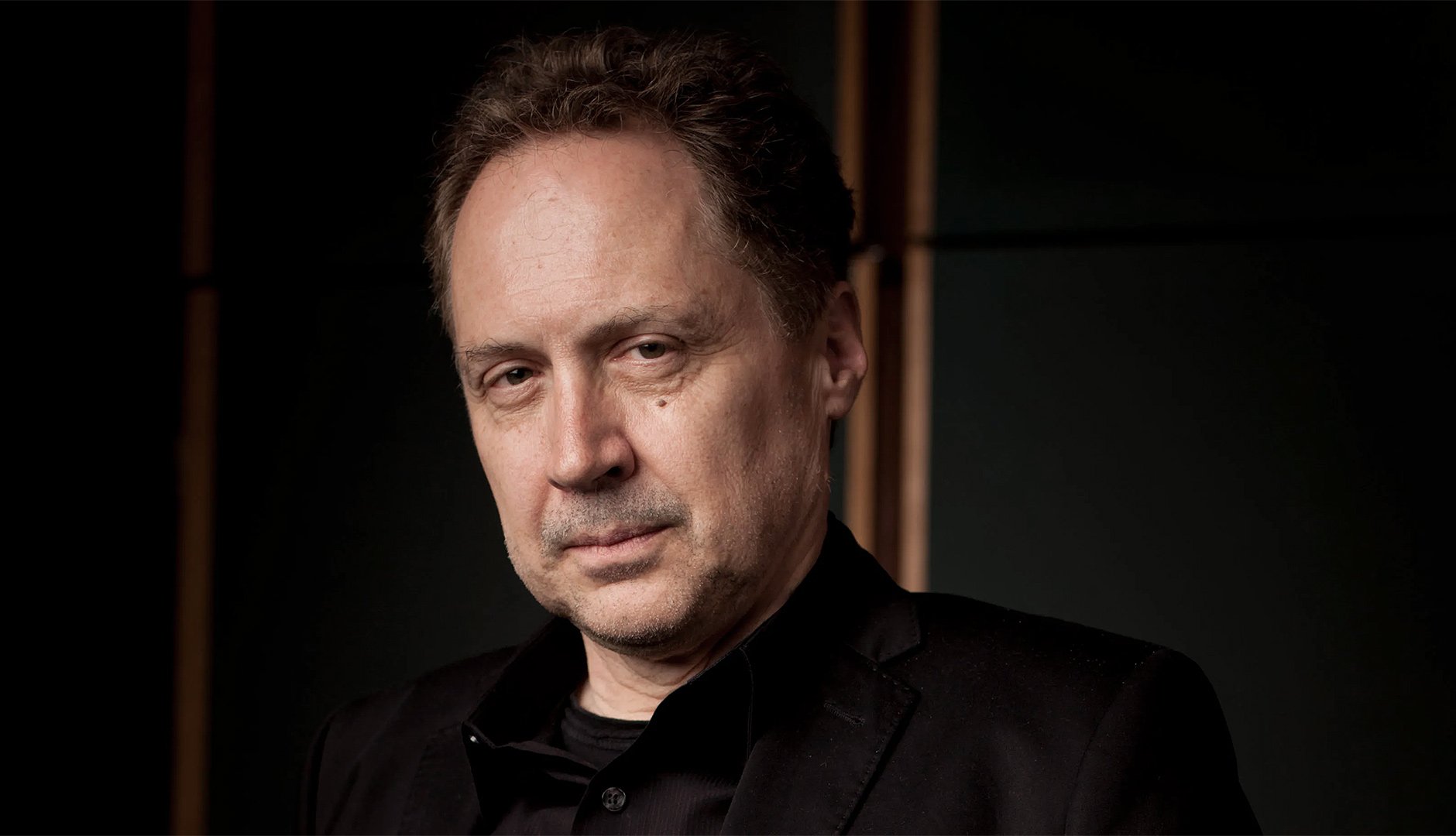
This is a conversation I had with American musician and composer Mark Isham on April the 24th, 2025. Mark played on two songs of Climate of Hunter: the second track, called Dealer, and the third track which was I think called Track Three. So, Mark’s contribution to these two tracks was mainly textural, where we created trumpet loops using an effects processor called the Lexicon Super Prime Time, which was super new at the time.
So just for context here, what we’re talking about with these loops is basically early sampling in 1982, where we were recording musical phrases, in this case, a trumpet performance from Mark, and we would capture that phrase in the Lexicon and then put it on a sort of repeat so the phrase would keep repeating itself and then you could layer other phrases on top, or other notes on top. So, it’s like building a collage of notes to create an atmospheric texture, in this case a texture of trumpets. During our conversation Mark is referencing ‘Frippertronics’ which is a fun name for a tape loop process where guitarist Robert Fripp was using tape to create guitar loops.
To give you a little bit of perspective how I worked with Mark - basically he would play the notes that Scott wanted and we would capture them in the delay unit, and then create these digital loops. He then says, “yes, then you flew them in”, which meant that I actually synchronised the delay unit with the tape and I would press play on the delay unit and record these phrases onto our multitrack tape in the right place, according to the arrangement - so certain loops fitted with the chords of the arrangement.
Mark also talks about John Hassell, who was an American trumpet player who also used modern electronic techniques as part of his production process. When I’m talking about Pete Van Hooke: Pete was the drummer who played on the album and on this particular song, the second track on the album: Dealer. We were aiming to create a more modern sound on the drum kit and may have used a Simmons pad to trigger an electronic sample which we combined with the acoustic sound we were getting from the room, as Pete was playing. And these sounds and new looping techniques illustrate a slow transition towards a more electronic sound world, in which Scott was interested in using certain elements of the electronic world to facilitate what he was wanting, and Mark describes it as a sort of “otherworldly” sound experience.
The telephone loop that I refer to in our conversation refers to the keyboard sound we used on Track Three, the song with Billy Ocean. In my mind when we recorded the basic keyboards I was thinking of the sound that you get - or the old sound you used to get - on a telephone line when somebody hung up on you or when the person you were trying to reach was unavailable. So, it’s worth remembering here that this process that we were using with Mark Isham was actually a technique that we used on a lot of recordings with Scott, building a collage of sound and putting it in a sort of textural perspective. Whether it was a trumpet (we used to do this kind of thing with Guy Barker), or a piano (I remember doing it on a particular track on the Pulp album with a piano and guitars, just building layers of sound). And we didn’t always use the Lexicon digital delay, but it was a sound that we discovered on this record, that we used on many projects over the years.
So, here’s the conversation.
Peter Walsh Thank you so much for joining me on this.
Mark Isham Of course, my pleasure.
PW It’s going to be interesting because it’s such a long time - like over 40 years I think since the session, and I don’t think we’ve actually spoken since then have we?
MI No, I don’t believe we have. I had to go back and listen to remember it. I vaguely remember driving to SARM, right?
PW Yeah, that’s right yeah SARM West.
MI Yeah those were the days when I’m still getting to know London. I remember every drive was an adventure for me.
PW Yeah, I’m still in that position now actually. But you’re from New York yeah?
MI I am originally from New York yeah although I left when I was still in high school so I never really had a professional career there. I was a student…. My actual career took off in San Francisco when I graduated from high school there and I just went right into the San Francisco workforce, played in the Oakland Symphony and the San Francisco Symphony and Grateful Dead and Carlos Santana and Van Morrison … I was the one guy that could play in both, under Seiji Ozawa and with Van Morrison.
PW Incredible.
MI I understood those worlds well enough to do okay in both worlds, and then of course, I just - I became a real jazz head, and anybody that wanted any sense of jazz would gravitate towards having me involved.
I came out of high school a pretty good trumpet player so I would do substitute work in the Oakland Symphony and the San Francisco Symphony and then play, you know, rock gigs at night and church gigs on Sunday morning and pretty much the gamut of everything.
PW That ability to work with different genres probably led you into projects like Scott.
MI Well exactly, there was no genre that I didn’t feel that well, I might, I’ll have something to add here, in some strange way.
PW How did you actually get the call to do it?
MI I think it came through Peter Van Hooke.
PW Right okay so you knew Pete Van Hooke.
MI I knew Pete so he must have dropped my name. I mean he must’ve said, ‘so there’s this guy that does weird stuff. Have him come in.’
PW Amazing. I listened to the tracks you played on… and you know, the textural side to it, we actually repeated on a lot of projects. You know, these clusters of notes, just happening seemingly randomly. And …
Maybe I should let you talk about your recollections of the session, if you can remember, before I chip in.
MI Well I remember I think in those days I was using the Primetime 2 as a looper, which was great because it was Number 6 - because I had heard it was coming so I had sent them a deposit and paid, you know, full list price for this thing.
[Number six either refers to the serial number or the sixth one he had bought. Probably the former. He knew that these units were just about to come on to the market.]
PW Amazing.
MI But I wanted a full bandwidth, you know, delay - they could do I don’t know, it could do almost a minute and of course those days that was unbelievable, you know.
[Refers to the full bandwidth sample rate and 1 minute of sample memory. i.e. it was possible to have a 1 minute loop at full bandwidth.]
PW It’s interesting you say that because I couldn’t remember whether I instigated it or you but obviously you’d been there before with that machine yeah?
MI Yeah! No I bought one because - you know, I was a big Frippertronics fan and I was convinced that the trumpet was just as valid an instrument for Frippertronics as any guitar, and I was doing a lot of stuff with it. You know, trying to find new voices on the trumpet within the looping world. And the great thing about the Primetime of course is that it sounded great, but it also had the two lines out, so you could offset them. So you could put a mono input and then you would get this stereo loop out, and very quickly build up a really spacious feel.
PW That’s it, yeah.
MI In going back and listening I think what we must have done is just say, all right how about we build something for this section, build it and then fly it in, because it had to be built, it couldn’t just be performed in a “one shot” thing you know.
PW I agree!
MI Because I hear the harmony changing quite sophisticatedly from one bit to the other, so each one of those must have been analysed for the type of chord and the type of motion, and built and then you must have flown it in just at the right spot … and that doesn’t contradict any of my memories of how we did it.
PW No. That’s right Mark. I remember actually where the unit was in the control room and hitting play. I think we got these clusters and then just literally laid them in on the multitrack.
MI Oh, wow.
PW And then the actual chord changes would happen with the faders, you know, so they’d obviously overlap. So, obviously pre Pro Tools, pre Logic, but I mean - groundbreaking stuff at that time I think.
MI Yeah. I mean Hassell was starting to do some stuff but all his stuff was live, so - he would build complex things like that, but they would just sort of have to sit there. And I think to try and do this stuff where you could take the time to establish a rather sophisticated harmonic cluster and then have it move, that’s a sound that was pretty new, you know. And yet you had all that intricacy and strange out-of-synch-ness with the looping technology.
PW Exactly yeah, yeah. So I’m glad that we concur on the process.
MI That was a great box because it had the variable feedback level, so you could set that so it would just infinitely stay perfect, or you could set it just so that it would - over three minutes it would decay, or over 10 seconds it would decay… And then of course if you did that, then you could add stuff and get three or four textures on top of each other…
PW The only other one that I know of that, which was more a sort of reverb, was the Quantec - you could sort of input stuff and then it would freeze it and build up this amazing kind of textural wash, you know, which was amazing, yeah.
MI And the great thing about having a monophonic instrument going into these things is that you can inject voices and have the voice do something that you improvise, of motion or something, and it really does come across like a chorale of a thousand people or something.
PW Nice, yeah. I agree Mark. And it’s really pleasing to hear you talk about this because I think that this was one of the textures, one of the effects, I said it before, that Scott kept going back to on future records. And sadly you were not always around for it, otherwise we would have got you back! But I remember building clusters like this with Guy Barker who we used quite a lot, but not using the digital delays, but actually building it up on Pro Tools and like multiple takes of things, and I would actually end up compiling stuff - but it was it was an effect, it was a colour that Scott used in in a lot of future work, and I think we were the first to actually come up with it, you know.
MI Haha, fantastic.
PW So, yeah, well done on that, it’s brilliant and it complements perfectly the whole song, with Pete Van Hooke’s kind of - it’s like a Simmons drum kit or something that he’s playing, it’s not a real drum. So the whole thing felt a little bit, kind of, yeah, just very “new”- sounding.
MI Otherworldly!
PW Otherworldly, yeah! Amazing. So - did you have any recollections of how Scott was to work with, any feelings about him as a person, a producer, as an artist?
MI I remember him being fairly quiet and very respectful of the process, and patient to let things evolve. I think when we just landed on this idea he recognised that, all right, this is going to take some diddling around and some experimenting too. But worth it and he was very supportive of the whole thing, you know.
PW Did you have any sort of preconceptions of what the session might be like?
MI I didn’t. You know, he was such an interesting guy in the sense that there’s so much drama in his delivery of a of a lyric, that you wonder what that’s going to be like in a person in the room. He was sort of the opposite of that in my recollection: just very, very quiet. And like I say, I remember it just being a very fun, relaxed, creative session. Just no sense of, “oh, I don’t know, there’s doubt in the room”- no, there was no doubt in the room, it was like, “yeah let’s dive in, let’s do something we’ve never done before!”, you know.
PW Yeah, fantastic. I also remember on that track there was like a - we were using a PPG synth. Do you remember those?
MI Oh sure of course, yeah.
PW It had this kind of bell-like texture. It was like a telephone loop or something. I don’t know but that combination of all those sounds working together and yet still feeling quite organic. Because it’s - you know, you’re putting all this organic stuff in, but the treatments were taking it to a completely different place.
MI Actually, now that you bring that up, it’s in those early days of electronics, there was a lot of electronic sounding stuff. And listening back to those tracks, there is a very organic feel to them even though there’s a lot of electronic stuff going on. And that’s something I’ve always prided myself on and strove, striven?, strove for – whatever the correct English word is! - I’ve always embraced the idea that this instrument, even though it’s electronic, should feel like you’ve discovered it in some strange culture somewhere and that it’s a sound that you’re hearing in a room somewhere, you know. And I think even taking the trumpet and making it otherworldly it still sort of feels - it feels very organic - it feels like, ooh, these are strange instruments in a cathedral in the back forests of northern Spain, or something.
PW Great, yeah, I love it! That’s it. And I was also really enjoying it, because I learned trumpet when I was a kid, so actually watching you play was like a great experience for me as well - and how you could make two notes sound so sweet - a lot of people would be like, he’s just playing two notes, but it’s like how he’s playing these two notes, it’s the sound, the sweetness is just great, not easy.
MI Do I recall correctly that I played in the control room? Or did you have me in a booth somewhere?
PW Well the studio was huge, it was the big room at SARM. And … I don’t know, Mark, I’m trying to remember. I mean it would make sense if you were in the control room, because we were….
MI I think so, so that we could cue you, or I could raise the fader myself or whatever was needed to build the loop, because we wouldn’t necessarily have to play, as long as I was in tune with the track, we wouldn’t necessarily have to play with the track. I just remember sitting in a chair and playing and everybody just around me. The one image I have of the actual … but it’s a long time ago, Peter!
PW Yeah, like I say I remember exactly where the unit was in the rack and now you mention it I’m thinking, maybe Mark was stood beside the machine, (the Lexicon delay unit), very interesting.
Obviously, I’m trying to get bits and bobs for Cathy who is putting the website together, so any thoughts about Scott’s kind of contribution, and now he’s no longer with us, what he’s left?
MI Well I think he’s just one of those talents that was so deserving of more recognition and more household name status than he ever achieved. I mean I guess he did when he first came out but that was in Europe. In America, to be honest with you he never achieved that, but his voice was an instrument that’s unparalleled.
PW I agree.
MI I mean it’s just remarkable and I can see as a producer it would be a constant challenge to… how do you set this voice up so it really can be everything it can be? Because it’s already just like huge and just commands so much space and presence and it’s just right there. And I think I think talents like that are very rare, they don’t come along that that often and he was definitely one of them, absolutely. I mean like, you never forget the voice. It’s one of those voices you never forget once you hear it. You hear one snippet of one track, you go wow, holy shit who’s that? - all right that’s a name that’s, like, logged forever.
PW I think for me, when we first started making the records - and that was the first one, Climate of Hunter - I think everybody was expecting a kind of Walker Brothers thing and then we came out with this very… well, new kind of sound. And it had moments of Scott’s past: beautiful kind of melodies, beautiful sound, and then it had moments where he was really pushing it in another direction. And I think back then it felt really extreme what we were doing, but when I listen back to some of the stuff now, I think: my God, some of these textures, I mean you’d be proud if you were making those kind of things today.
MI Yeah. It definitely stands the test of time.
PW And it’s interesting how you’ve had such a prolific film scoring career and, I’ve also - with Scott, we did two films together with Brady Corbet: The Childhood of a Leader and Vox Lux. And Scott was a complete cinema fan, he loved film, he was very knowledgeable and I think a lot of the music that we made, your sessions included, are very cinematic. You could have that trumpet on its own in a scene and that’s all you would need. I wish I could get my hands on it, actually, now! But you know, those kind of textures where we’re layering stuff and building: now you can kind of do it with a preset. It’s got multi effects, one thing goes into another, but back then we were doing it all - you know there was the loop and then that was going through some sort of modulation and then it was going into a big reverb and then …. So it’s interesting we’ve had these film careers as well. We weren’t just making a pop record then, you know. It’s that film sensibility, I think.
MI Well it’s interesting that you mentioned that Scott was a cinephile and loved film, because his voice is almost operatic in the way that he delivers emotion, which of course is a whole high level of storytelling in its own, the ability of an opera singer in that vocabulary to tell a story, and to bring emotion. It’s at a whole ‘nother level than a pop singer. So that sort of makes sense hearing you say that, because he obviously had this incredible gift to deliver with that instrument of his, this incredible sense of emotion and for storytelling. And his lyrics, you know, reflect that.
PW Yeah I agree, Mark, great. Lovely words there. I think those sort of artists come along once in a blue moon, don’t they, really. They’re irreplaceable. Like you said, there’ll never be anyone else like that.
Well - that’s great for me!
MI All right! Fantastic. This has been fun, man, I’ve been reminiscing.
PW It’s nice, isn’t it.
MI Yeah. When was this, was this ’82, do I have that right?
PW Yeah ’82, ‘83 yeah.
MI Yeah, because I left London … yeah, I came back to America and did a film score in ’82, and then I came back to London and worked for a little while longer, and then came back to America permanently in ’84. So, it was probably in that second round, between that first film score and then leaving again.
Am I right in thinking that his commercial success was more in Europe than in America? I wanted to make sure that I remembered that correctly.
PW No that’s correct. He was a child star, he was on the stage when he was like 8 years old, 10 years old. There was an auntie in America who had all of the old newspaper clippings….It’s fascinating.. the story.......
MI All right man, great to catch up! And we’ll stay in touch.
PW Yeah, thank you and thank you so much for for sharing all this with us.
MI My pleasure. Take care.
PW See you Mark, best of luck!