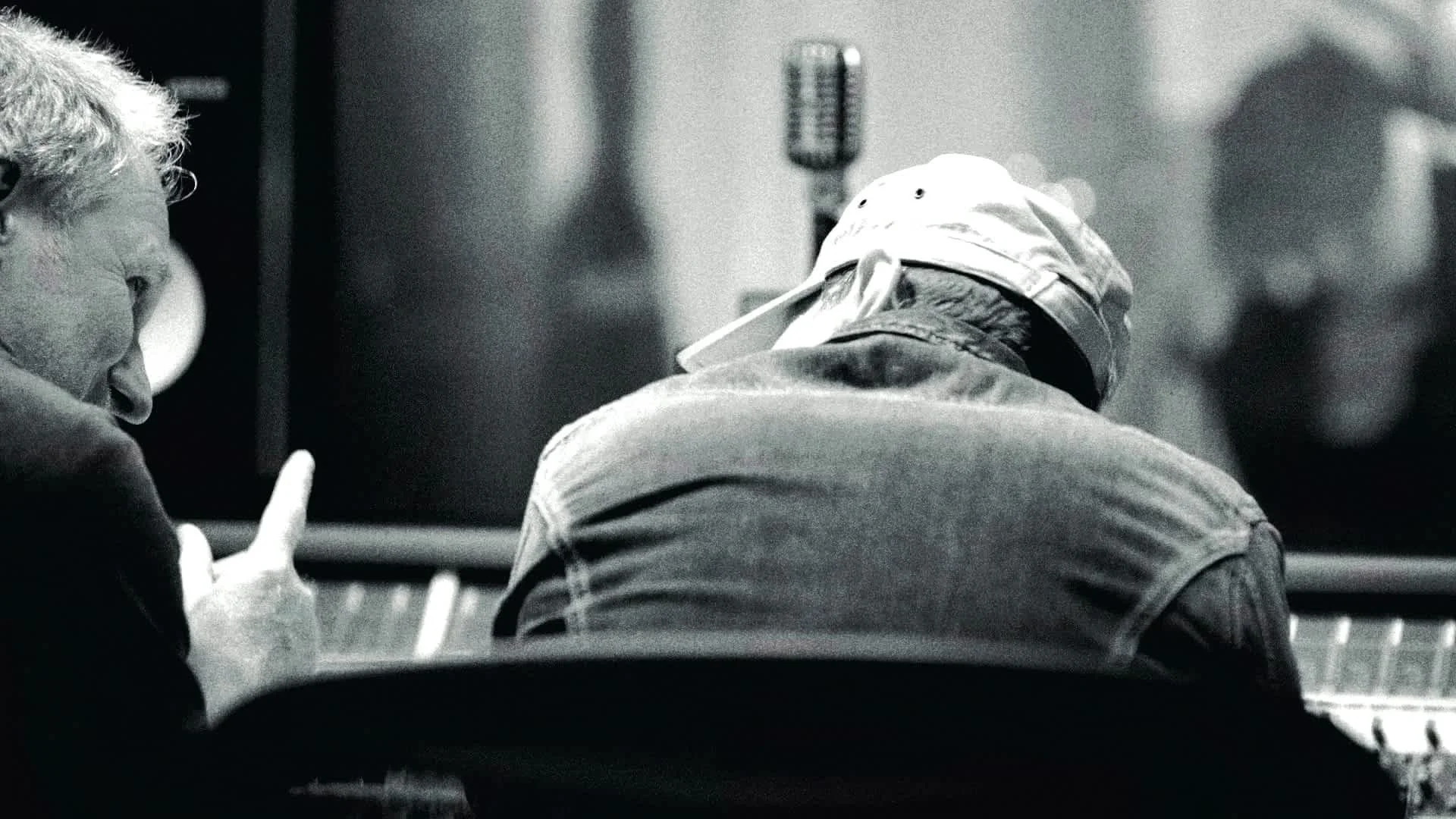
Scott Walker and Peter Walsh on producing Bish Bosch
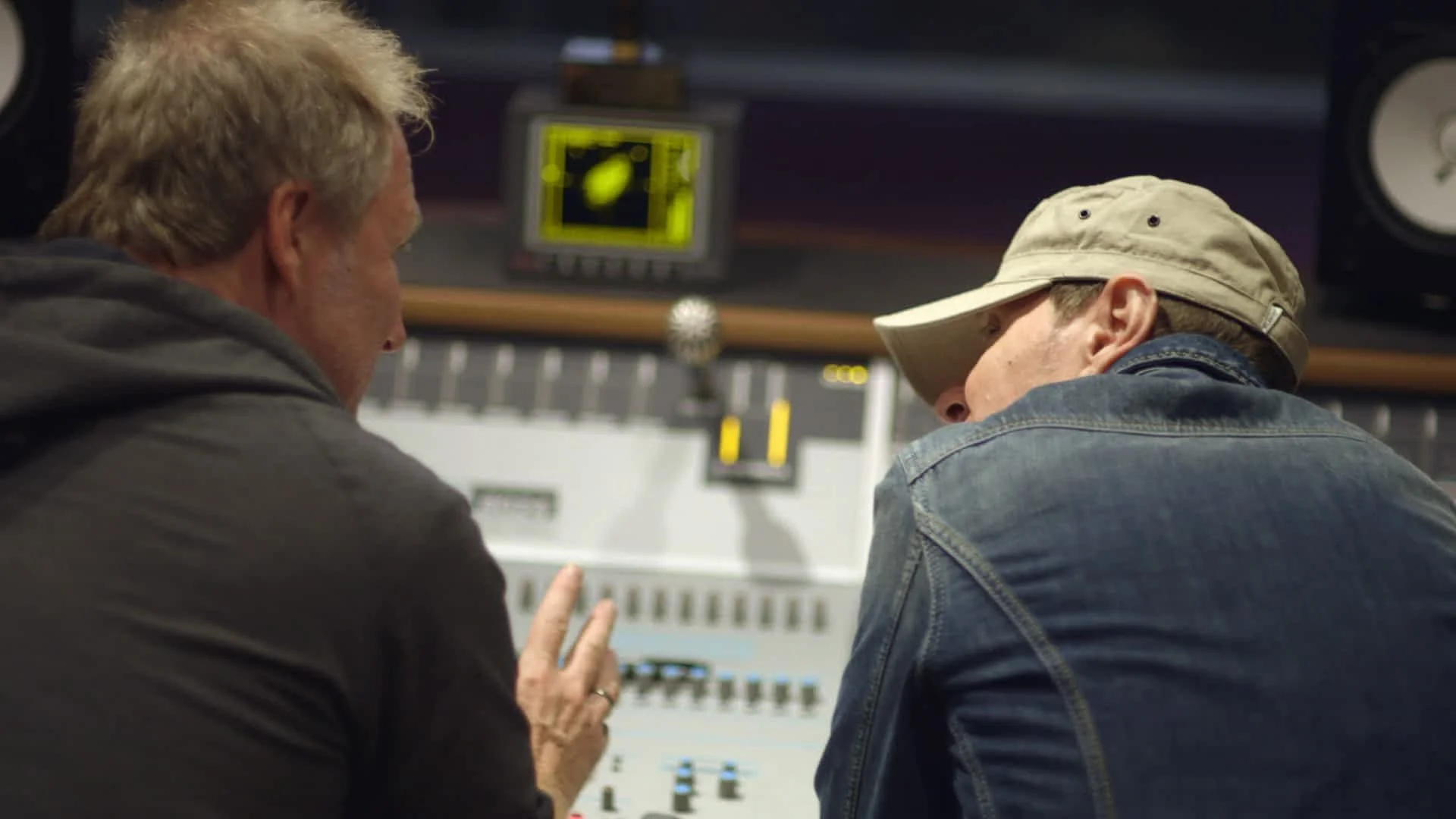
First published January 2003
by Tom Doyle for Sound On Sound
If Scott Walker had disappeared from the music world at the end of the ‘60s, leaving behind him the towering orchestrated pop hits of The Walker Brothers and the stunning, cinematic run of four eponymous solo albums that ended with Scott 4 in 1969, his legendary status would already have been assured.
Instead, the singer retreated into the margins and struggled through a bumpy creative patch in the 1970s, as record companies prevented him from writing his own, far more adventurous, if far less commercial songs. Surviving this potentially career-snuffing period, however, he was to emerge with his music changed virtually beyond recognition.
Having reunited the now country-flavoured Walker Brothers in the mid ‘70s, with limited chart success, he used the band’s last throw of the dice, with 1978’s Nite Flights, to create an artful, experimental sound – in songs such as the title track and The Electrician – that was to influence Brian Eno and David Bowie and point the way to Walker’s future direction.
Since then, making music that is increasingly conceptual and challenging, and apparently enjoying absolute creative freedom, he has produced a distinct “second act” to his career.
“Yes, that’s probably a correct assessment,” says Walker, the elusive singer granting SOS a rare interview. “Although absolute creative freedom…I don’t know.”
It’s widely accepted that this new period of Scott Walker’s remarkable career began when he signed to Virgin Records and produced the tangential, atmospheric pop of Climate Of Hunter in 1984. It was also the first album he made with co-producer Peter Walsh, a fellow sonic adventurer who’s worked with Walker on everything he’s done since.
Together, the pair go to extraordinary lengths to craft the singer’s stark, theatrical music, whether it be recording the sound of a side of pork being punched in Clara from 2006’s The Drift or machetes being sharpened in Tar from his latest album, Bish Bosch.
Both Walsh and Walker have different theories as to why their working relationship has managed to endure for close to thirty years.
“I think where we fit together,” says Walsh, “is I’m very good at interpreting where he wants to go. He’s very concentrated and sometimes there can be a frustration because he has the image in his head, but he doesn’t want to divulge what it is. Because then everybody goes, “Oh, I know what you mean, you want it to sound like…” And then it becomes too literal, too obvious. So he’ll kind of steer the boat, but he won’t tell you where’s going.”
Walker reckons he and Walsh enjoy a “shared aural appreciation, as well as instinctual understanding and mutual trust. Pete’s a very stabilising presence in the studio and that’s essential, as we’ve faced many challenging problems together over the years. We still make each other laugh though and, of course, he’s a fantastic engineer.”
With Bish Bosch, Scott Walker and Pete Walsh have created their most ambitious and idiosyncratic record yet, full of high-concept, almost futurist-operatic sound collages that backdrop the singer’s wholly expressive and dramatic vocals. The singer reckons that it marks a further honing of the pair’s abstract sound. “I believe that we have finally achieved what can be called a style that you can identify if you’re a long time listener of our records,” he says. “I would describe it, cursorily, as Hi Fi.”
A huge fan of film and always visually-minded when working with sounds, Walker says that for many of the songs, he is almost trying to create the aural equivalent of Swiss surrealist artist H. R. Giger’s sci-fi Gothic drawings for the original Alien film. “A sort of glossy black and grey sound,” he says, “with occasional flashes of white.”
When Scott Walker and Peter Walsh first hooked up in 1983, the former had been without a record deal since the creatively successful, if poorly-selling Nite Flights, while the latter was a twenty-three-year-old engineer-turned-producer who’d just overseen the making of Heaven 17’s Penthouse And Pavement and Simple Minds’ New Gold Dream for Virgin Records.
When the label signed Walker, a meeting was arranged for the producer and the singer in a London hotel where Walsh was told he should be able to identify Scott as the figure in a baseball cap, chewing a match. “I was expecting this very mysterious, strange encounter,” says the producer. “But in fact it was completely normal.”
Given Walsh’s already varied recording history and training at Utopia Studios working with artists as diverse as Stevie Wonder, The Tubes and Spandau Ballet, he wasn’t at all thrown by the idea of working with the enigmatic Walker. “Having been in the studio with so many different people, and having to deal with lots of different situations,” says Walsh, “you’re up for anything really.”
It was clear from the off, however, that the sessions for Climate Of Hunter were to be unusual. Before going into the studio, Walker worked with arranger Brian Gascoigne on transcribing his ideas from rough drawings he’d made of chord clusters on a keyboard into various charted parts for the session musicians to work around. No demos were made which meant that, on day one of the recording, Walsh turned up, not having heard a note of music.
“I had actually no idea what was gonna come out of the speakers when I turned up to co-produce the album,” he laughs. “I turned up at the Townhouse at 10 o’clock, the musicians were all there, and I’m getting sounds for an album that I don’t actually know what’s gonna be played.”
Once the sessions were underway, in one key moment, Walsh was surprised when Walker stopped a guitarist playing a part following a guide top line, saying it sounded too obvious. From this point in, none of the musicians would hear the vocal melody until all the tracking was done.
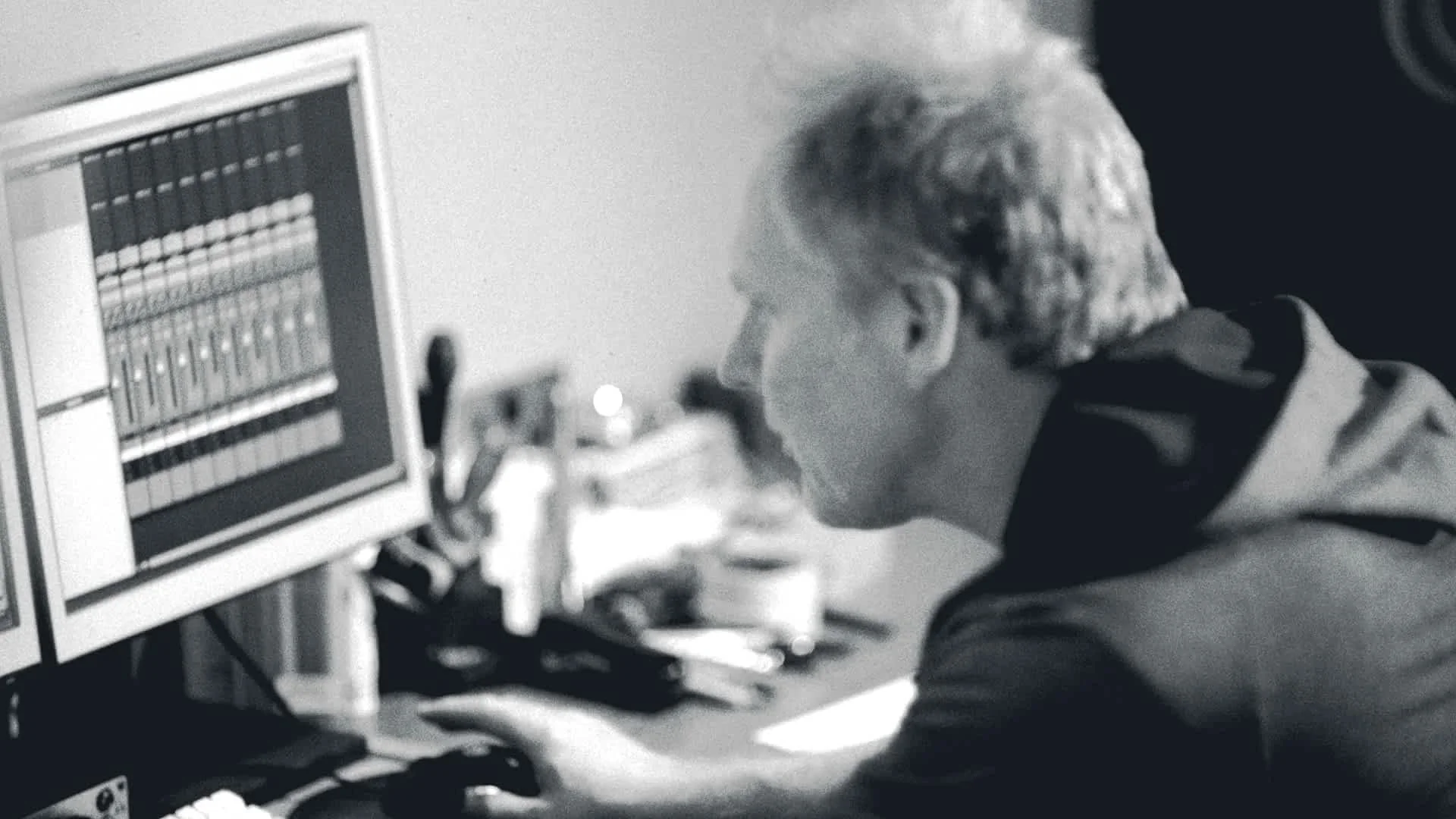
“Everything has to be as spontaneous as it can be,” says Walsh. “He doesn’t want it to follow any kind of format.”
“We’re relying on accidents and surprises happening in the studio with the musicians,” says Walker.
During the making of Climate Of Hunter, it became clear that Walsh was more than equipped to interpret Walker’s more irregular demands. “I remember he drew me a picture of the stereo [image] and he had it as a kind of rectangle,” says Walsh. “He said, ‘I’m hearing it more kind of like an arc.’ A lot of people would probably go, ‘What do you mean by that?’ But I just went, ‘Yeah, OK, I can work with that,’ and I made a few alterations in the panning. I think it was too narrow for him.”
It was one of many breakthrough moments in the pair’s relationship. Now, “for the panning,” says Walker, “I leave that to him, as he’s got a great ear for placement.
Post Climate Of Hunter, it was to be another eleven years before the next Scott Walker album, 1995’s Tilt, following a new deal with Fontana. Tilt was the result of increasingly focused and intense sessions at RAK and The Townhouse, producing a more ambitious sound that ranged from acoustic minimalism to industrial noise to otherworldly orchestrations.
Walsh says that his favourite track from Tilt is the dislocated, largely acoustic, near-eight-minute Bolivia ’95. “The vibe on that is just amazing,” he enthuses. “We had the drummer, two percussionists, guitar and bass and that pretty much went down live. We were working to tape, so it’s quite an achievement getting that stuff down live. A lot of it’s improvised and we were working fast at RAK on a small API desk, so it’s not like a massive console where you can have loads of different mics and stuff. We really had to be very specific – 24 tracks and just make sure it’s right.”
Controlling the amount of potential space in the music became a major priority. “At the beginning you don’t know how exposed one particular element might be in the mix, so it’s all got to be recorded well. It could come down to one element and so you don’t want to have some headphone spill or some sort of click going on.”
It became clear to Walsh that Walker was becoming less interested in traditional arrangements and was thinking more along the lines of creating music as conceptual art, almost in a painterly way. “He really does look at it like that,” says the producer. “It’s very much just splashing stuff around.”
From Tilt on, Walker began assembling a team of musicians who remain with him, including drummer Ian Thomas, percussionist Alasdair Malloy, bassist John Giblin and guitarist Hugh Burns. “He’s loyal to the musicians that we use,” says Walsh, “and they know what’s coming. They’re actually into it just as much as we are, so they give that extra 10 per cent. They expect it from Scott. He does drive people very hard. He likes to work really fast and doesn’t like to get bogged down with one particular thing. So everybody has to be on their toes to move at his pace.”
Walker himself admits that he does push the musicians. “I can be demanding,” he says, “but I hope not in an abusive way. That would be totally counterproductive. You can achieve the required results without all of that. The scuttlebutt is that musicians usually like working on our sessions…or maybe I’m being delusional.”
Typically, there are elaborate stories and sound ideas behind Walker’s songs, which he then has try to convey to the producer and musicians, no matter how complex or oblique or plain weird. On Bish Bosch, the 22-minute, elaborately-titled SDSS1416+13B (Zercon, A Flagpole Sitter), for instance, involves a thoroughly out-there concept in which the jester in the 5th century court of Attila The Hun rises through space and time, before finally becoming a brown dwarf planet.
This, of course, would sound horribly pretentious if it wasn’t for the flashes of humour evident in Walker’s work (“You should get an agent,” he sings in Zercon, “why sit in the dark handling yourself?”) “The songs are, I hope, many-layered and humour certainly plays its part,” says the singer. “I’m reminded of Kafka who while reading his stories to friends would become infuriated if they weren’t laughing.”
For his part, Walsh says he strives to understand Walker’s lyrical conceits, even if sometimes there isn’t enough time in the studio to fully discuss the writer’s motives. “Normally he’ll come in and he’s so concentrated on what he wants to do that there’s no real time for discussing anything that’s not really related to getting the thing moving forward.
“There is chit-chat but you don’t feel it’s the right time to say, “Y’know I’m having trouble with this Attila bit…how does he fit into the whole thing?” It’s so all in his head you can’t really quiz him on it. It’s almost embarrassing to. I just get the overall thing. You get these images that are presented to you or that you make up on your own, like the Roman army marching over the mountain. You just have this picture in your own head and then you go for it. Nine times out of 10, I’ll get exactly where he wants it to be.”
Walsh cites guitarist James Stevenson (The Cult, Tricky), who appears on Bish Bosch and its 2006 predecessor The Drift, as a great interpreter of some of the singer’s more unorthodox requests. “He comes in and he’s asked to do some feedback guitar, or there’s a moment on the new album, in Zercon, where we wanted these kind of animals wailing.
“He’ll play the part and you can really see him going in. You listen to it and you go, ‘Yeah, that’s absolutely what we want.’ And it wouldn’t be the same if the guy didn’t perform it. Even though we’re in the studio, it’s all about the performance and getting it feeling live. It’s theatre.”
“The great musicians,” says Walker, “like the ones we’ve worked with over the years, tend also to be great actor/players, so they generally surpass the expectations of my imagination.”
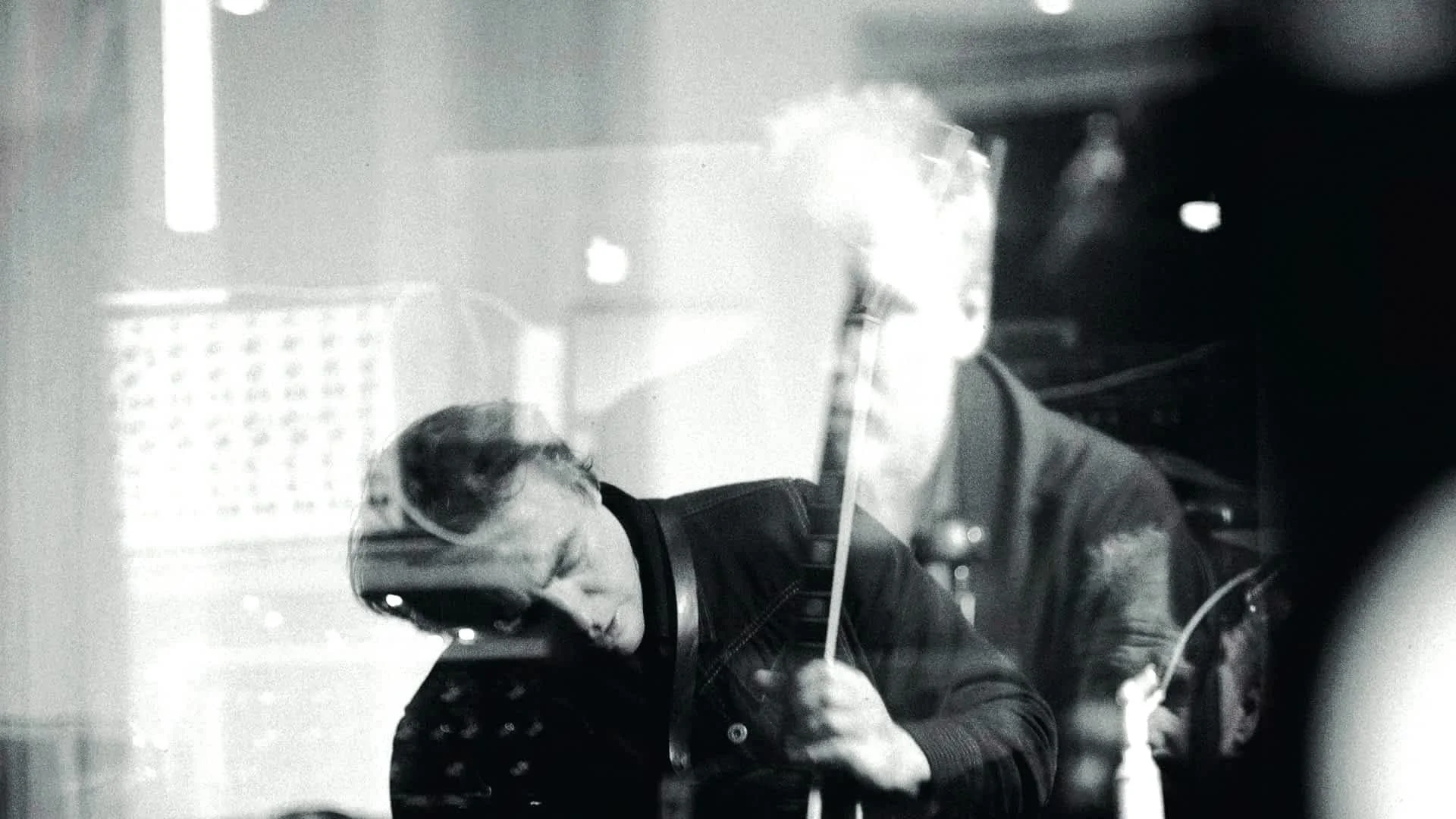
Since The Drift, Scott Walker has developed a working method distinct from his albums in the ‘80s and ‘90s, which involves him creating demo sketches of his songs in the sequencer of his Kurzweil K2500 keyboard workstation, which he presents to musical director Mark Warman.
“It’s quite simple really,” says Walker. “I virtually arrange about 80 per cent on my Kurz – rhythm section, guitar parts, percussion, strings, ideas for unusual noises and sketches for electronic sounds that we will eventually search for and hopefully fully realise by using a combination of studio equipment and Mark’s more sophisticated electronic gear.”
From here, Walsh transfers Scott’s demos into Pro Tools, while Warman prints out a score for the musicians. “There is a vocal line which he’ll play on a keyboard,” says Walsh, “and that helps us sometimes to know where we are, but it’s not really used in any way.” Given the disjointed nature of his music, Walsh admits that Walker’s sketches are often initially hard to follow. “It’s quite difficult to interpret,” he says. “He’ll have one half of the song in one sequence and then the second half is in another sequence.”
When choosing a studio for a Scott Walker project, Walsh says he has to keep in mind the singer’s preferences for tape and vintage desks. “He’s very aware of how music technology has changed over the years,” Walsh says. “He listens to tons of stuff, so he’s very aware of the difference between a modern set-up and maybe an old Neve or an API. “He won’t come in and play stuff, but you know where he’s been fishing. One day he came in and said, ‘I’m hearing this kind of Celine Dion reverb’. And you go, [laughs] ‘Celine Dion? Do even know her?’ Then you listen to that and it’s this huge sound and you go, OK. He is a man of extremes, he never goes halfway with anything. So if it’s a big reverb, he likes to take it right to the limit.”
Tracks on Bish Bosch such as Zercon and Corps De Blah open with Walker’s acapella vocal, and for these stripped-back moments, Walsh would switch between his analogue and digital masters, which he was recording simultaneously. “I had two feeds,” he says, “There’s moments of the album that are so incredibly quiet, where the signal is so low, like string harmonics or vocal breathing. I wanted to have the option, if the tape hiss was getting in the way, of going to the digital, so that I could have complete silence.
“Basically we just sent the signal through the multi-track and back onto Tools. When you’re done, you know exactly what the delay is in samples, so you can move the wave back however many samples and match it to the digital. Then you’ve got an analogue track and a digital track and you can do what you want. Overall, the analogue was more satisfying. It fit into our sonic world. But when he’s on his own singing, we would be favouring the digital side.”
Both Walsh and Walker admit that when looking for a studio, privacy is a factor for the painfully-shy, fame-shunning singer. “He’s not gonna hang around in the studio bar or the restaurant,” says Walsh. “He comes in, does his thing and leaves.”
“Privacy is a big factor,” says Walker, “but I’m increasingly flexible about where I work.” Having of course made his name in the big studios of the 1960s, in sessions characterised by enormous live rooms, dozens of musicians and attendant time pressures, he admits he is still acclimatising to modern recording in smaller rooms.
“It’s taken years to wean myself from the big occasion of being in a major studio with all of the condiments and accoutrements that are on offer,” he says. “I still believe, as with this album, that for recording basic rhythm section tracks, such an atmosphere lends, because of pressure of time and expense, a sense of urgency and underlying tension that you don’t necessarily get when you have limitless amounts of duration and space to get things done.”
Sessions for Bish Bosch moved between two studios in West London, Kore and Sofa Sound (the latter owned by Phil Collins/Sting producer Hugh Padgham), with Walsh editing and prepping in-between times back in his studio in his adopted home of Dusseldorf. This time around, he says, in a reverse to their normal process, the team concentrated on the electronic elements of the music first, playing the keyboard parts live to Pro Tools and processing the sounds with chains of plug-ins and outboard effects.
But Walsh is coy about the specific sources of some of the unearthly keyboard sounds on Bish Bosch. “I probably couldn’t divulge too much,” he laughs. “Scott has always said to me, ‘Don’t say too much’. But whatever we do, we have to take it a step further so that nobody else can get the same thing.”
Vocals for the album were recorded at Sofa Sound on the studio’s Studer A800 Mk3 24 track machine, using a Neumann U48 that Walsh borrows from his producer brother Greg and which has been the one constant of his recordings with Scott Walker. “It’s pretty much the same as the 47, but you can change the polarity and direction of it. It’s been a godsend really, ‘cause that’s the one thing I can guarantee on. So when we’re moving around studios, we have that consistency.”
Generally, says Walsh, Walker’s vocals are “individual performances”, with the singer never keen to do more than one or two takes. “I don’t record with any compression on the voice either. I feel certainly for Scott’s voice that I prefer to make that decision later on. He’s quite particular about when he should have compression and when not.
“In a way, we use compression for effect rather than to facilitate the balance or to warm the sound or whatever. Traditional terms for arrangements don’t really work here, but we’ll do verse by verse or sections. But always trying to keep it live once again. He’ll always want to keep moving forward.”
“It usually doesn’t get much better after one or two takes,” Walker says. “It can be draining, you just have to be prepared. Easier said than done. As memory serves, with a few notable exceptions, vocals were far less demanding in the ‘60s. But then, of course, so was the material.”
When it came to recording the strings for Bish Bosch, due to budget constraints, the team had to nail three tracks in one day with a 36-piece orchestra at AIR Lyndhurst. Time, understandably, was tight. “Of course, for me anyway,” says Walker, “there is no escaping this when it comes to recording strings.”
“Everything’s prepared,” says Walsh. “Everything’s scored out and Scott’s gone through the arrangements with Mark umpteen times. It is very demanding what the musicians have to do, some of the styles that he wants them to play in. There’s also a fair amount of improvising within the arrangement. So Mark will have the notes written on the score, but he’ll at one particular point say, ‘Those are the notes, but don’t play them all at the same time’. So they’re improvising in front of you.”
Elsewhere, there is a strong element of almost Foley-like sound effect recording to the sessions. Which is where, often, the fun and games begin. Most famously, of course, to simulate the sounds of the bodies of hung dictator Benito Mussolini and his mistress being beaten by an angry mob in Clara from The Drift, percussionist Alasdair Malloy was requited to thump a side of pork.
“Once again it’s this realism that Scott’s always searching for,” Walsh points out. “It was a difficult moment, ‘cause it was all set up and the expectation was so high that this was gonna sound amazing. But it just sounded like somebody slapping a wet fish. So that’s when the old EQ comes in and you have to get the right mic on it and get some low-end energy going. ‘Cause, I mean, I’ve never miked a side of pork before.”
Walsh and Walker have gone to other, faintly ludicrous lengths to achieve certain sounds. During the recording of The Drift, for instance, they hired an orchestral bass drum and Scott fell in love with the sound of hitting its wooden flight case, rather than the instrument itself. Trying to hire it again to create the slapped box sounds on Cue, they were disappointed to be sent the drum in a smaller case (“A real Spinal Tap moment,” laughs Walsh) . In the end, they had to employ the producer’s carpenter brother-in-law to built them a box of suitable dimensions.
“Scott definitely thinks big on everything,” Walsh says, “so he won’t go halves on anything. It’s just looking at what you’re doing and thinking, How can I make this sound as huge as possible?”
Unusual sound sources on Bish Bosch include marbles rolling around inside a metal dustbin lid, the blowing of ram’s horns and the aforementioned sharpening of two huge machetes against one another. Walker found the latter weapons online and had his management order them, without considering the fact that carrying these lethal swords around London to the sessions might actually be dangerous or illegal.
“I didn’t worry, but everyone else freaked out,” says Walker. “Even the guys who owned the studio were anxious the whole time they were there and couldn’t wait until I’d taken them away. I was really surprised at the reaction considering all the stuff we’ve gotten up to in the past. I realised they had to be large and of some weight, otherwise they would sound like someone sharpening a kitchen knife.”
Elsewhere, in Corps De Blah, there are some worryingly realistic fart sounds. “I think we’ll keep the source of flatulence under wraps, if you don’t mind,” quips the singer.
The mixing for Bish Bosch was completed in a brisk three weeks at Sofa Sound. “It’s very difficult,” says Walsh, “’cause where do you start? I would probably get the vocal going first and spend a lot of time on getting the right sound, setting the gain structure. But it is very much each song for its own. In Dimple, say, I probably would start with the gongs.”
“Because of the nature of the material,” says Walker, “and the fact that much of the time we’re treading unknown ground, there are no set rules for doing our mixes. What generally happens is that Pete will toil long and diligently on a mix and it will sound great and then I’ll arrive and totally fuck it up. So it’s a combination of his traces and mine making the thing work.”
The surprise dynamic shift is an oft-used trick in Walker’s sound, with the music suddenly going from hushed to explosive. “He will come in and maximise that,” says Walsh, “so the loud bits have to be even louder and the quiet bits have to be even quieter.” Very occasionally, Walsh will have to talk Walker out of a particularly severe idea. “There was a moment where he wanted a cymbal really loud. And I said, ‘Look, I know what you want, but it’ll just sound completely out of balance and it will hurt.’”
Ultimately, of course, Bish Bosch is still heavy, demanding, uneasy listening, and as such, not for everyone. Walsh reckons that people who find Walker’s music too challenging should “research his lyrics…when you listen to it at face value, you don’t immediately understand what’s happening. It’s like looking at a painting.”
For his part, Scott Walker himself wonders why people find his music so extreme. “To me it all sounds normal,” he states. “All I’m doing, after all, is dressing songs.”
Kindly reproduced with permission from Sound on Sound, the original interview can be found here