
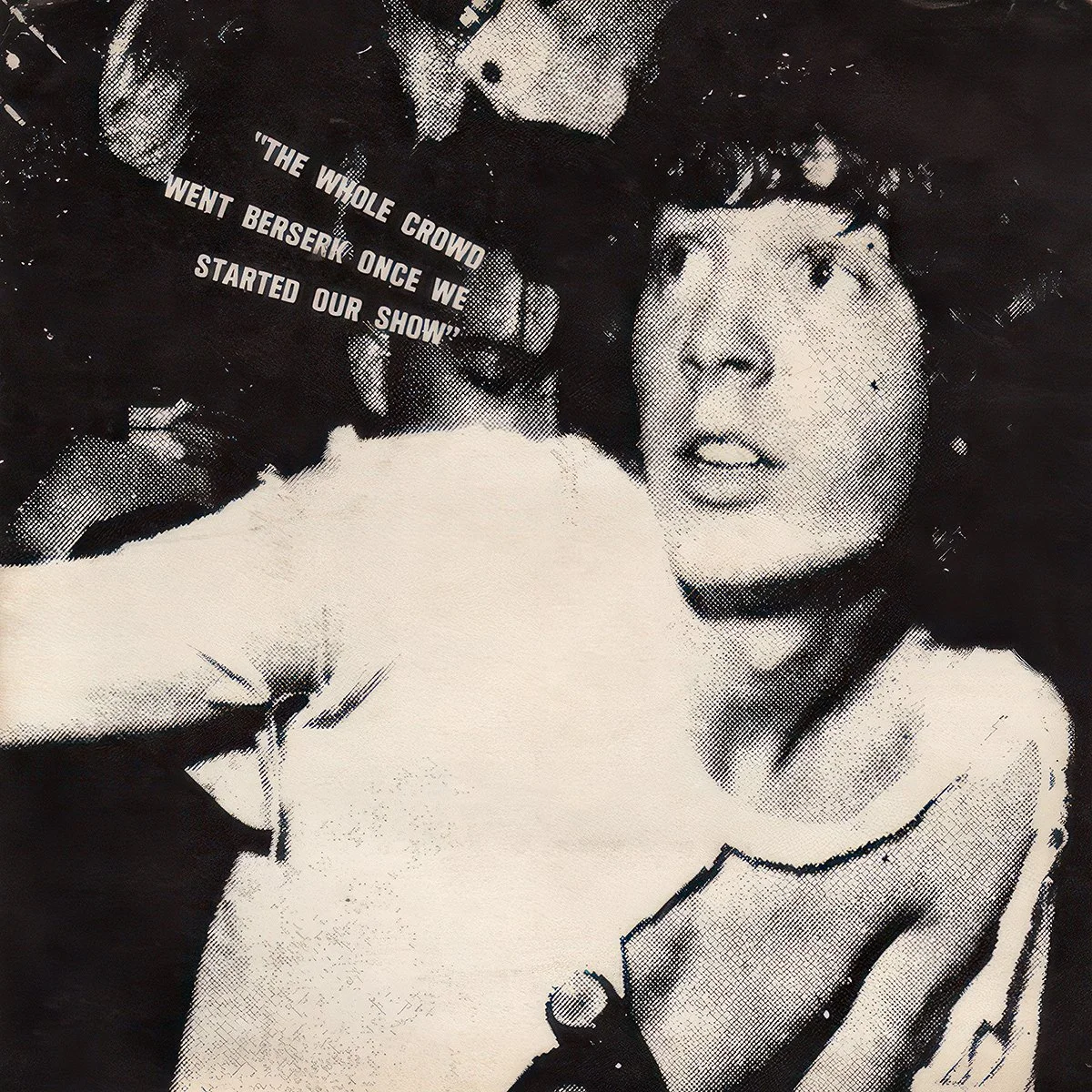
USA Picture Sleeve: Smash S-2000
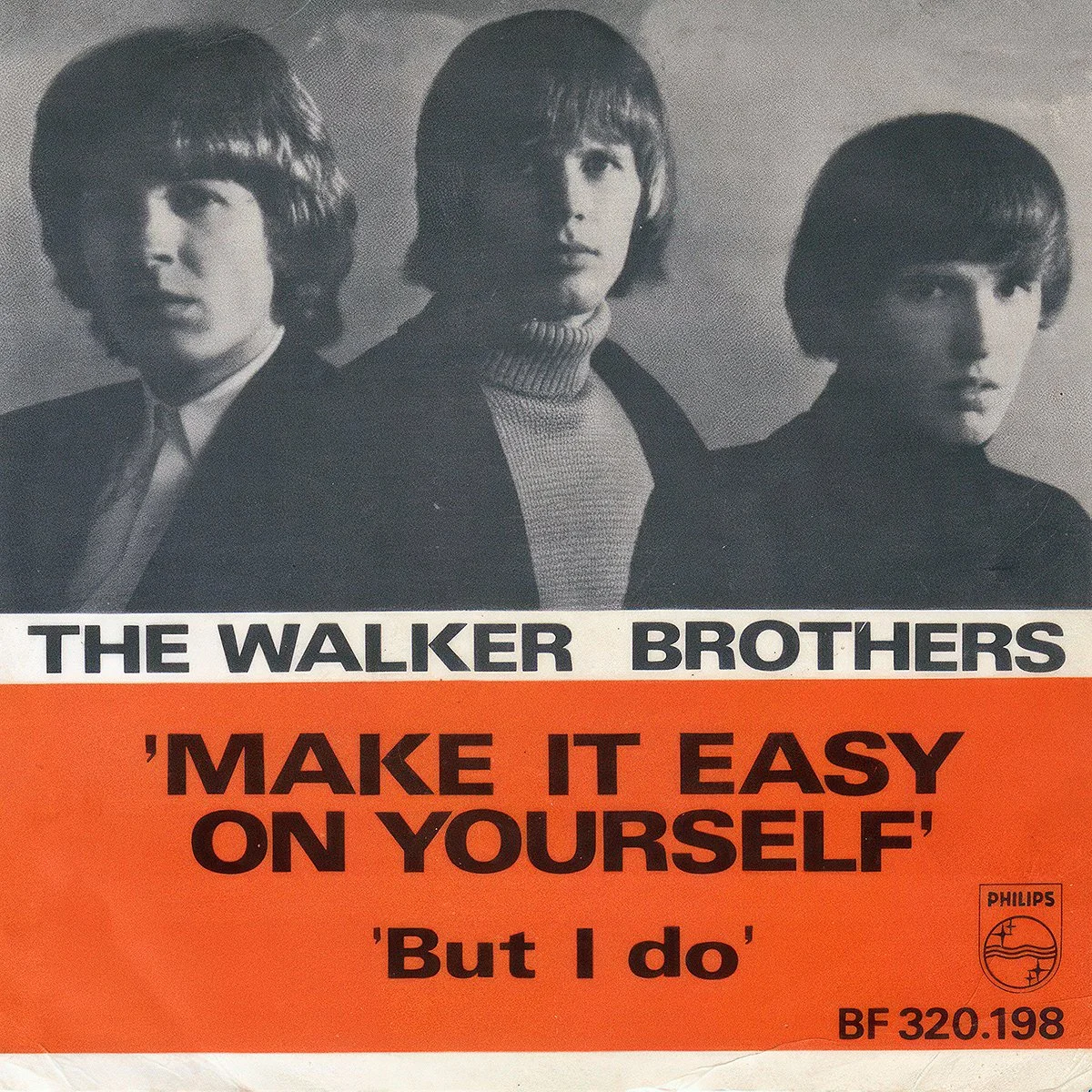
Norway Picture Sleeve: Philips 320 198 BF
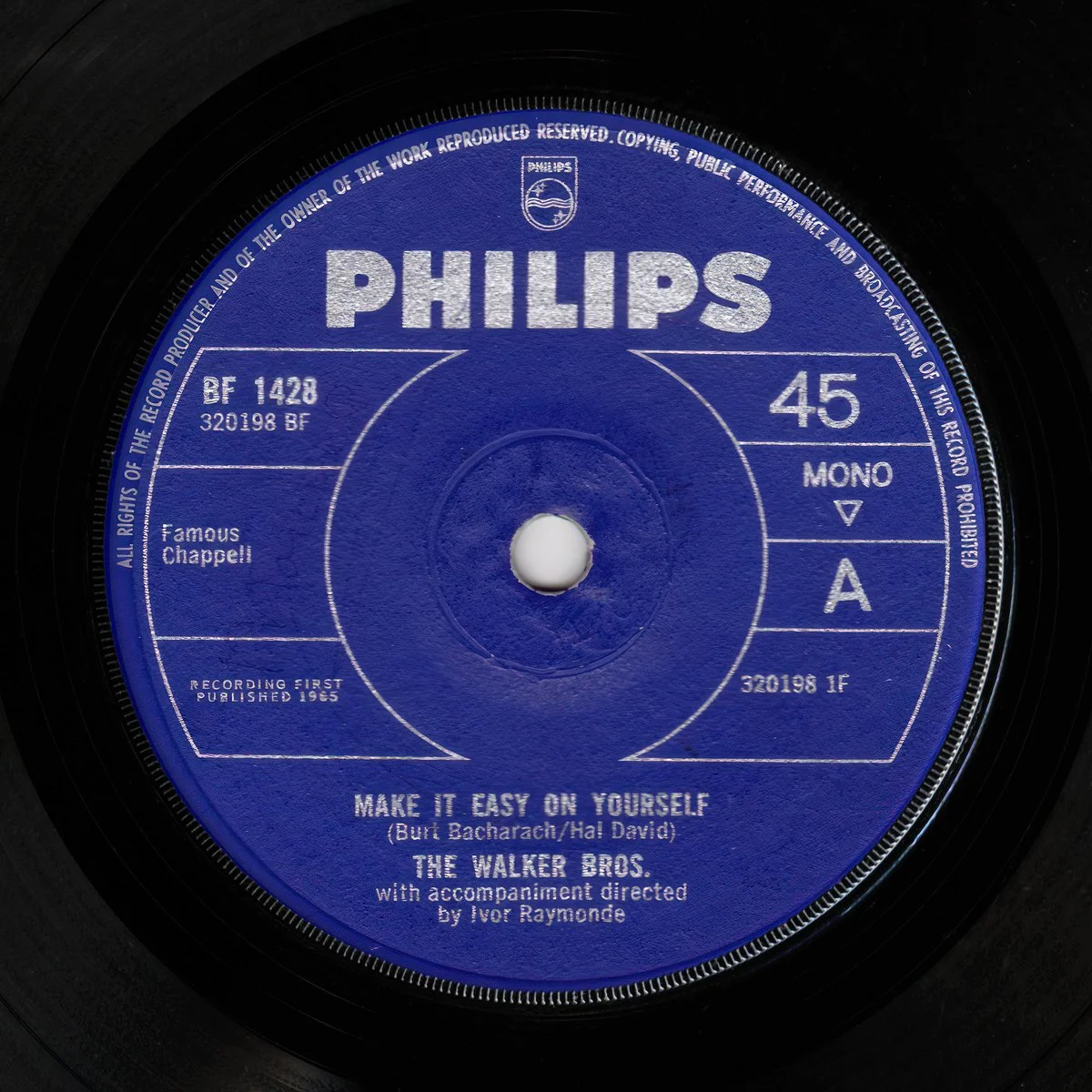
First UK Release: Philips BF 1428 / 320198 BF. Side A
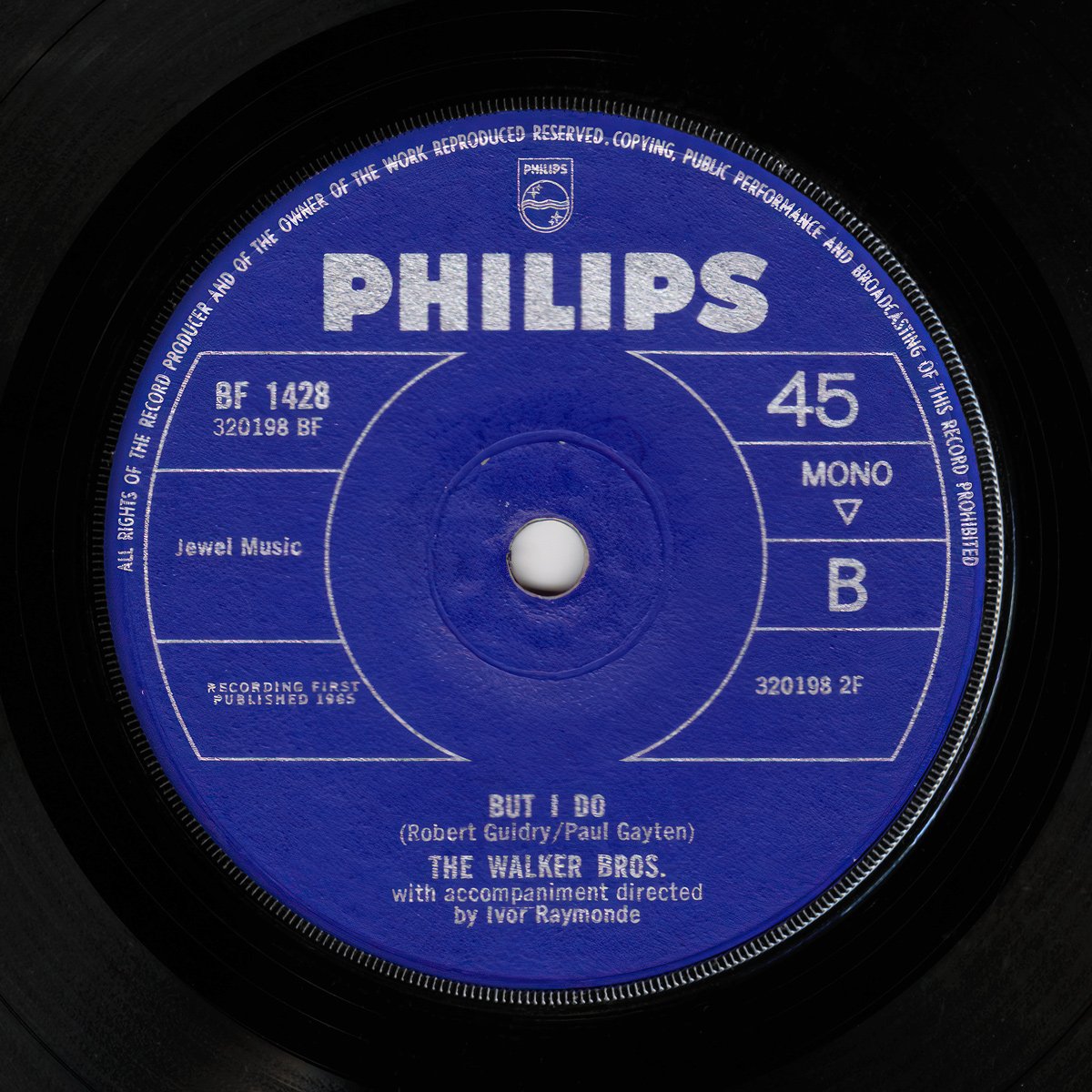
First UK Release: Philips BF 1428 / 320198 BF. Side B
A Make It Easy on Yourself
B But I Do
by The Walker Brothers
Released: August, 1965. Label: Philips
Make It Easy on Yourself was the Walker Brothers’ third single. Written by Burt Bacharach and Hal David, its lyrics centre on a narrator telling his departing girlfriend not to placate him as she leaves him: “Don’t try to spare my feelings/Just tell me that we’re through”. The song was first released as a single by R&B singer Jerry Butler, a member of The Impressions, in 1962, reaching no. 20 in the US singles charts. The Walker Brothers’ version has Scott Walker on lead vocals for the second time.
Recorded in Philips Studios in London’s Marble Arch, Make It Easy On Yourself was arranged by Ivor Raymonde, who had worked at the BBC in the 1950s alongside Angela Morley, credited before 1972 as Wally Stott, and produced by Johnny Franz, who would work on Walker’s releases, both in his group and solo, up to 1973’s Any Day Now. Additional musicians include guitarist Vic Flick, the performer of the James Bond theme, prolific session guitarist Big Jim Sullivan, and drummer Ronnie Verrell.
The B-side in the UK and most international regions was But I Do, a cover of a 1961 no. 4 hit for New Orleans R&B singer and pianist Clarence “Frogman” Henry. In the US, the B-side was Scott Walker’s Doin’ the Jerk, the B-side of their debut single, Pretty Girls Everywhere.
Make It Easy on Yourself became The Walker Brothers’ first UK number 1 hit, staying in the top ten for eight weeks, and the top 40 for thirteen. It reached No. 16 on the US Billboard Hot 100. The song also opened Take It Easy with the Walker Brothers, the group’s debut album, and side 2 of their debut US album, Introducing the Walker Brothers.
Credits
A. Make It Easy on Yourself 3:14
Written By Burt Bacharach, Hal David
Arranger Ivor Raymonde
Producer Johnny Franz
B. But I Do 2:56
Written By Paul Gayten, Robert Guidry
Arranger Ivor Raymonde
Producer Johnny Franz
Notes from Impossible Dream:
The story of Scott Walker and the Walker Brothers
by Anthony Reynolds
Gary explained the reasoning behind their choice of song:
“Bacharach is writing very well at the moment and he’s quite well accepted, so we liked the song very much and it was down the same lines as what we’d done before with ‘Love Her’. And we thought it would be good all round, y’know. So we cut six sides and out of those six we figured The Bacharach is about the best.”
John had found the song initially.
“Jerry Butler had done it.” He explained. “And I was an incredible Jerry Butler fan. So I kinda’ presented the idea to Scott and said ‘what do you think? Should we have a go at trying this’? You know, it’s a big task. Jerry Butler’s version was so good”.
The arranger for those first sessions was to be one in a long line. Ivor Raymonde was a well respected professional who was best known for some exquisite work with Dusty Springfield. He loved ‘Make it…’ and established an instant rapport with Scott and co.
“Ah! What a joy to record a song like that!” he told London radio 25 years later, “I mean the song itself is beautiful. Putting an arrangement to it is absolutely magic.
“Between Scott and myself, we devised an orchestra that would be The Walker Brother’s band - if you know what I mean. So we had three pianos, four guitars, umpteen Latin American instruments, percussion… a sound that we hoped would be the ‘Walker Brother’s ’ - and of course, it worked.”
Ivor Raymonde 1990
Both Alan Parker and Big Jim Sullivan would go onto play guitar for The Walkers throughout the next decade but at that first meeting, even with the modest hit of ‘Love her’ behind them, the name obviously meant little to them. “I had no idea who they were” admits Parker.
‘Big’ Jim Sullivan, also considered the gig just another job, but even so picked up on something special. “I worked with ‘em right from day one of them coming to England.” He states matter of factly.
“We didn’t really know what we were doing. We didn’t know we were laying down history. Who were The Walker Brothers? Nobody until they had hits… I was introduced to Scott going up the stairs of the Philips studios… I remember when I first heard him sing I thought ‘This guys got a great voice’.
There are some people whose voices don’t suit their face but his did… he was a cool guy in every way that I could see”.
Big Jim Sullivan
Alan Parker describes the dynamic at these sessions:
“Scott was very, very friendly and a little bit nervy, a little bit fractious, I suppose. But that was just his personality. But we got on, he and I and John, we got on extremely well and over the years it developed into quite a professional relationship.
On those early sessions, my set up set up then was a little Fender amplifier, a Deluxe reverb. Guitar wise, would have been either a Fender Telecaster a Stratocaster or a Les Paul.
I would usually play the lead guitar but if I was working with Big Jim, we may swap around now and then and he would maybe do it.
Big Jim would play a lot of the Acoustic parts, too and we’d both do the ‘Ker-Chink’ on the offbeat… that would be done on either the Telecaster or the Strat’. I would always take at least three or four guitars with me to the session.”
Big Jim remembers the session slightly differently.
“My first session with them was for ‘Make it Easy…’ You can tell it was me because in lots of the tunes there, especially with Ivor Raymonde, I’d be doing the ‘Ker - chink’! sound on guitar. That was my speciality. That’s why Ivor used me because I did all of the cross- rhythms on electric guitar. When Ivor had a session, I was usually on it.
My amplifier then would have been an Ampeg and the guitar I used on these sessions was called a ‘National’… I’d use a fuzz box when they wanted distortion.
Listen to ‘Make it easy…’ It sounds like there’s two electric guitarists playing two parts but that was all me, recorded live. I had a footswitch that triggered the tremolo either on or off. Just a pedal. Nothing to it.”
Big Jim Sullivan
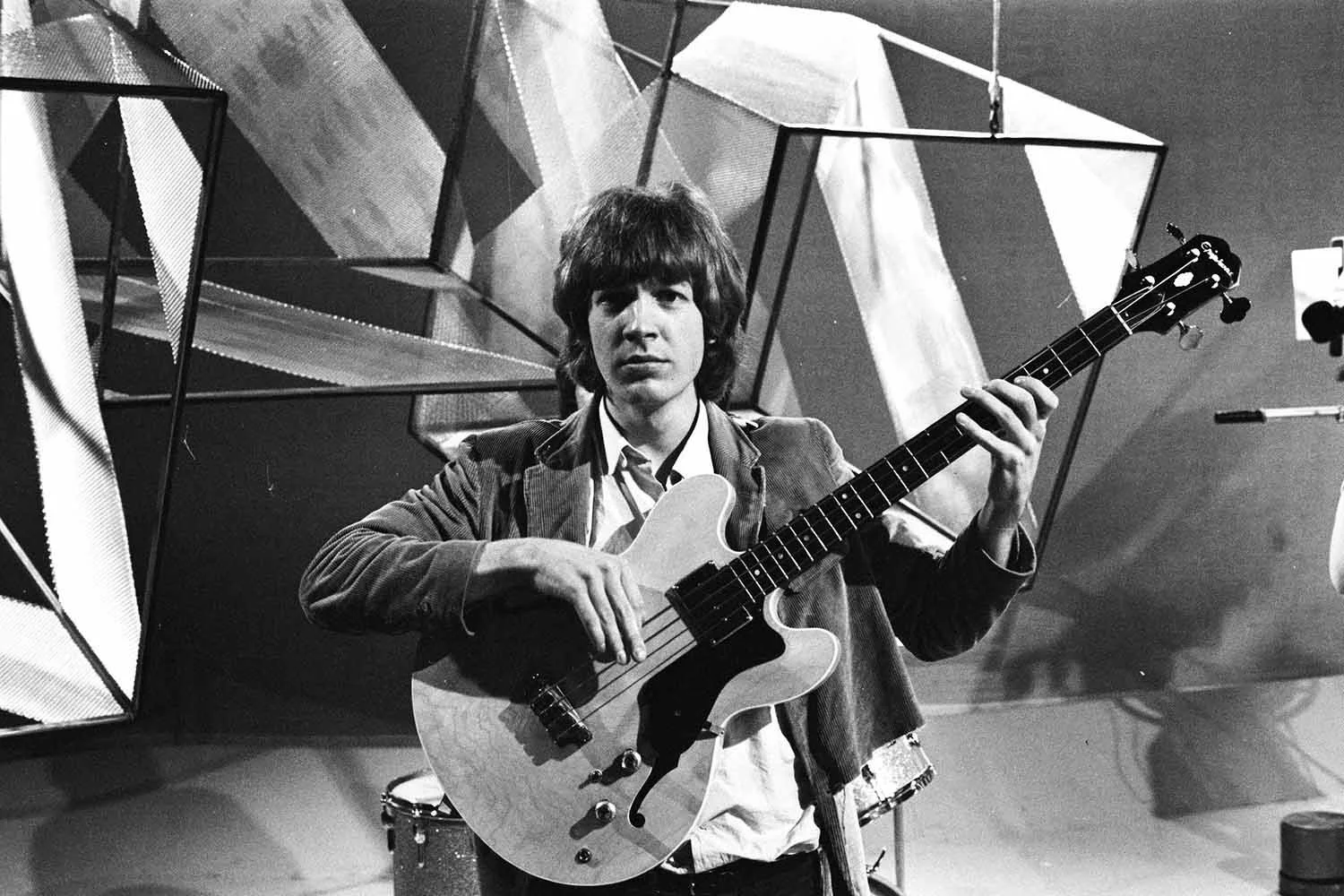
Scott Walker 1965. Photo by Stanley Bielecki