
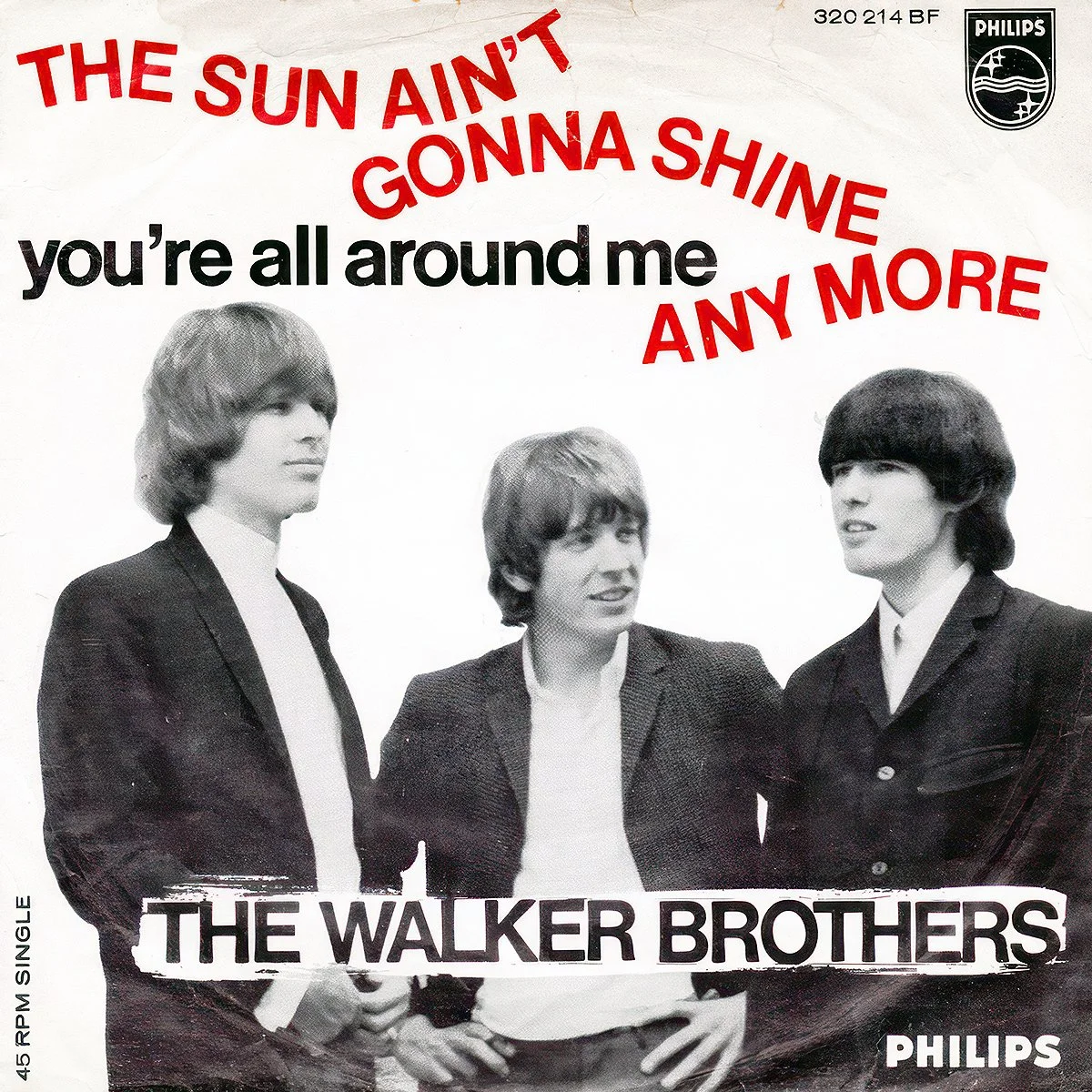
Netherlands Picture Sleeve: Philips 320 214 BF
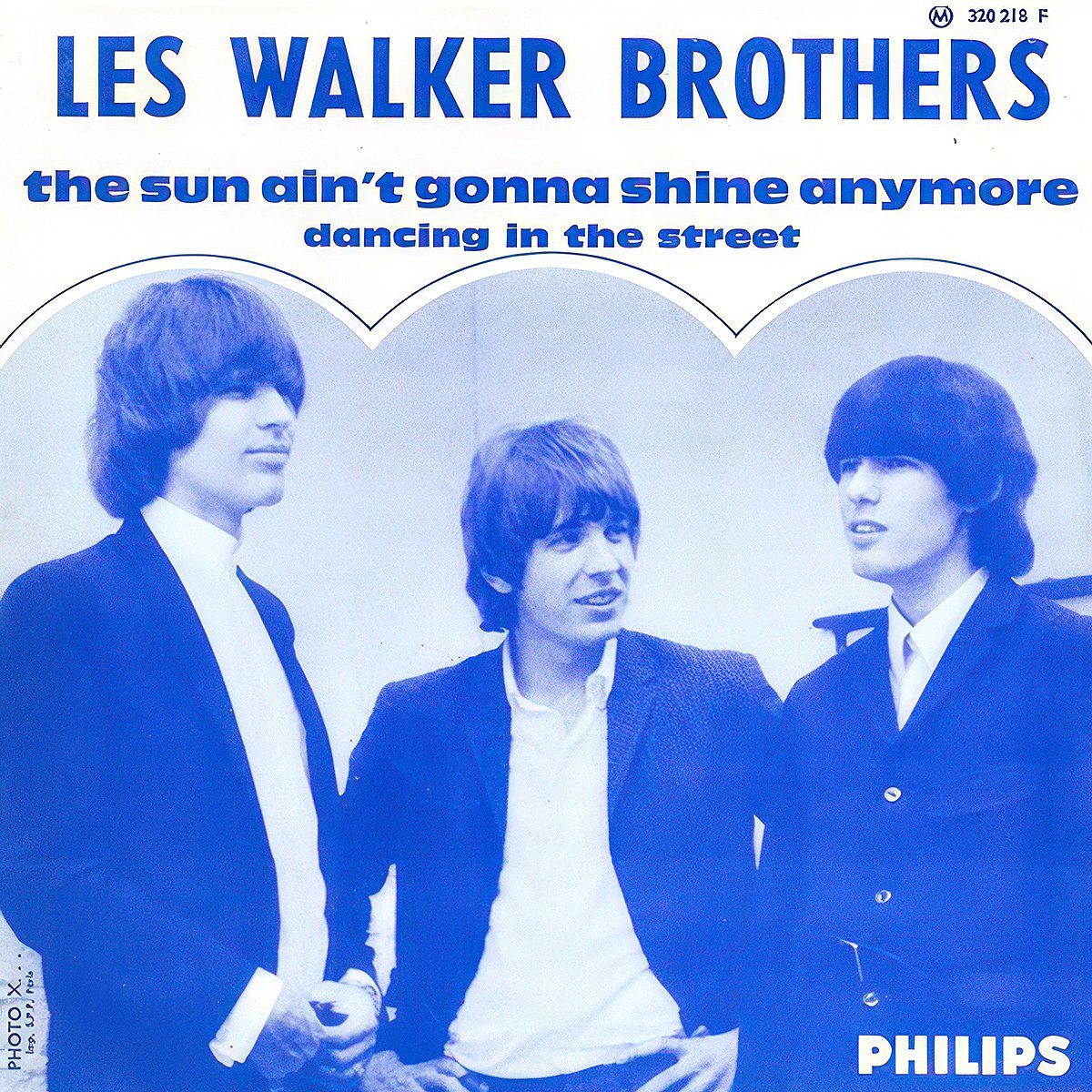
France Picture Sleeve: Philips B 320.218 F
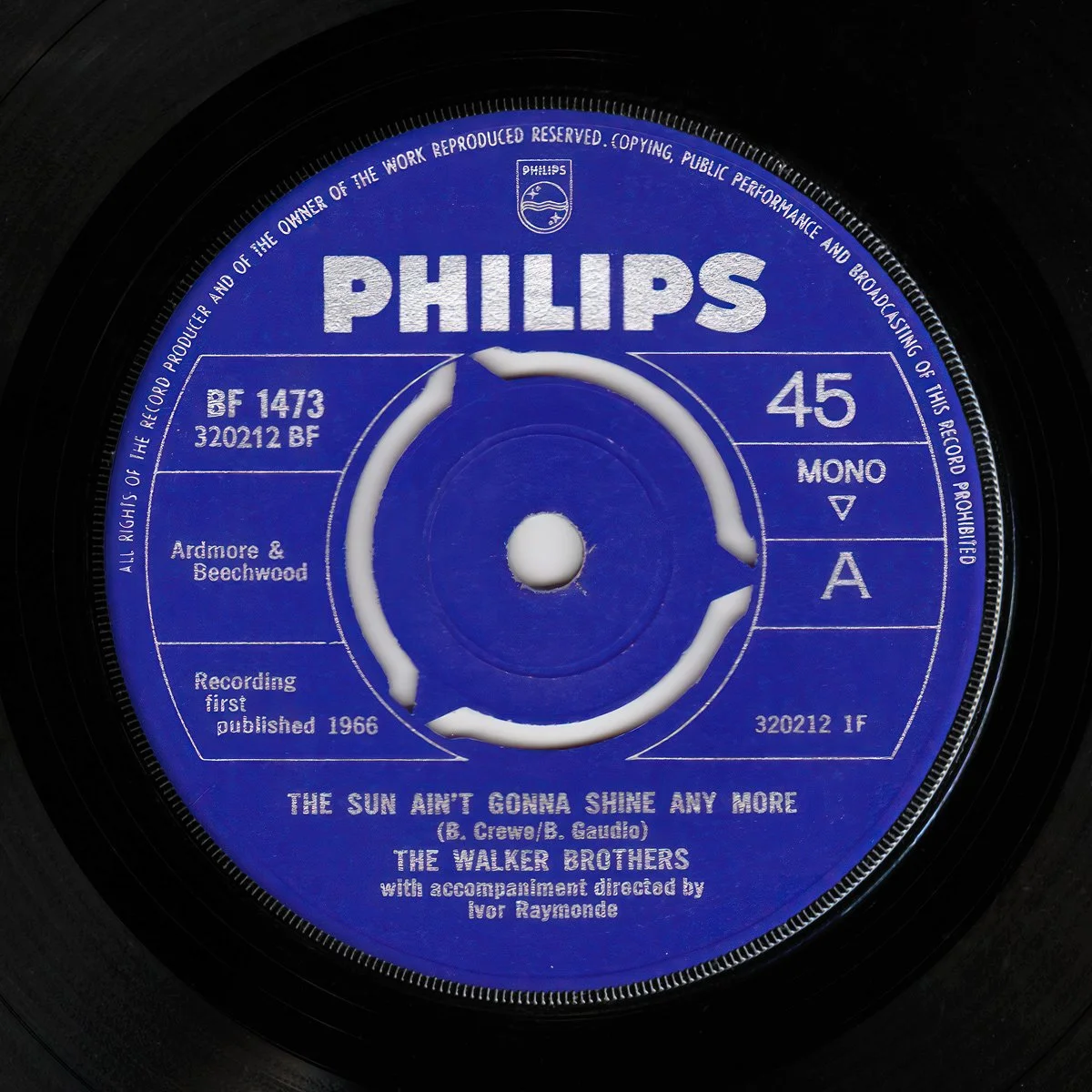
First UK Release: Philips BF 1473 / 320212 BF. Side A
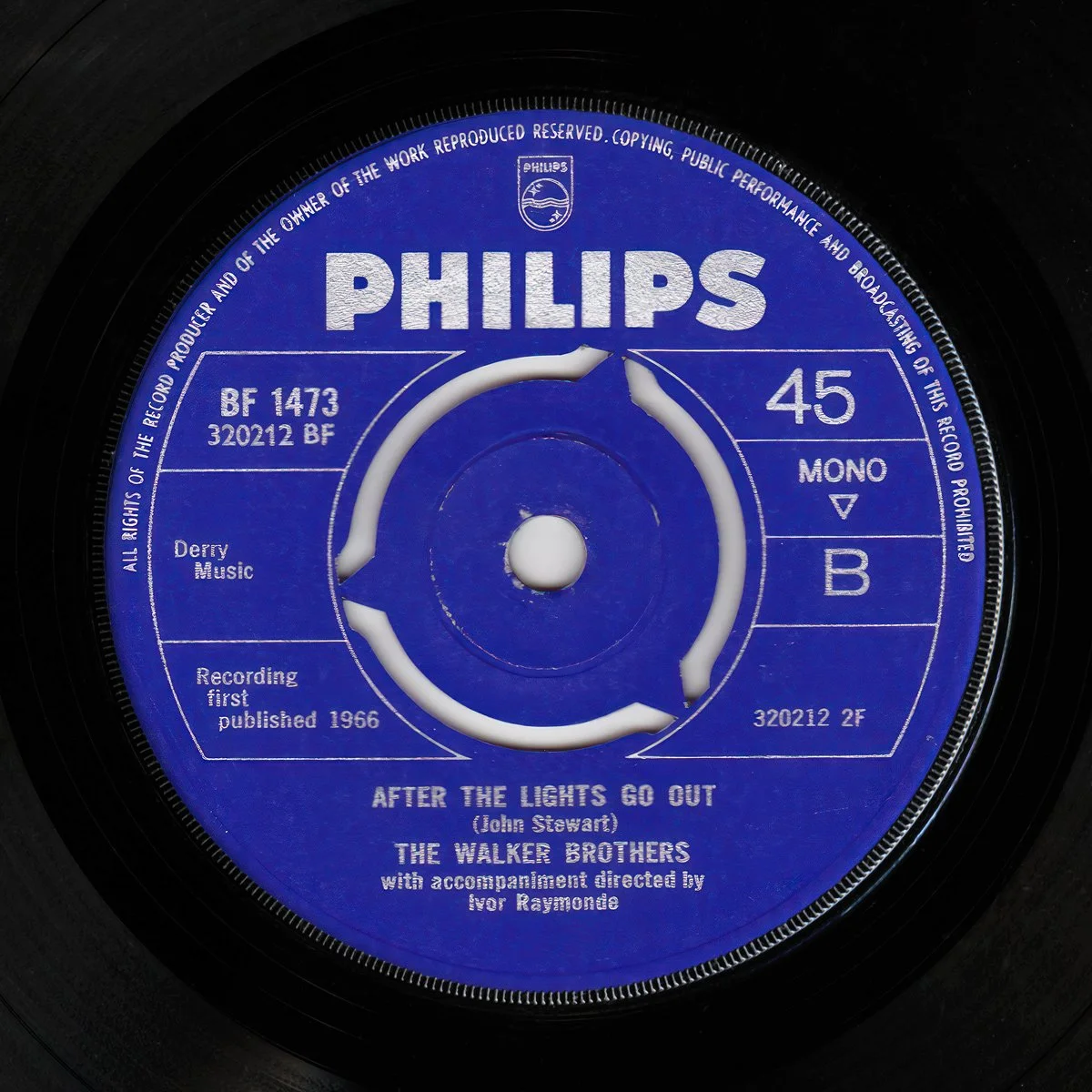
First UK Release: Philips BF 1473 / 320212 BF. Side B
A The Sun Ain't Gonna Shine Any More
B After The Lights Go Out
by The Walker Brothers
Released: February 26, 1966. Label: Philips
The Sun Ain’t Gonna Shine Any More is the Walker Brothers’ fifth single. Written by Frankie Valli and the Four Seasons members Bob Crewe and Bob Gaudio, whose previous credits included Big Girls Don’t Cry and Walk Like A Man, it was first released as a Frankie Valli solo single in 1965, reaching no 128 on the US charts.
“Loneliness is the cloak you wear/A deep shade of blue is always there,” its lyrics begin, against an expansive Ivor Raymonde orchestral arrangement, before Walker sings about how the movement of the sun and the moon have ceased. A promotional clip was released to TV to accompany the release, featuring the Walker Brothers singing in Millesgarden, an art museum and sculpture garden on Stockholm’s Lindingö island.
Produced by Johnny Franz, The Walker Brothers’ version became their biggest international hit single. It stayed at no. 1 on the UK Singles Chart for four weeks, above The Hollies’ I Can’t Let Go and The Yardbirds’ Shape Of Things, and stayed in the top 40 for eleven weeks. It also reached no. 13 in the US Billboard charts, becoming their biggest hit single in their home country, and a top ten hit in Canada, Ireland, the Netherlands, Norway, Germany and New Zealand.
“It’s good to have it all to ourselves at the No. 1 spot this week,” Scott Walker said to the NME’s Keith Altham in March. “[But] I’m not crazy about doing records on stage, I think it’s a bit too much to just go on and do your latest record but people seem to expect it so what can you do?
The B-side, After The Lights Go Out, was written by American singer-songwriter John Stewart, who wrote Daydream Believer for the Monkees a year later.
Credits
A. The Sun Ain't Gonna Shine Any More 3:17
Written By Bob Crewe, Bob Gaudio
Arranger Ivor Raymonde
Producer Johnny Franz
B. After the Lights Go Out 4:01
Written By John Stewart
Arranger Ivor Raymonde
Producer Johnny Franz
Notes from Impossible Dream:
The story of Scott Walker and the Walker Brothers
by Anthony Reynolds
“From what I ascertained, or ‘Sussed ’as it were, Johnny and Scott always seemed to be very friendly and very collaborative.
I’m sure Scott had a lot of respect and admiration for Johnny, he was a very experienced man, you know, he was a producer of a hell of a lot of big artists, you know, there is no hiding from experience. Johnny was a lovely man, actually… and a real producer.”
Guitarist Alan Parker
The incongruous looking duo of Engel and Franz would soon both be working together obsessively and socializing - mixing business and pleasure.
They dined together frequently either at their favourite local Chinese restaurant, ‘The Lotus House’ on Edgware road, and at Franz’s impressive residence near Hampstead Heath, which the producer shared with his wife, Moira. Engel and Franz were both obsessed and possessed by music and clearly enjoyed each other’s company and talent, discussing arrangements, writing songs and playing standards together just for the thrill of it all.
Scott told the journalist Joe Jackson in 1995 “Johnny Franz was old school. A great piano player for singers… He played for Tony Bennett… everyone. A great man combined with Rock’n’Roll players and a young engineer (Oliff)... it was wonderful to be with him.”
As head of A&R, Franz had a baby grand in his office. Quite often sessions would be delayed as Scott and Franz ran through the classic American songbook. Gary would often sit in as a one-man audience making requests.
“I’d be there, giving ‘em the most obscure numbers I could think of – you know, old standards and such and I couldn’t catch em out - they knew ‘em all!”
The resident engineer at Stanhope place was at this time Franz’s ‘number two’, Peter Oliff, a diminutive man who while at the sound desk, was perched somewhere between Franz and Wake.
Recalling Franz’s right hand man to some decades later, Scott’s comments would provide an insight to what could arguably be thought of as the parallel, if invisible Walker Brothers. A trio consisting of himself, Franz and Oliff.
“(Oliff) was a great engineer” says Scott “and he’d been doing Dusty Springfield and all those people. But although he had a wonderful idea of what a new sound could be he couldn’t quite get it. So I knew what was happening at the bottom end and that’s what made it complete. What Spector did was use two bass, an upright, and an electric. Then he used two or three keyboards playing the same thing. One would be an upright piano and the other a harpsichord. Then he used two, three maybe four guitars. Whereas Peter was just using the basic guitar, bass drums set up with two drummers sometimes.
Johnny Franz could read music whereas Spector couldn’t.”
The Sun Ain’t Gonna Shine Anymore
Mimed promo video (filmed at Millesgarden Museum, Stockholm)
The Sun Ain’t Gonna Shine Anymore
Unused B-Roll Footage
Does he think pop is essentially fake? Not necessarily, he says. “There can be great purity in pop music. You hit certain moments when you can get a great single. The Sun Ain't Gonna Shine Anymore was for that time a great pop single, and it had a lot of beauty in it.”
The Guardian, 23 November 2012
by Simon Hattenstone
He talks about his love of Jaques Brel, jazz, European cinema and London fog and reveals how The Sun Ain’t Gonna Shine (Anymore) was nearly a disaster. The band had to record four songs in a three-hour session and the studio rules were rigid – second chances were not allowed.
He knew the song would be a big hit but admitted: “The fixer who fixed that session, and it didn’t happen often, hired a really deaf guitar player who had to play the intro and it just wasn’t happening. I demanded that we re-record that and we recorded it again with all the right guys.”
The Guardian, 21 June 2017
by Mark Brown
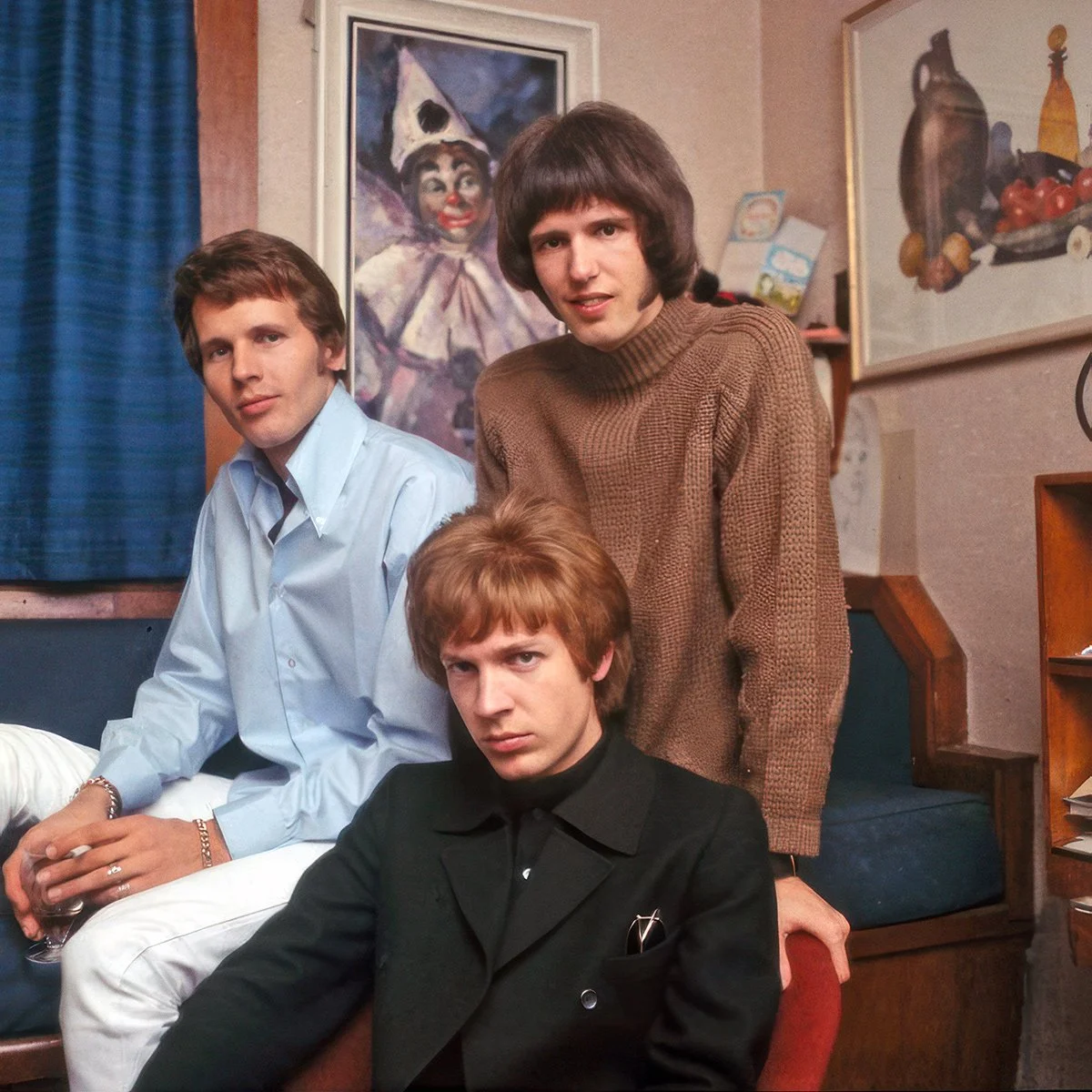
The Walker Brothers 1966. Photo by Tony Gale