
Exploring Scott Walker’s Meltdown Festival, 2000
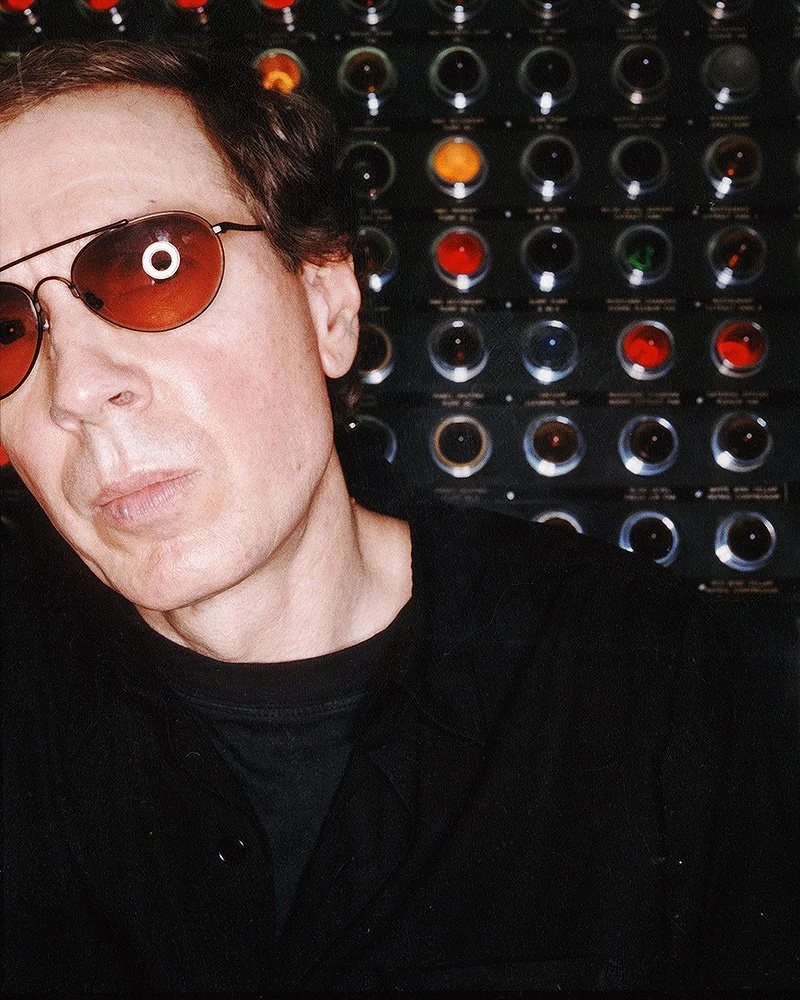
Photo by © Rankin
David Sefton, Meltdown founder and programmer, who commissioned Scott to direct the Festival, recounting his experience working with him
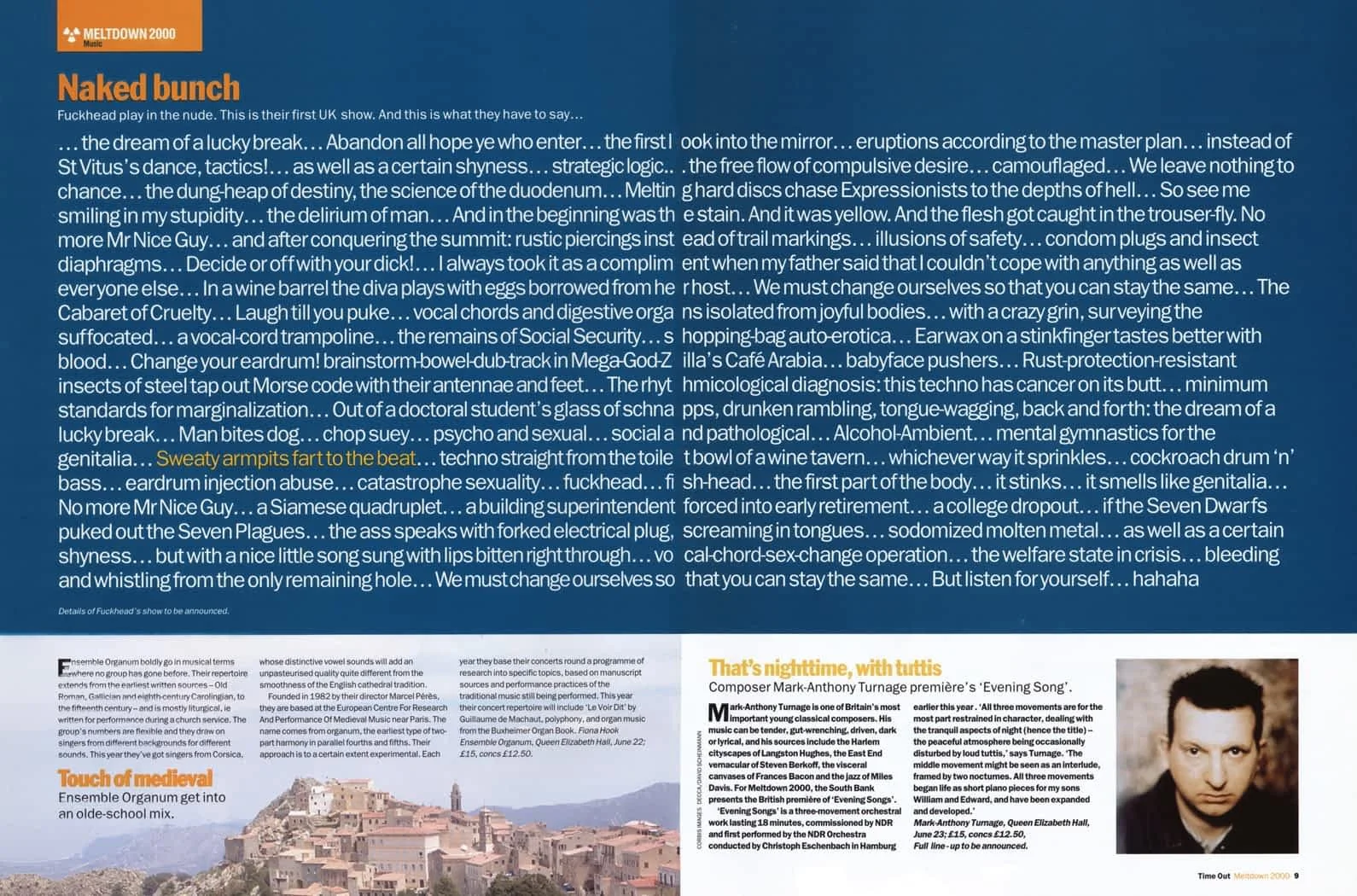
Scott was actually the first artist I asked to direct Meltdown. I’d check-in with his management about once a year. About five years later, they called me to say Scott wanted to meet. Turned out he’d been keeping an eye on the festival and was interested. I came to realise this was very much his personality – to consider and to be incredibly well informed and to take his own time making his mind up. Scott was insanely up to speed on everything cultural and every single decision in his Meltdown – from Hanna Schygulla to Fuckhead – was very much his own.
He was an utter joy to work with – smart, funny, personable and not at all the eccentric recluse of public mythology. Although he certainly didn’t go out much – he actually came to my leaving party from the Southbank Centre and walked through the door with the immortal line, “You know, this is the first party I’ve been to in 35 years.” His Meltdown was impeccable and I couldn’t have asked for a better one to leave on.
Guardian March 2019
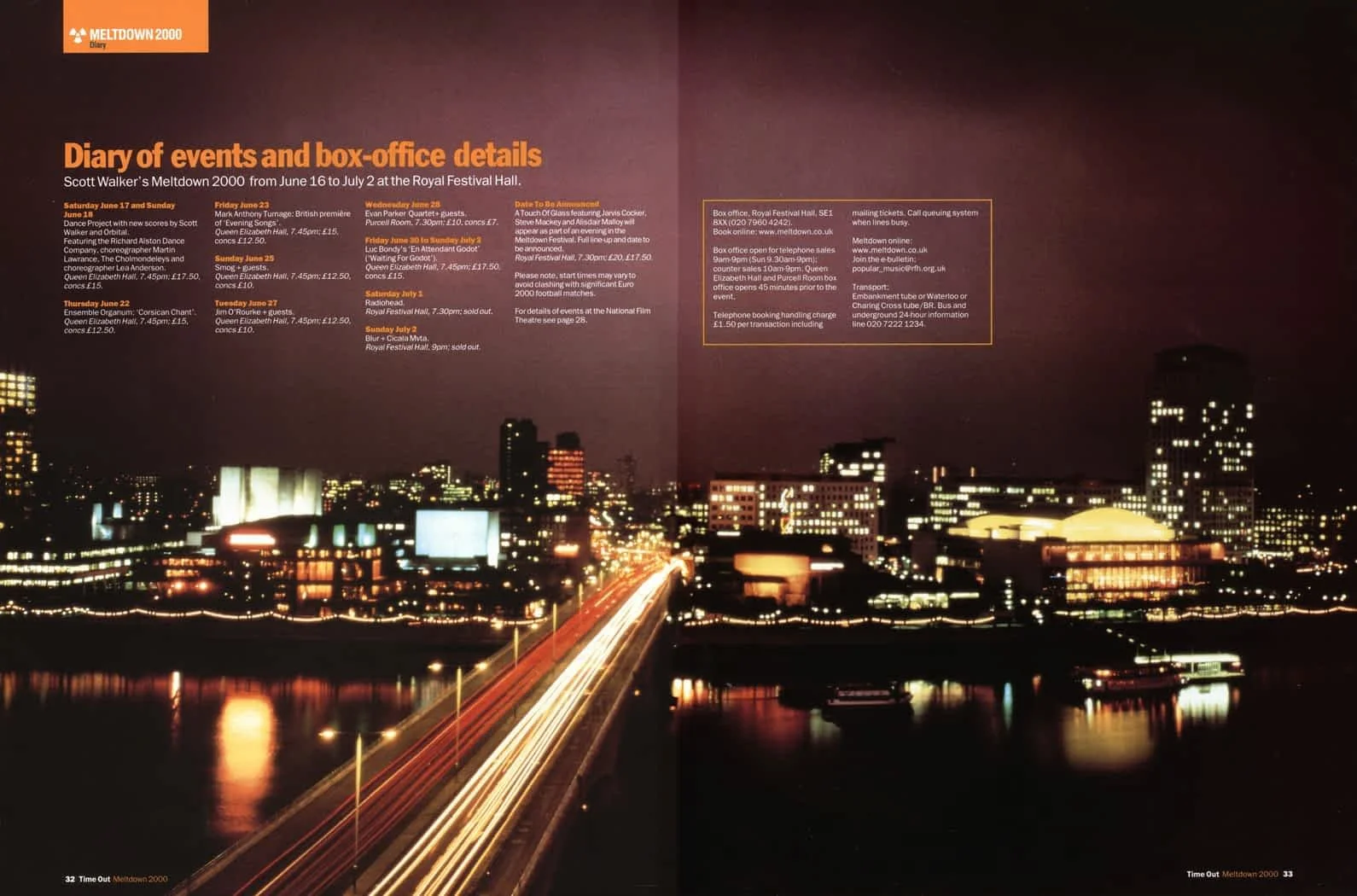
Scott Walker's Meltdown 2000 from June 16 to July 2 at the Royal Festival Hall.
Diary of events
Saturday June 17 and Sunday June 18
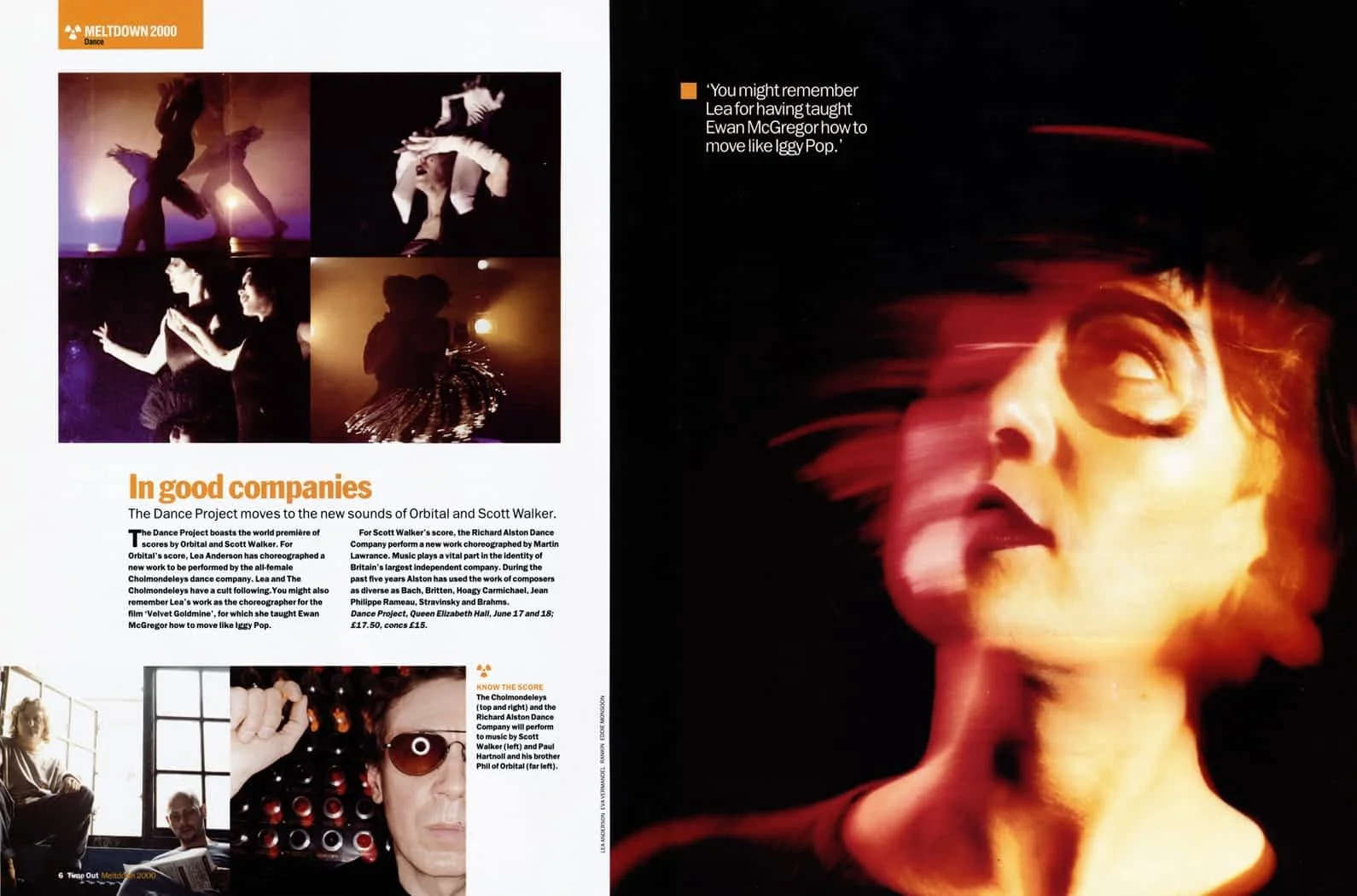
Dance Project with new scores by Scott Walker and Orbital.
Featuring the Richard Alston Dance Company, choreographer Martin Lawrance, The Cholmondeleys and choreographer Lea Anderson.
Queen Elizabeth Hall
Wednesday June 21
Elliott Smith
Royal Festival Hall
Thursday June 22
Ensemble Organum: 'Corsican Chant'.
Queen Elizabeth Hall
Friday June 23
Mark Anthony Turnage: British première of 'Evening Songs'.
Queen Elizabeth Hall
Sunday June 25
Smog+guests.
Queen Elizabeth Hall
Tuesday June 27
Jim O'Rourke + guests
Queen Elizabeth Hall
Wednesday June 28
Evan Parker Quartet+ guests.
Purcell Room
Friday June 30 to Sunday July 2
Luc Bondy's 'En Attendant Godot' ('Waiting For Godot')
Queen Elizabeth Hall
Saturday July 1
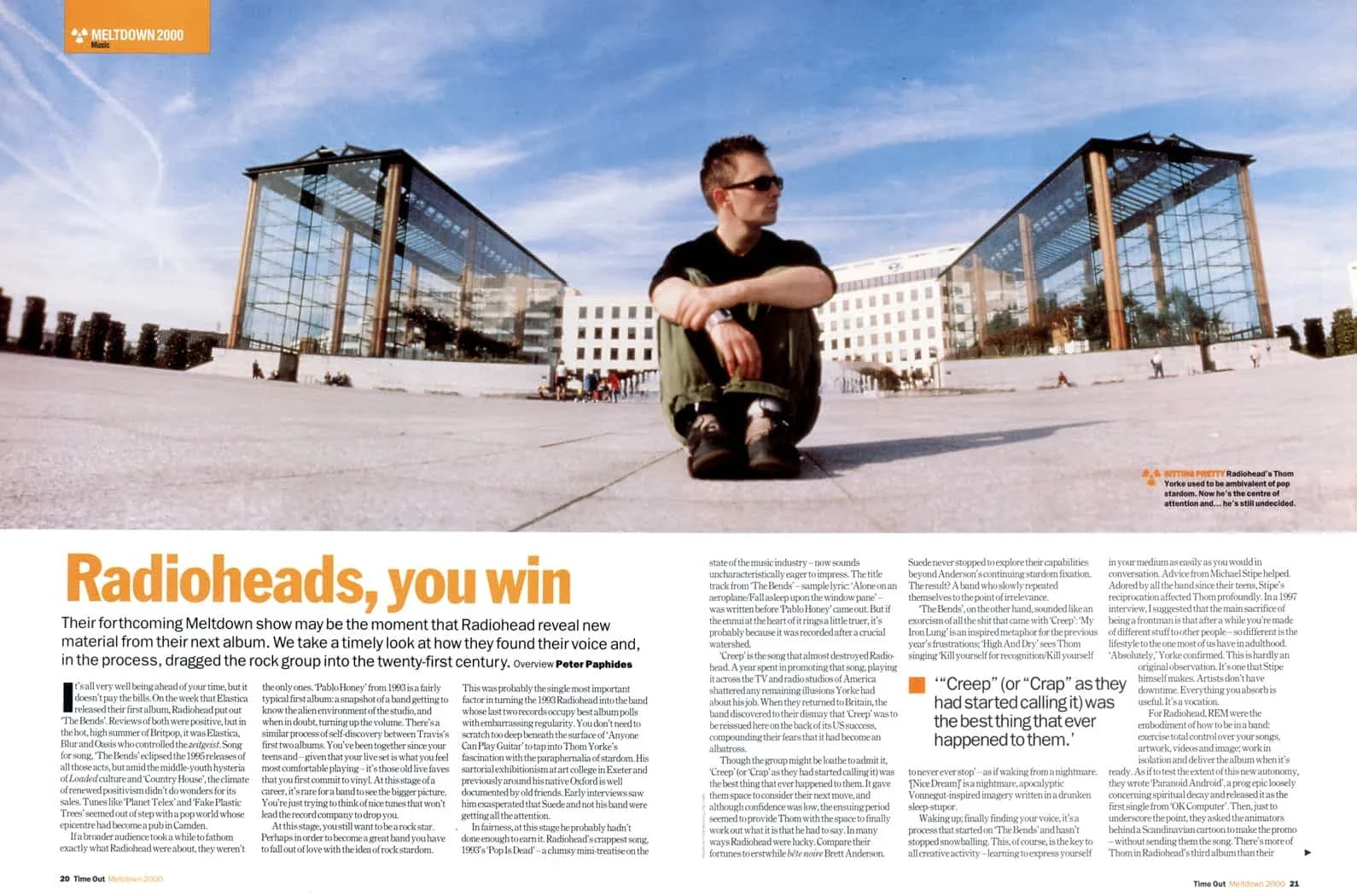
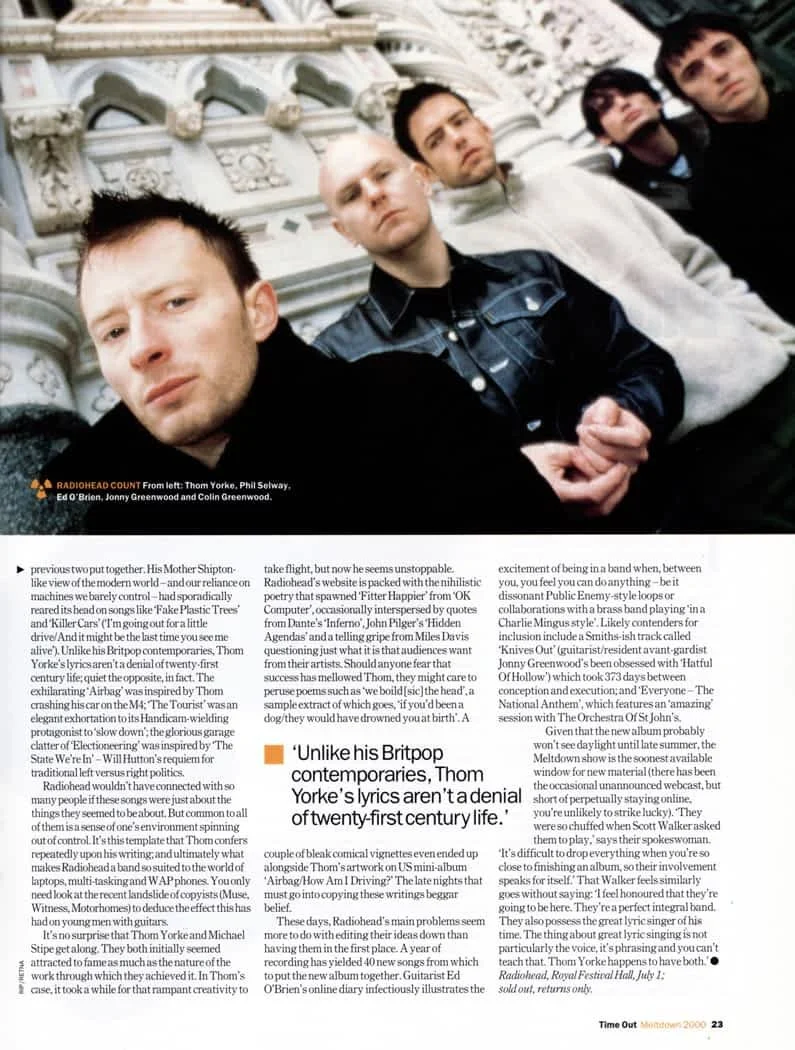
Radiohead
Royal Festival Hall
Sunday July 2
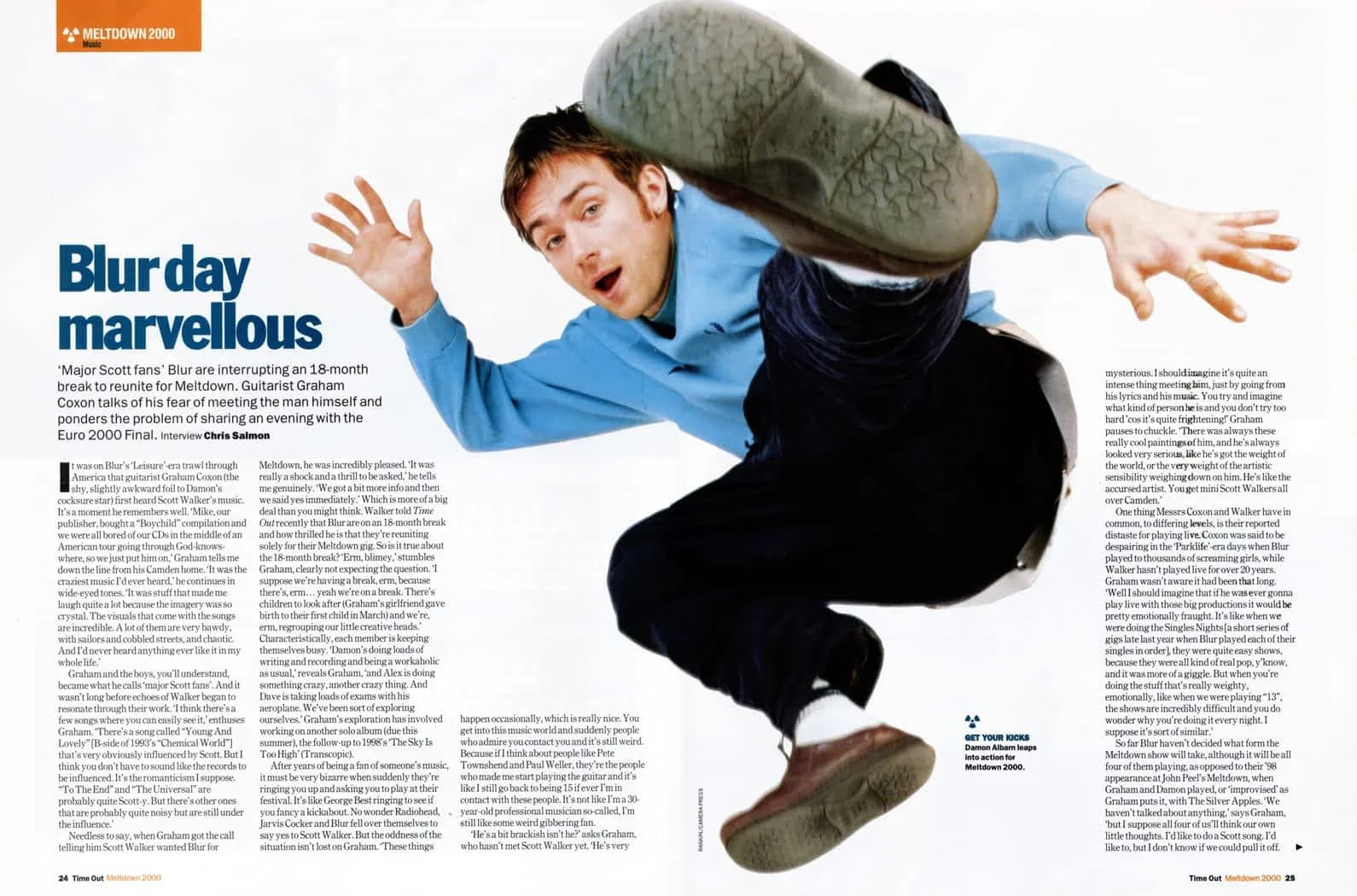
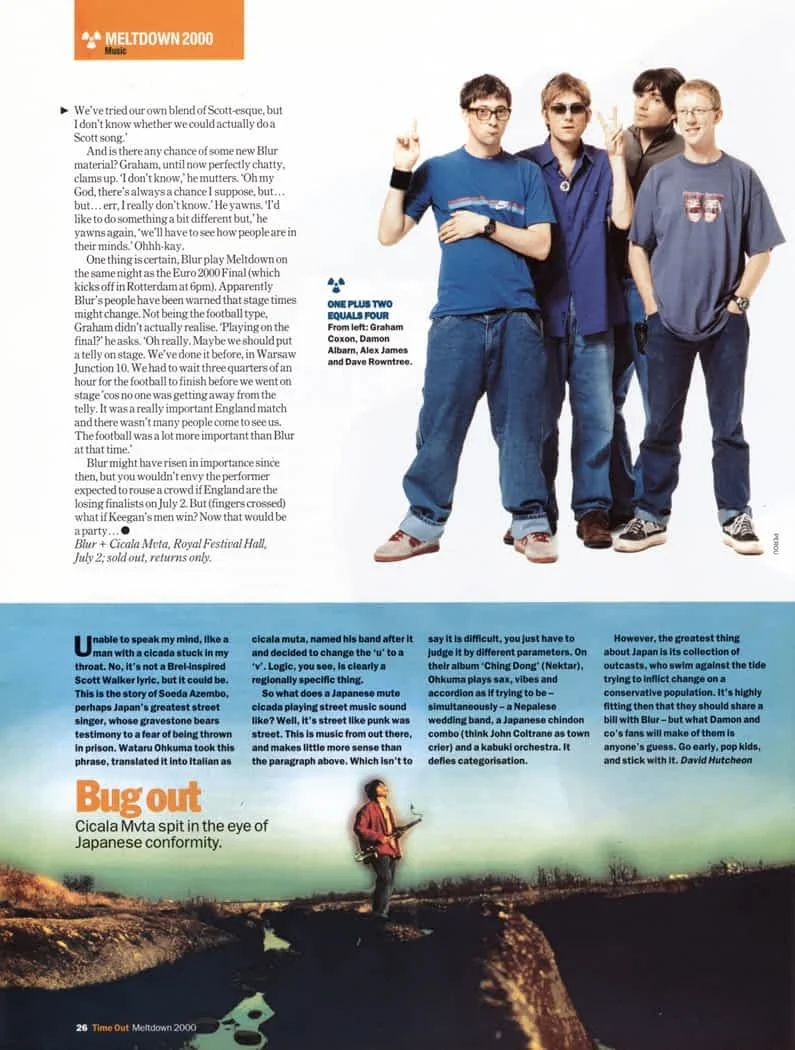
Blur + Cicala Mvta
Royal Festival Hall
Sunday June 25
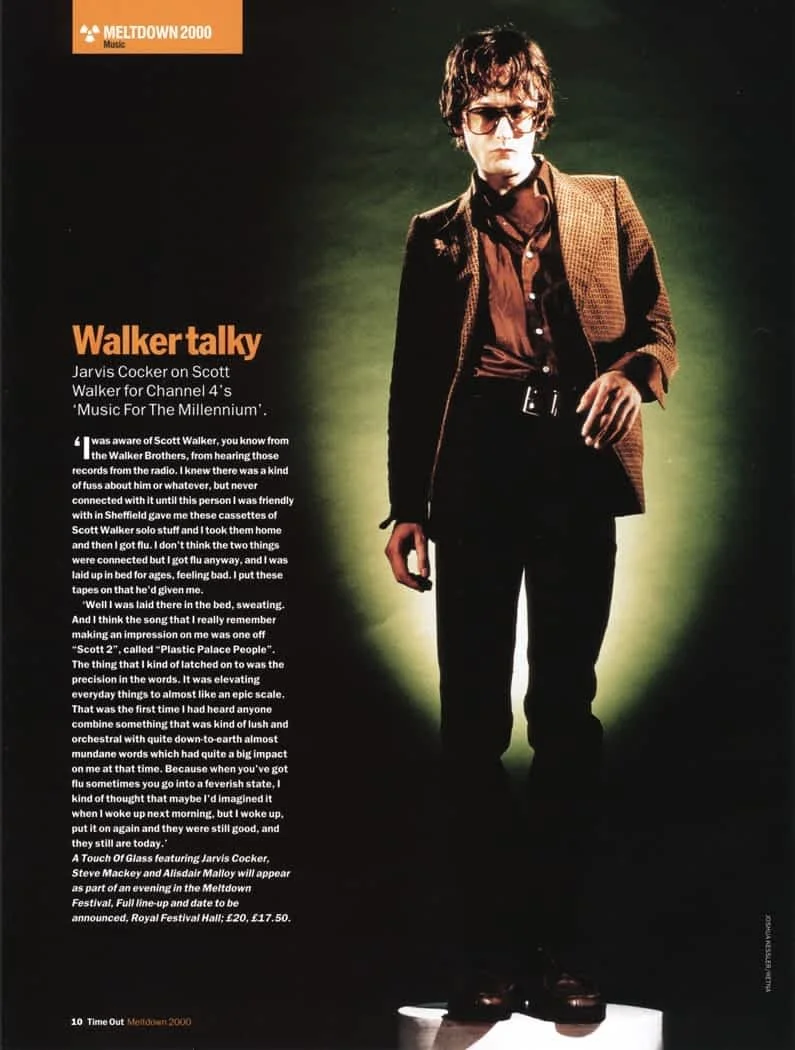
A Touch Of Glass
Featuring Jarvis Cocker, Steve Mackey and Alisdair Malloy will appear as part of an evening in the Meltdown Festival
Royal Festival Hall
Photos by © Rankin
Thimble Rigging - Meltdown 2000
Vocals: Eliizabeth Fraser
Music: Scott Walker
Dance: Richard Alston Dance Company choregraphed by Martin Lawrence
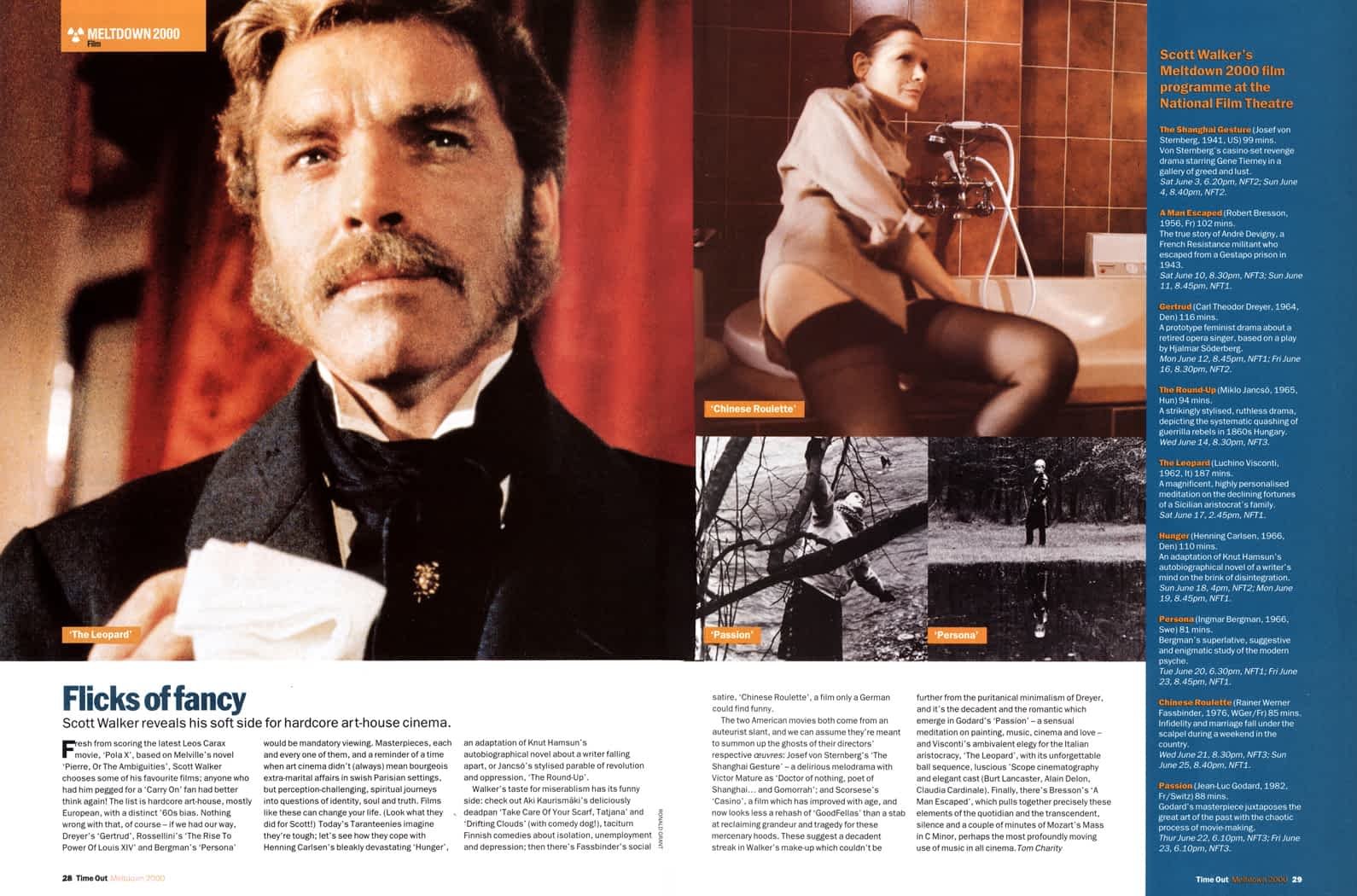
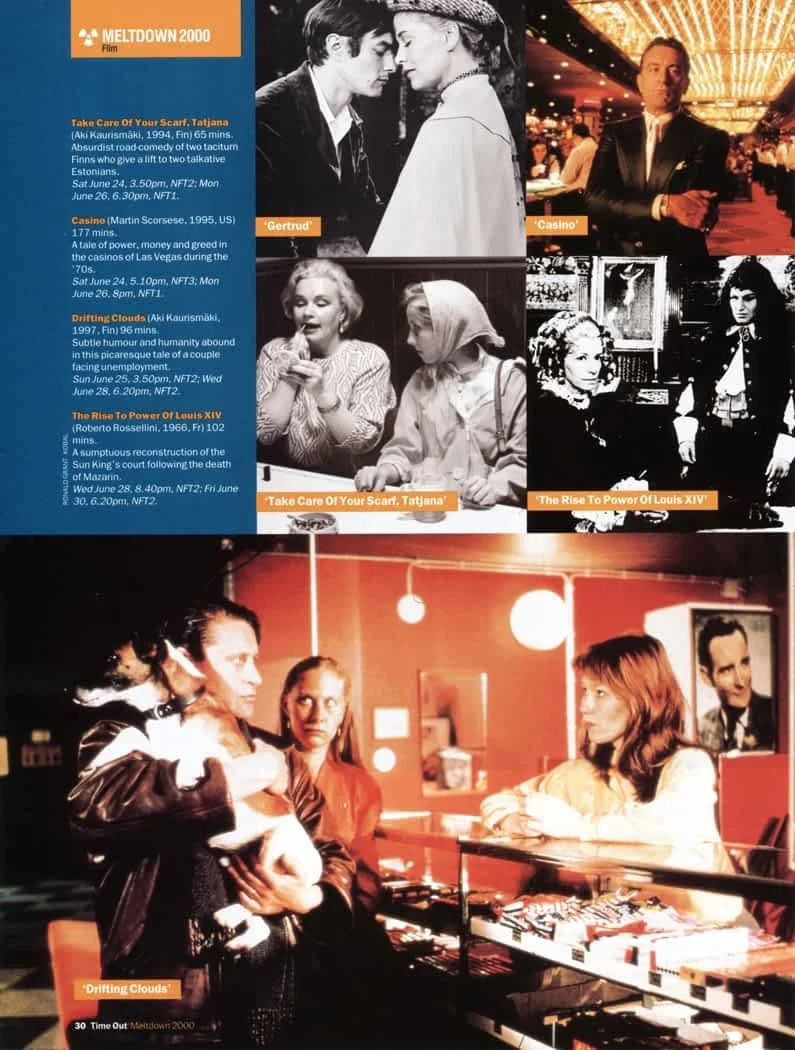
Scott Walker's Meltdown 2000 film programme at the National Film Theatre
The Shanghai Gesture (Josef von Sternberg, 1941, US) 99 mins.
Von Sternberg's casino-set revenge drama starring Gene Tierney in a gallery of greed and lust.
A Man Escaped (Robert Bresson, 1956, Fr) 102 mins.
The true story of André Devigny, a French Resistance militant who escaped from a Gestapo prison in 1943.
Gertrud (Carl Theodor Dreyer, 1964, Den) 116 mins.
A prototype feminist drama about a retired opera singer, based on a play by Hjalmar Söderberg.
The Round-Up (Miklo Jancsó, 1965, Hun) 94 mins.
A strikingly stylised, ruthless drama, depicting the systematic quashing of guerrilla rebels in 1860s Hungary.
The Leopard (Luchino Visconti, 1962, It) 187 mins.
A magnificent, highly personalised meditation on the declining fortunes of a Sicilian aristocrat's family.
Hunger (Henning Carlsen, 1966, Den) 110 mins.
An adaptation of Knut Hamsun's autobiographical novel of a writer's mind on the brink of disintegration.
Persona (Ingmar Bergman, 1966, Swe) 81 mins.
Bergman's superlative, suggestive and enigmatic study of the modern psyche.
Chinese Roulette (Rainer Werner Fassbinder, 1976, WGer/Fr) 85 mins.
Infidelity and marriage fall under the scalpel during a weekend in the country.
Passion (Jean-Luc Godard, 1982, Fr/Switz) 88 mins.
Godard's masterpiece juxtaposes the great art of the past with the chaotic process of movie-making.
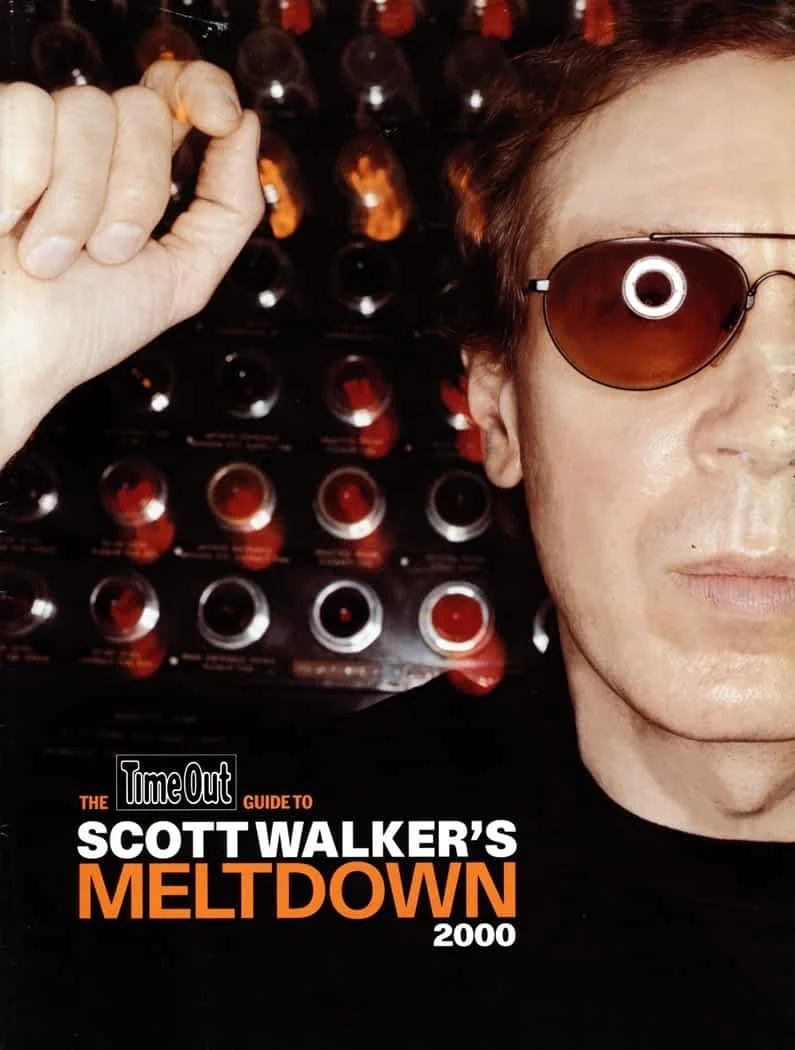
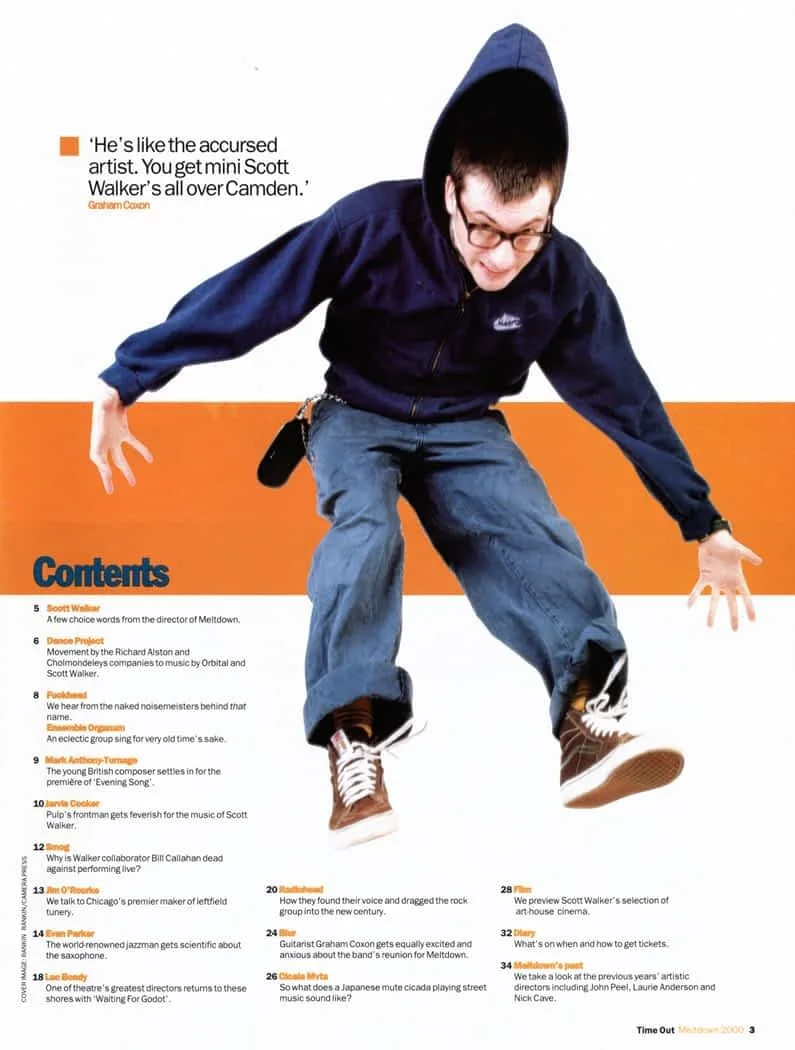
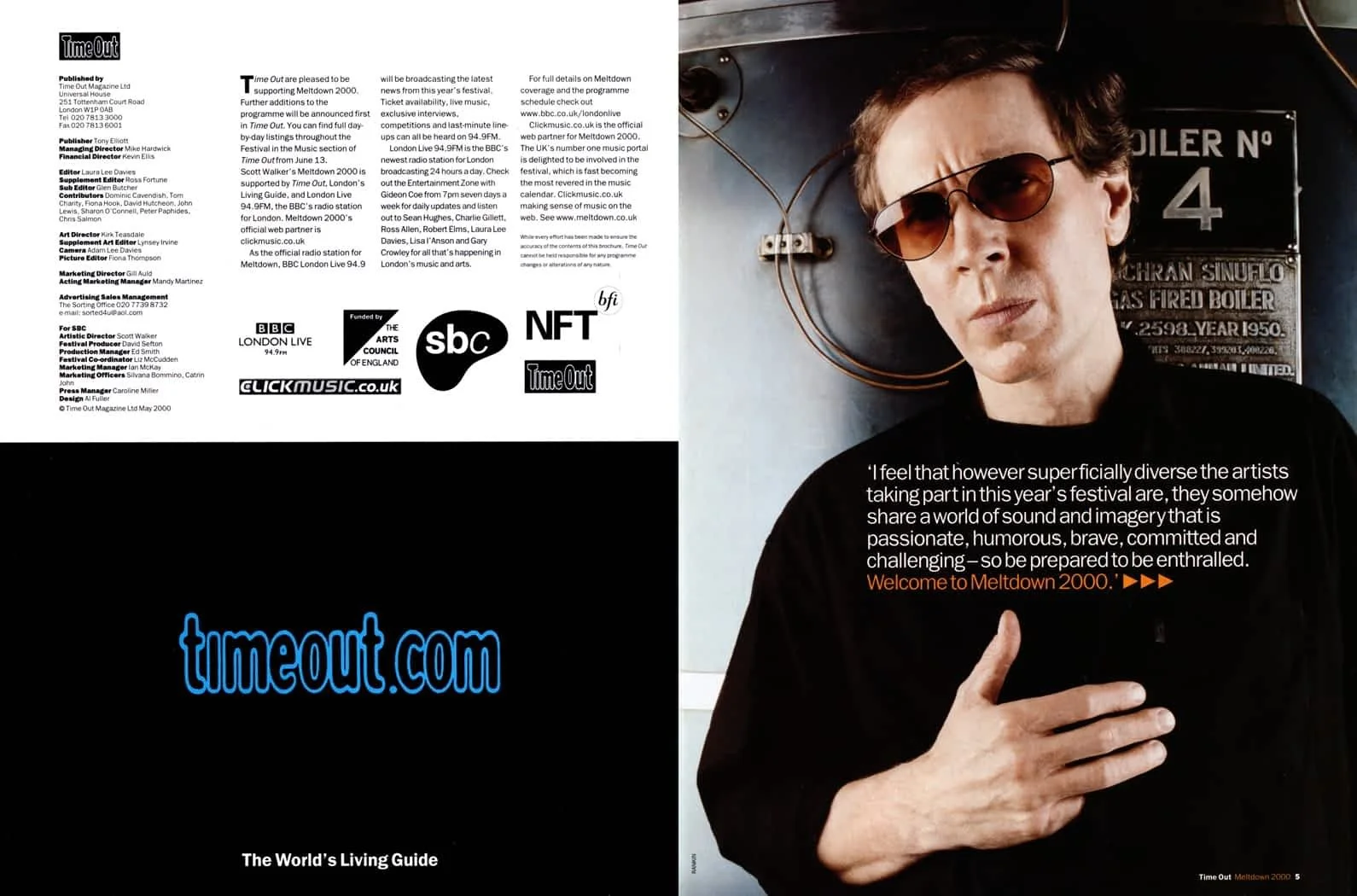
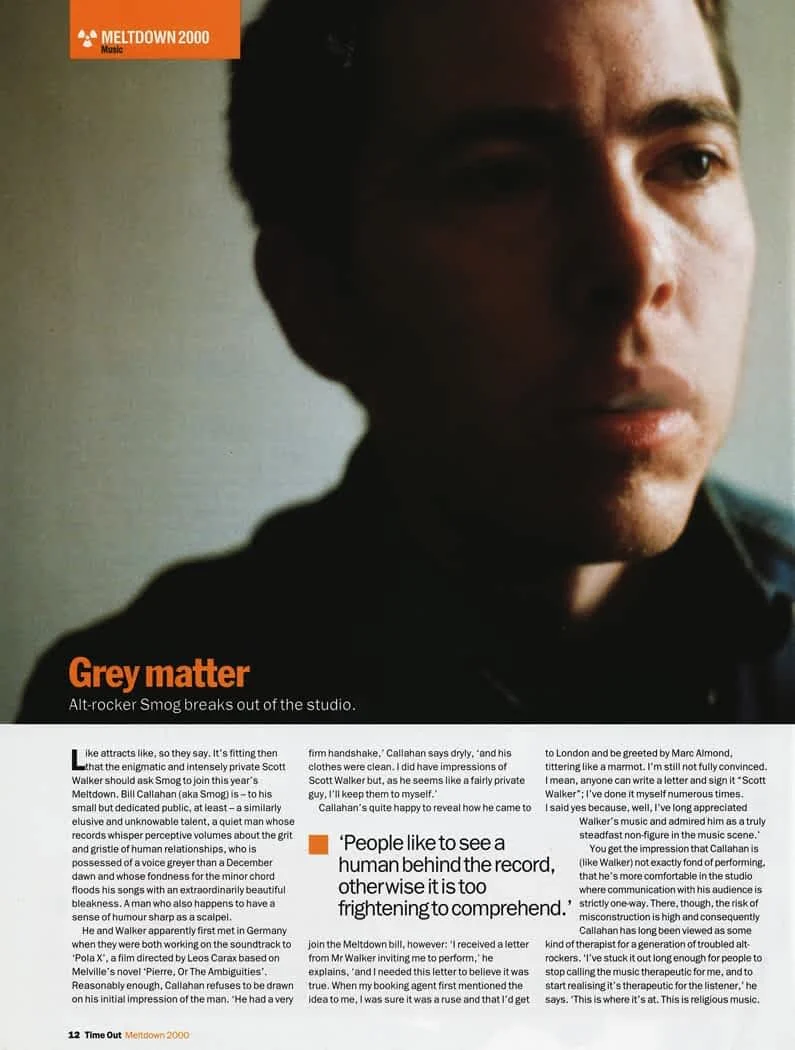
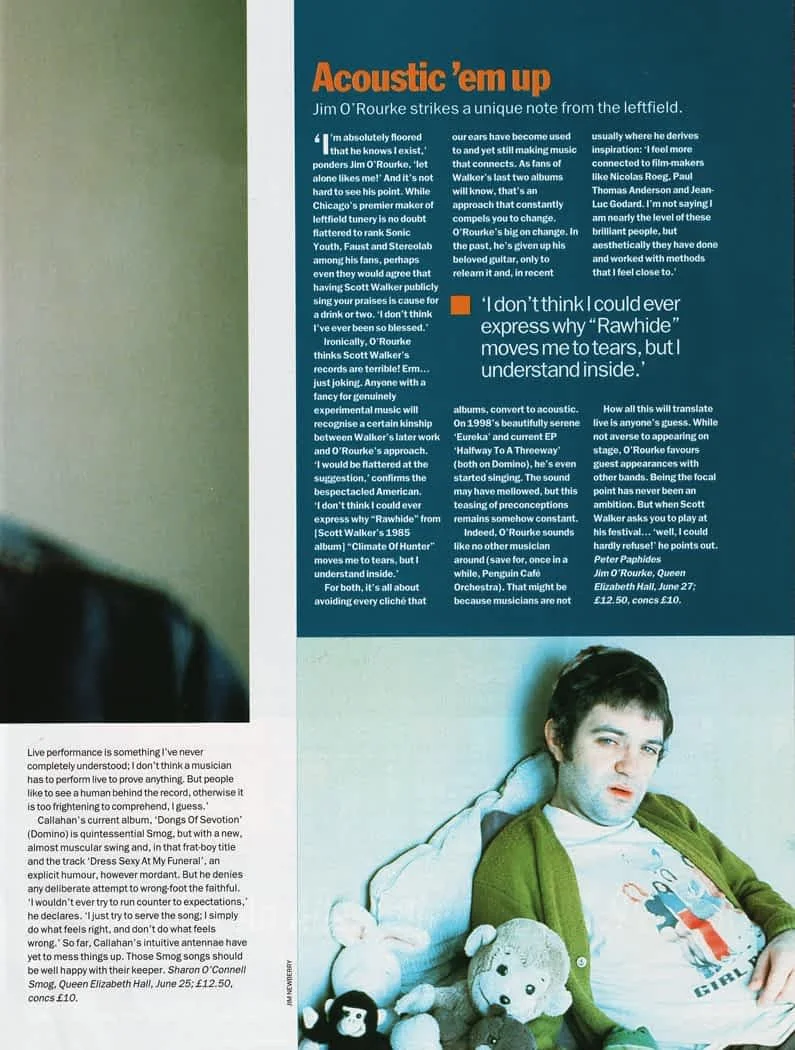
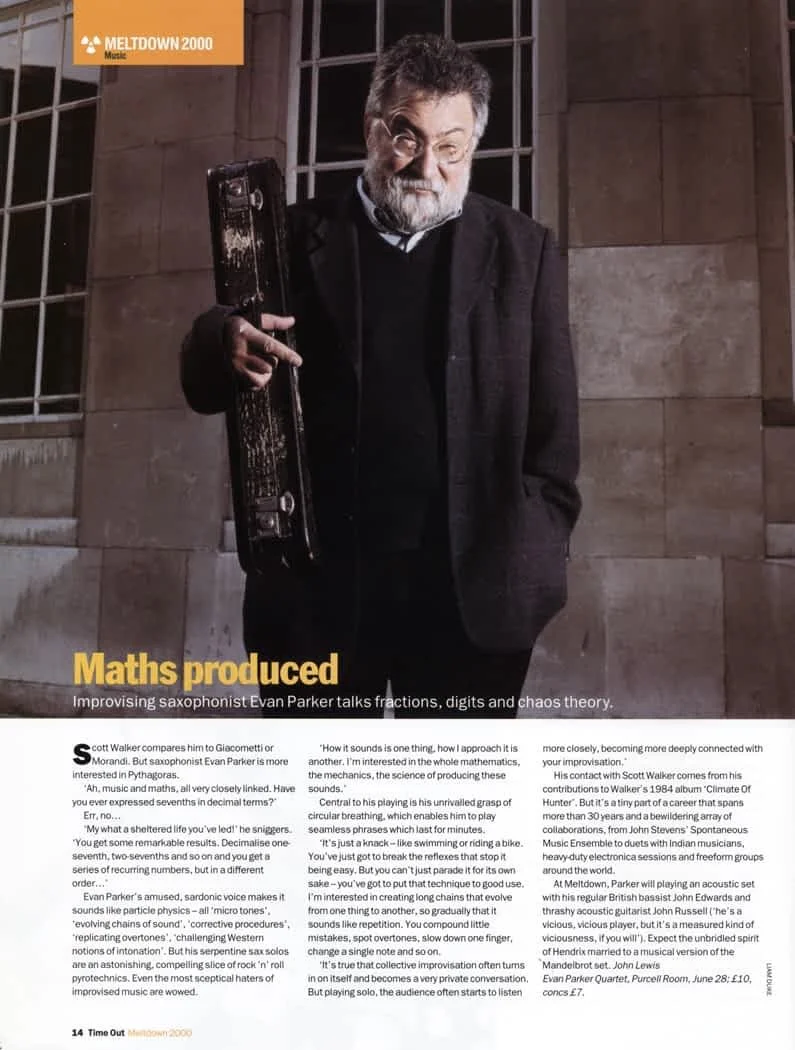
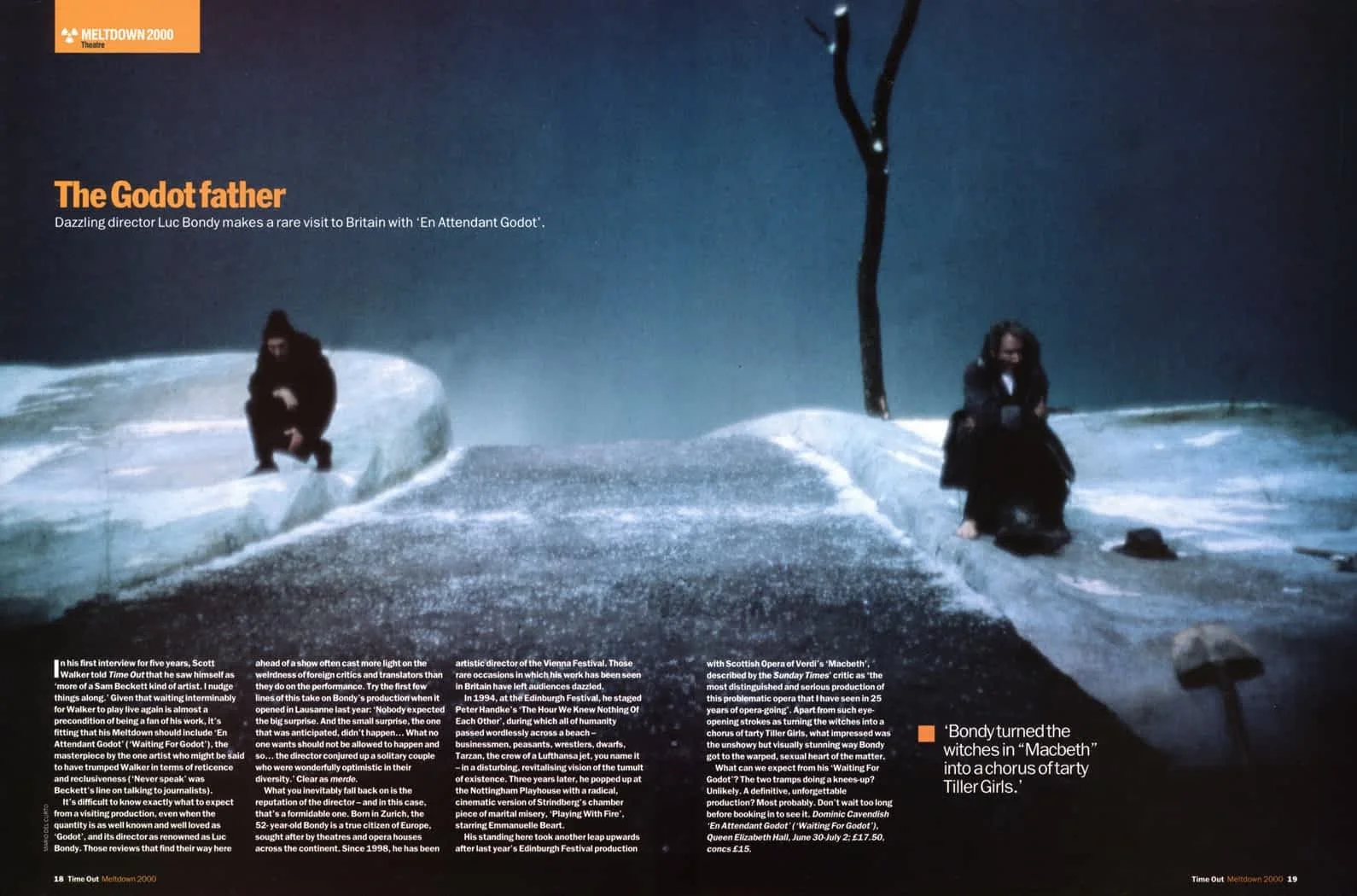
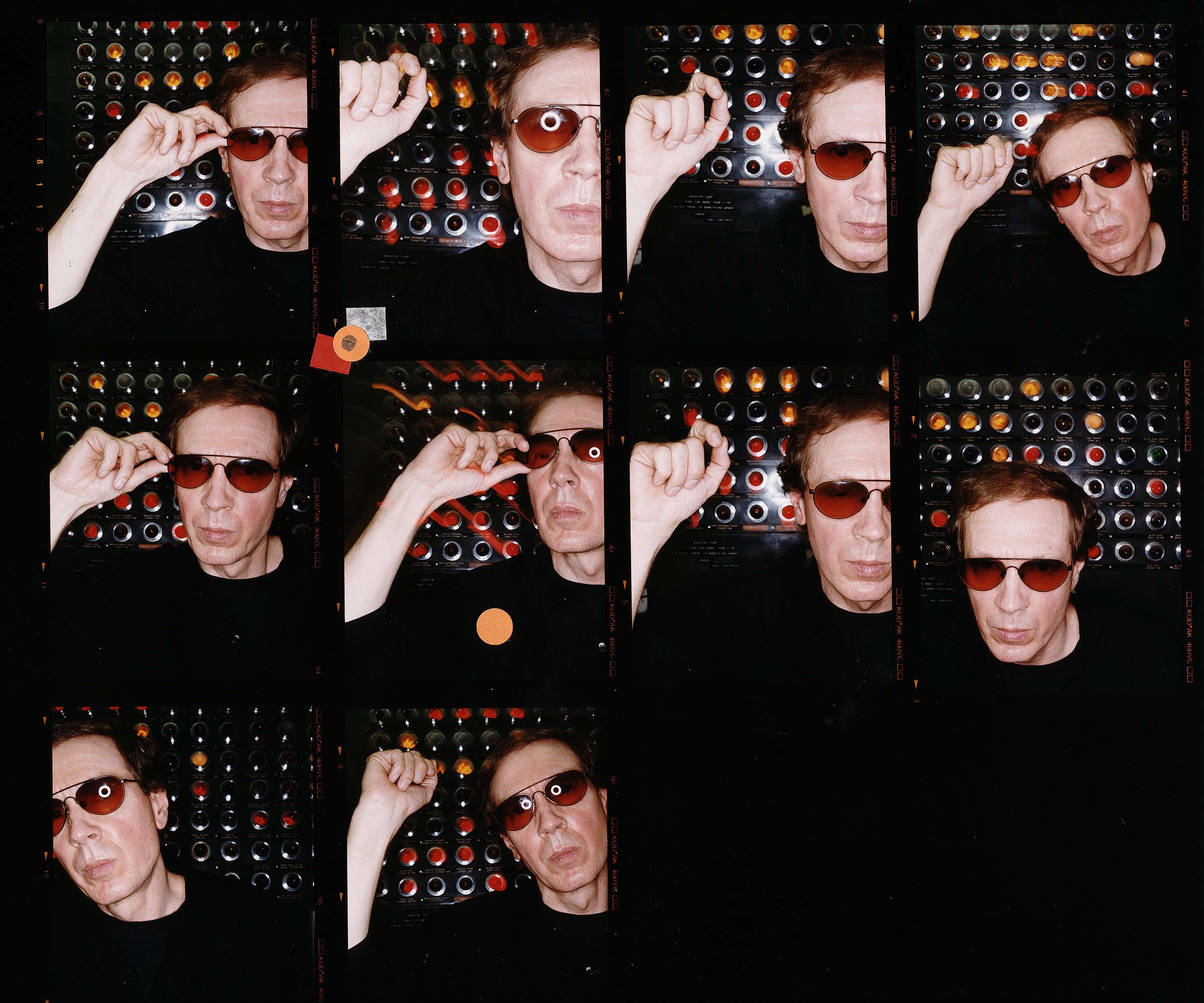
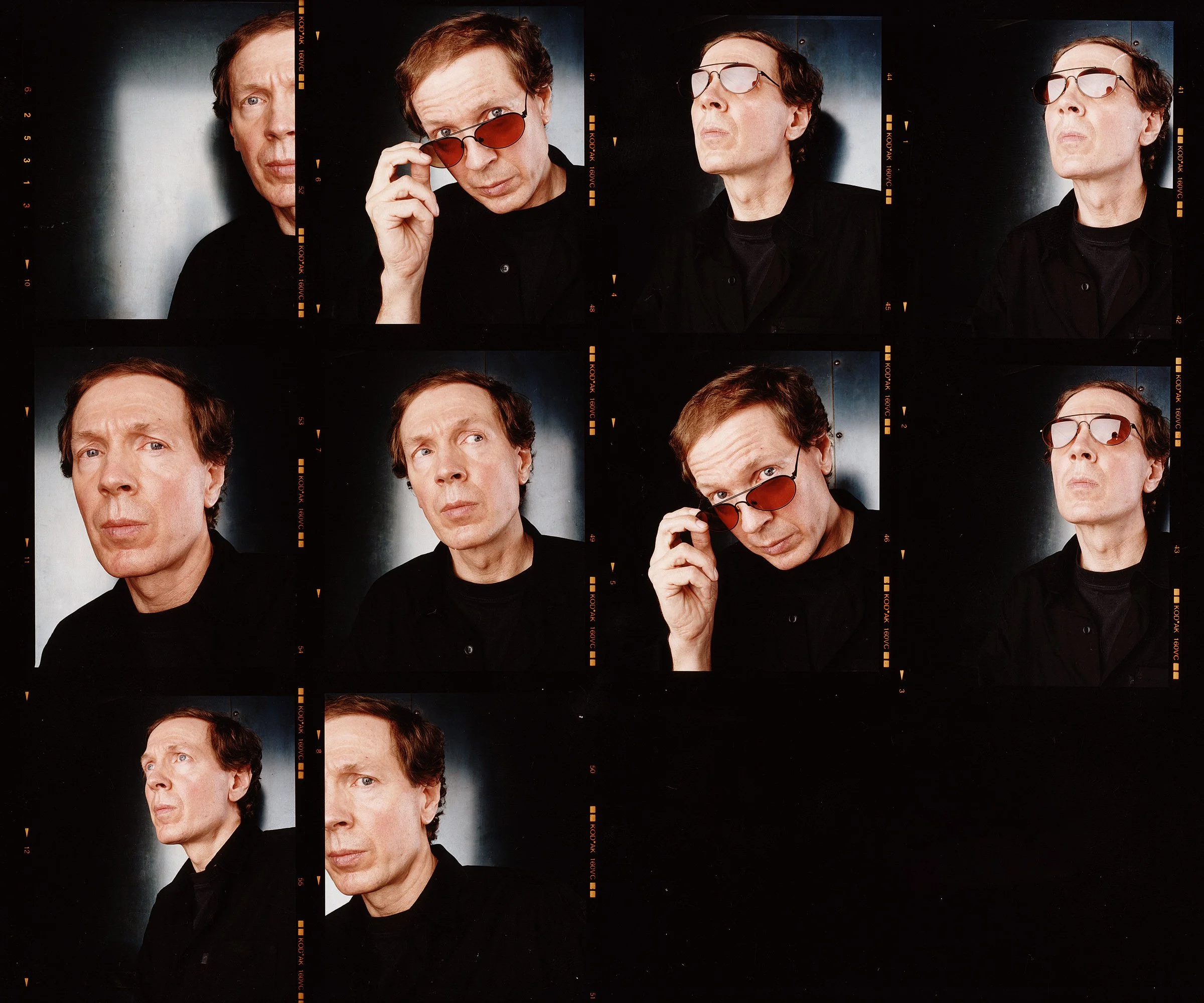
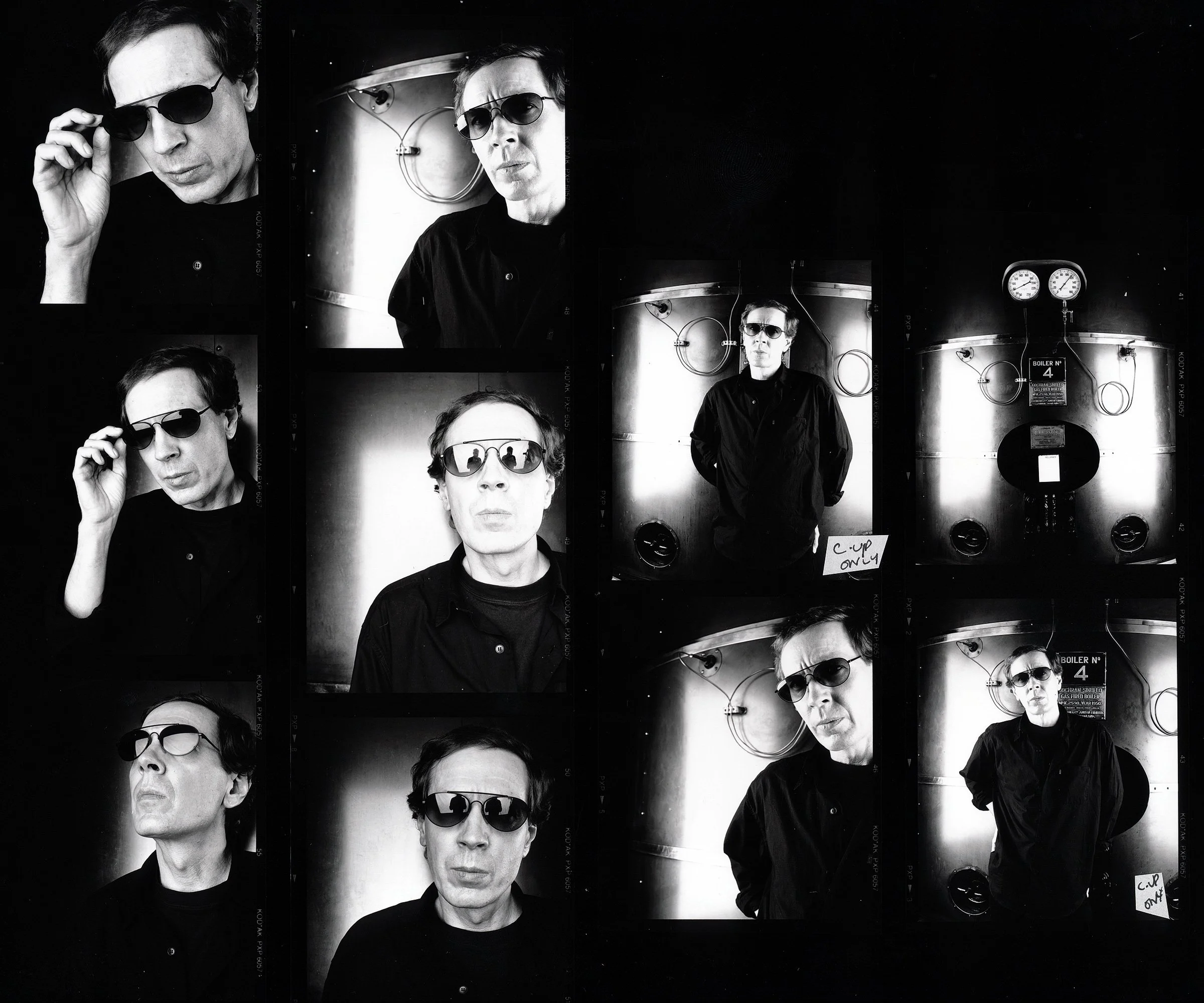
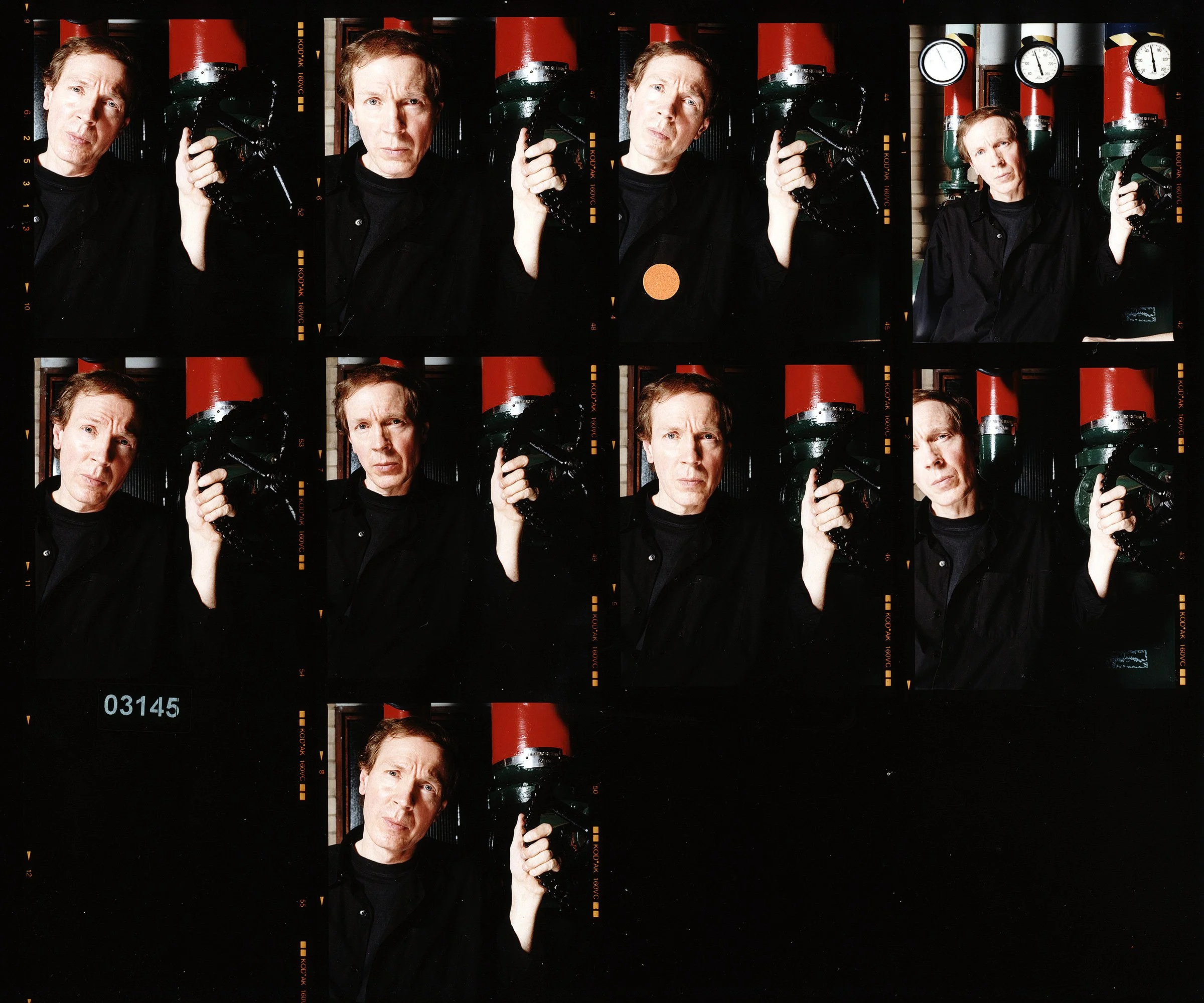
Photos by © Rankin
Interview
Time Out 5th April 2000
by Ross Fortune
Scott of the art antics
This year's Meltdown festival has scored something of a coup - no less a director than reclusive pop genius Scott Walker. Here, in his first interview for five years, he explains why he postponed work on his new album to helm the project, and how he came to choose the featured artists.
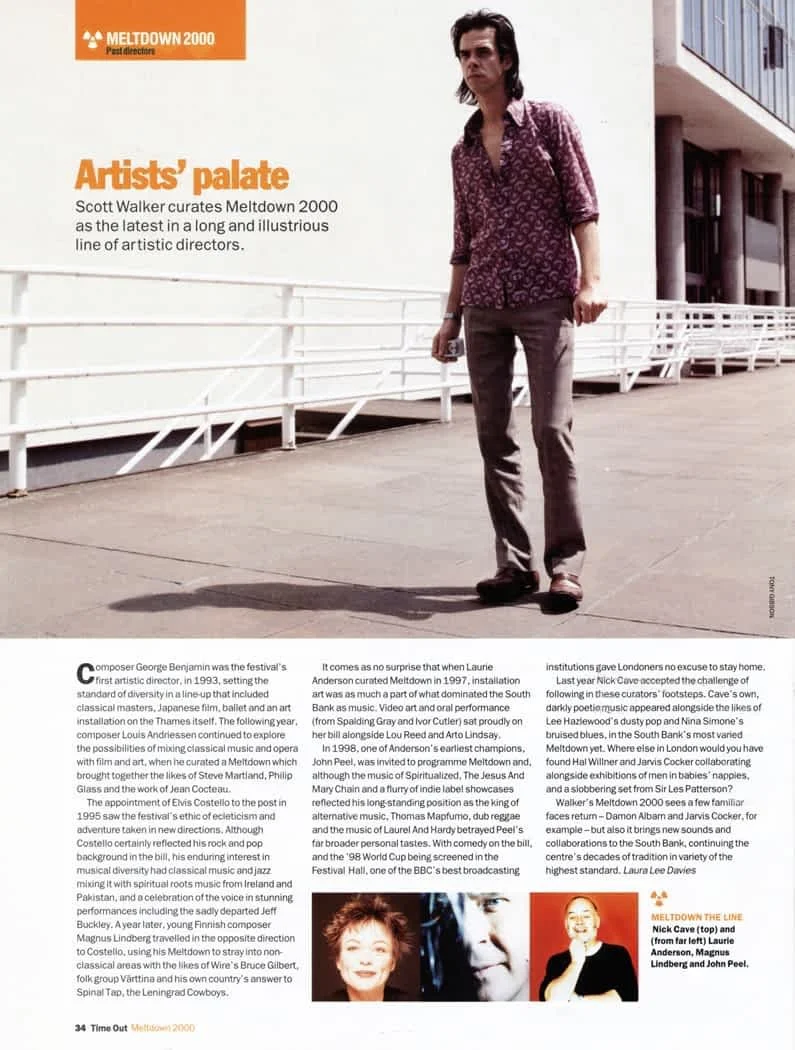
Softly spoken and anonymous-looking, Scott Walker strides slowly through the Festival Hall. No trademark shades, just a casual jacket, faded jeans, a bag slung over his shoulder and a baseball cap pulled down low over his eyes. Nobody gives him a second glance. The 57-year-old former teen heart-throb turned uncompromising composer and enigmatic recluse is the director of this year’s Meltdown festi- val. Following in the footsteps of Elvis Costello, Laurie Anderson, John Peel and Nick Cave, he is a bold choice. Bearing in mind his fiercely private nature and aversion to performing live, it is also something of a coup.
‘I wasn’t sure about doing it,’ he readily admits, his accent still discernibly American after more than 30 years of living in Europe, ‘and I certainly prevaricated!’ A significant factor in his decision was whether or not he himself would be expected to perform. ‘I only agreed to do it on the grounds that I wasn’t going to be pushed into that, or any- thing else,’ he says, softly but firmly. ‘It’s best to get the rules right up front or else it comes back on you later…’
Walker’s fear of public performance dates back to the hysteria he endured in the ‘60s, when, with the Walker Brothers, he was a reluctant idol - ‘the blond Beatle’ - personifying pop and epitomis- ing cool. Breaking free from what he perceived as a shallow musical world, between 1967 and 1969 he recorded four intense and mesmeric solo albums that still sound powerful and prescient today. However, while they sealed his reputation, for a while they hung heavily over his career. The ‘70s were something of a mess, the ‘80s a mix of mystery and silence broken by the release of just one album.
He hasn’t performed in public since 1978. ‘I never had any problems once I was actually on the stage,’ he explains. ‘It was getting there, y’know… It was the prospect of getting on. Now it is the prospect of getting on and trying to recreate what you’ve put on record. I’m very hands-on, so if everybody wasn’t playing up to… whatever it was, I would go mad! There’s all that tension. I believe what Glenn Gould said, in a sense, about there being something very masochistic about it. If you have that feeling about it, then it’s pointless putting yourself through it. Some people, most people, are totally comfortable with it and that’s fine. But you know, I might still find my way through. You never know…’ He trails off, adding somewhat abstractedly: ‘I figure what I might do in a couple of years is sneak in slow. Go somewhere like the Purcell Room and just try and see what I can do with a small group, or just one other person. Try and build it from there. See what happens.’ But doesn’t Meltdown offer you the perfect opportunity to do just that now?
‘Well no, it doesn’t, because it is built around you more. There’s this giant thing and there’s no way you can avoid being the centre of it, so it puts even more pressure on you. The most ideal way would be to start in Brussels in a cellar somewhere and work up from there.’
So you won’t even be getting on stage like Nick Cave last year, introducing everybody?
‘No, no.’ He laughs. ‘I don’t think I’d enjoy that! There is going to be a new piece for dance here which I’ve written, and that’ll cover me a bit. The great thing about Meltdown is that it’s sort of like having a birthday you never had. You’re getting a lot of the people on you like. It’s a strange thing. I read an interview with Nick Cave and he was say- ing something along the same lines and I thought: Gosh, I couldn’t believe you fell for it! But it’s true. You get that. It’s an amazing thing.’
When I interviewed Walker five years ago, he mooted the idea of playing “Tilt’ - his first new album in 11 years - live in the Royal Festival Hall. He believed the organ there would perfectly suit the album’s huge sound and baroque grandeur. Not surprisingly, it didn’t happen. Sadly, it doesn’t look like it ever will.
‘It would have been such a gargantuan task,’ he explains. Just an awesome project. Generally speaking, people tailor their records to their tours, but that restricts your imagination a lot and I can’t have that. I have to have what I have to have. It can be one other person or it can be a lot of people, or it can be whatever the song requires, but it restricts you as far as touring and stuff is concerned.’
Despite his low profile and the lack of any live performances (Walker did actually appear on the BBC’s ‘Later With Jools Holland’, but was recorded in isola- tion and slotted into the otherwise live programme afterwards), “Tilt’ was a significant landmark for Walker. It established him anew in the eyes of others, and enabled him to redefine himself. Before, he was bound to the past, lazily perceived as some lost way- ward genius suffering in the shadows. And the bur- den of expectation was always immense.
When it finally arrived, “Tilt’ was epic, but not in the way people might have expected, or even wanted. It was a dark, dense and brutal work of neo- classical violence and beauty. It was magnificent. Since its release, Walker has finally been accepted for what he is now, and not what he once was.
He agrees. ‘I think there is a more healthy combination now. Before it wasn’t. It was like I was kind of planted in aspic or something.’ This is a telling phrase that he has used about himself and his past many times before. “Tilt’ was a liberating experi- ence for him, and in the five years since its release he has been quietly productive-prolific, in fact, by his own standards. He even sang a track on the soundtrack to the James Bond film ‘The World Is Not Enough’. ‘It didn’t appear in the film, though,’ he laughs. “They cut the scene. David Arnold just contacted me,’ he adds by way of explanation, ‘and now and again I’ll do one of those.’
More significantly, he composed the score to Léos Carax’s film ‘Pola X’. Including snatches from ‘Tilt’, Walker created a dramatic and startling work of glowering cacophonic textures and hues. (It also featured Smog and Sonic Youth.) More recently, he has written and produced two tracks on the new Ute Lemper album, ‘Punishing Kiss’.
“That was particularly interesting,’ he says, suddenly animated, ‘because we did it totally blind. I actually wrote a couple of things for her, but only “Scope J” appears on the album.’ The other (Lullaby’) may be included on the Japanese ver- sion. “That’s a ten-minute song I’d actually written for my own album, but I think it’s a great song for her. I’m very disappointed that a lot of people won’t hear it.’ For a moment, he looks genuinely distressed. ‘The idea of cutting it over again for myself is an agonising prospect because I can usually only do things one time anyway, and that’s a real effort. But I’m going to try.’
So when can we expect a new Scott Walker album? ‘Well, I’m working on it. I’ve been writing it sporadically and I was going to do it this year, but Meltdown came through, which is funnily time- consuming. I was about to go into the studio and start, but I kept getting calls, so I postponed it. I have tunnel vision when I’m working. It’ll probably happen around October. It’s a grim task,’ he adds with a trace of smirk, ‘but I’m looking forward to it. I have it all in my head. “The way of arriving there is going to be similiar to “Tilt” in the sense that through a certain process of elimination you find your sound-world, but I’m going to move in other directions as well.
“There are two kinds of artist. There’s someone like Bowie, who changes a lot. I’m not that kind. I’m more of a Sam Beckett kind of artist. I nudge things along.”
“The point about doing anything is that you shouldn’t do it just because you can do it,’ he asserts. “That’s not a good reason. You should do it because it’s compelling stuff in the end. Of course, all artists are different. Other people find it easy, but to me it’s terribly difficult… Looking fit, healthy and considerably younger than his years, Walker is clearly still motivated by a desire to move forward and create - ‘more so now, I think, than ever. My life is my art, basically.’ And, while others obsess about his past, he remains healthily disconnected from it. A Walker Brothers’ ‘Best Of album is due to be re-promoted to coincide with Meltdown. His response is surprisingly sanguine. ‘I actually don’t mind that too much. It’s so long ago, it’s another career, really.’ Nevertheless, last year, when Fontana were set to reissue four of his less acclaimed albums from the ‘70s (Scott Sings Songs From His TV Series’, ’Til The Band Comes In’, ‘The Moviegoer’ and ‘Any Day Now), he blocked their release. ‘I don’t particularly want those albums out,’ he says. I mean, why? You know? They’re not great albums. They were recorded during a period when I just didn’t know what I was doing. I was just trying to work out a contract. I made a lot of mistakes in those days, and I don’t want to see them around now!
‘I never listen to the old stuff. Ever. I don’t know a lot of people who can do that, though I heard the other day that Sinatra played his own records at home all day long to impress his girlfriends and stuff. I mean, that would be agony for me, especially the records I make nowadays-that would be agony for everybody…’ He leans back in his chair, folds his arms, and grins.
MELTDOWN 2000 Scott talks us through his South Bank choices
Dance Project with new scores by Scott Walker and Orbital
‘I don’t know what Orbital are going to do. I really want to be surprised myself. I’m not really in touch with them. I trust them. There’s also a projected film and this group I’ve got coming over from Germany, Fuckhead. The name’s been a nightmare for the Festival Hall! They’ve had a lot of trouble accepting that. They’re going to be doing some music for that, as well as their own night. They’re brilliant as far as that really heavy industrial metal stuff goes. When they get going they make most people sound like triflers. I was in a record store, Rough Trade or somewhere, and the name was irresistible so I picked it up, took it home and it was everything it promised to be and more. As for my new piece, a dance company is going to do it. It’s just a concept I had, and it’s still quite vague at the moment. We’re really fighting a last-minute thing with this one. It’ll be seat-of-your-pants stuff, but who knows, it might be all right!’
Ensemble Organum
‘They’re really fantastic. They’re from France, but they’ll be bringing Corsican singers. They’re kind of the wild men of early music. I mean, don’t expect to come and see wild men, but their scholastic approach is very interesting, and the singing style is very raw, so it’s not this sort of beautiful vowels and everything that you hear in mostly English groups or some German groups singing very early music.’
Mark Anthony Turnage
‘The Turnage is beautiful. It’s a new piece called “Evening Songs”. It’s receiving its UK première at this Meltdown. In places it has a wonderfully bluesy feel like it could be related to one of those ‘40s noir films set in Manhattan.
Jarvis Cocker And Friends
‘I have no idea who he’s going to bring in or what he’s doing. He’s an artist, somebody I trust, and a great songwriter. I’ve never met him, but I’m going to phone him soon to discuss things.’
Smog
‘One of the great indie bands. When I was doing “Pola X” I met Bill [Callahan - who is Smog] in Germany. He’s one of those artists who whatever they do, whatever they touch, it’s very carefully thought out. And he’s a great vocalist.’
Jim O’Rourke
‘Jim’s label-mates with Smog. He’s another great indie musician/producer. I probably don’t listen to as much music as everybody else does, but my antenna’s always out. I filter out a lot of it, but I will zero in on things like this.”
Evan Parker
‘He’s a completely dedicated musician who over the years has honed and honed his style. He’s like Giacometti or Morandi. He also works wonderfully with electronic music, so maybe there’ll be some of that to hear as well.’
‘En Attendant Godot’ (‘Waiting For Godot’)
‘A lot of people have their favourite production of “Godot”; this Luc Bondy one has been touring Europe to fantastic reviews. It gives us a chance to see a great European theatre company at the peak of their powers.’
Radiohead
‘I feel so honoured that they’re going to be here. They’re a perfect integral band. They also possess the great lyric singer of this time. The thing about great singing is not particularly the voice, it’s phrasing and you can’t really teach that to anyone. Thom Yorke happens to have both gifts.’
Blur
‘Another great band. They’ve disbanded for 18 months and they’re coming together just to do this and so what can I say - a great honour. They’re always searching. They’re always changing and they could have had an easy time and they didn’t. They made one of the great LPs last year. You won’t get any flimsy satire going on.’
Cicala Mvta
‘They’re really fantastic musicians in the trained sense. They’re great jazzers. You can put them in just playing straight Ornette Coleman stuff and they could do it, but a lot of what they do is ironic and pastiche and terribly funny as well. They’re supporting Blur.’
Film festival
‘Film is really an obsession with me. These are mostly European because that’s what I’m interested in.’ The films are:
Photo by © Rankin