
The Sanctity Of Strings: Scott Walker remembered by violinist Paul Willey
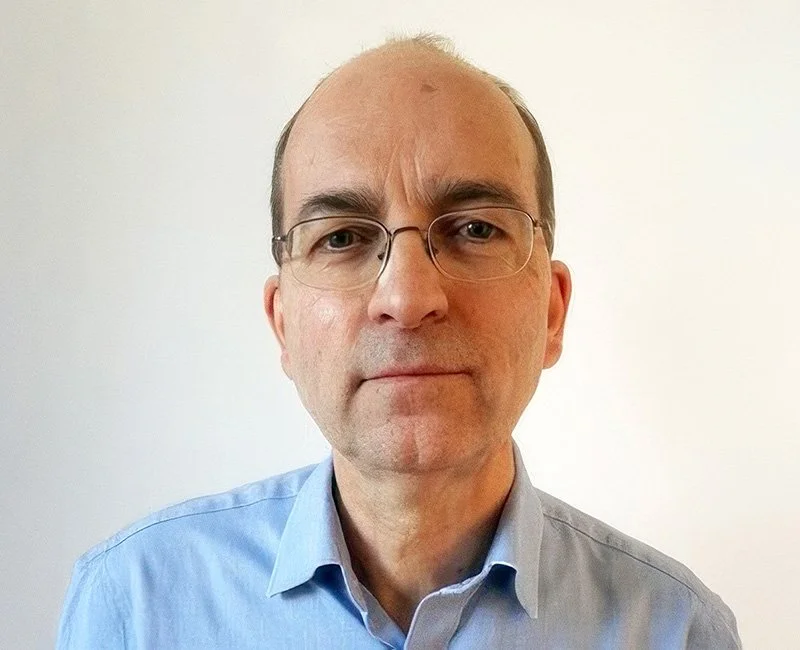
Saturday 9th August 2025
Mark Warman: I was wondering when you first worked with Scott. Would it have been in 2005 on the first album that I did with him: The Drift?
Paul Willey: Yes, that’s right.
MW: That was a one hectic day at Air Studios in the Hall.
PW: Right.
MW: The morning was conducted by Philip Sheppard.
PW: I remember, yes.
MW: Scott had given him three tracks to score. He was really interested to use Philip, particularly because he'd been intrigued by some conversations they'd had around multiphonics and other unusual ways of playing string instruments. Philip had spoken about some translucent, see-through textures that he could perhaps try, or indeed even ways of creating extra harmonic resonances within a string orchestra just from the original chords. Scott was intrigued by that and booked Philip to conduct and score three tracks in the morning.
And then I did the remaining three in the afternoon. Scott referenced Berio and Ligeti when describing the attack, the energy and the clusters of sound he wanted me to get out of the strings. In terms of your wide experience as a session musician, how unusual is it to have “squeaky gate”, modern string techniques asked of you in an album recording session?
PW: It's become more common. They call it aleatoric, where we’re playing behind the bridge and hitting all sorts! Which is not what I really remember of working with Scott. His sessions were a bit more planned and he had a bit more of a vision about it. It wasn't just going crazy for the sake of it, which it sometimes seems to be these days.
MW: Yes, I always had an issue with how best to notate the slightly rhythmically random ideas that I’d hear in his demos. I’d sometimes ask your help as Leader to work with the violin section and deliberately not play perfectly together, without straying too far from his original conception.
PW: Yes, there's a balance, isn't there? I mean, I think he always had a vision, he seemed to know when he'd got what he wanted, which isn't always the case. Some people seem to want to just try things to see how it sounds. But I think he had it in his head. He'd got this idea, and when you'd reach that point, that was it and you could move on to the next bit. It wasn't, oh, let's have another go.
MW: That’s right.
PW: And I think musicians always appreciate that. Rather than they're just being used as guinea pigs for somebody who doesn't really know quite what they want.
MW: I found a lovely quote from Scott while he was recording Bish Bosch, the next album we worked on together: “There is nothing that gives you the power or the resonance of strings.” We had a big string day again at Air, again with Geoff Foster engineering. You led the orchestra of 36 magnificently that day. Those large string session days were always Scott’s favourite moments. And that was the album where on one track, Corps de Blah, you were brought in later as a solo performer for all those weird and wonderful violin harmonics.
PW: Yes, I remember that. That was the one we did in that small studio in Acton: Kore. It was great to do something different and try stuff. It wasn't just a run-of-the-mill, what you’re expecting sort of session! You were using your own ingenuity, trying all sorts of things until you could see that's what he wanted. It challenges you in a good way, I think.
MW: You're right: there was that reassurance that once he heard performed what he was hearing in his head, he’d make it clear that that's absolutely right. It did immediately change the dynamic from being slightly cautious and “Is this right?” to something positive and certain.
I suppose you're sometimes in the awkward situation where sounds might come out almost by accident - particularly if you're doing unpredictable things behind the bridge - and you're slightly nervous that you won’t easily reproduce it and do it again to order!
PW: Yes, yes. [laughs] But I never remember it as being ever anything that was just outlandish.
“It all seemed to make sense to me and you felt reassured that he was an extraordinary musician in a way, but of a completely different type from anybody else probably that I've worked with in a studio.
MW: Really? So he does remain one of your more unusual clients?!
PW: Yes. And a very interesting person to work with - never boring, which is not always the way with studio work, as you know!”
MW: He was always so passionate to use real string orchestras. It was the sound and scale he'd obviously grown up with. In the pop world of his earlier years, if you wanted a string sound, the only way to get it was to have a large group of string players. He would occasionally send over reference tracks from the 60’s or 70’s where there would be this real energy and furious passion coming through from the string sound.
PW: Yes, that feeling when you really are on the edge of your seat. That's what performance - and hopefully some of that comes across in recordings - is all about, isn't it? That's why people go to concerts, hopefully, rather than just sit and listen to it on their iPads.
MW: After those two albums, six years apart, came the film scores in 2015 and 2018. Childhood of a Leader, the first film by director Brady Corbet, who then came back to work with Scott on his second picture, Vox Lux. You led the orchestra at Angel [Studios] both times.
PW: There was always a very nice atmosphere on those sessions. A very nice group of people. Was it Peter…?
MW: Yes, Peter Walsh, his long time engineer and co-producer.
PW: A very nice chap.
MW: As the leader of the orchestra, did you find it useful when - via the conductor - you're being told that a little nervous, busy phrase you're being asked to play should sound like an irritated bee, or a pit of snakes, or some such simile?
PW: Any advice is helpful! It's a completely unique style, what Scott was doing. So you need all the advice and the markers you can get. If the composer can tell you what they had in mind when they wrote it, that has to be helpful.
MW: With Scott we were definitely working with someone who knew what he wanted. I'm delighted that your memories of his sessions were of a polite, warm, friendly, receptive environment to make music.
PW: Yes, I mean, there was always a very nice team feeling. Andy [Barnwell, the fixer]and yourself always got nice, good players to work with, and also in the control room there was just a very good atmosphere. Of course, you and I communicate very well and it all worked smoothly.
MW: Well, I know that those large string sessions were always the icing on the cake for Scott. He used to look forward to those days with such excitement.
PW: Oh that’s nice.
MW: Behind the scenes I was aware of the battles that he'd hand over to his management to fight on his behalf about player numbers. He would be absolutely adamant. If he had decided that his score needed 10 firsts, 10 seconds, 10 violas, 8 cellos and 8 double basses, then that was it. That's what it had to have!
PW: You felt he just had a vision that he wanted to realise.