
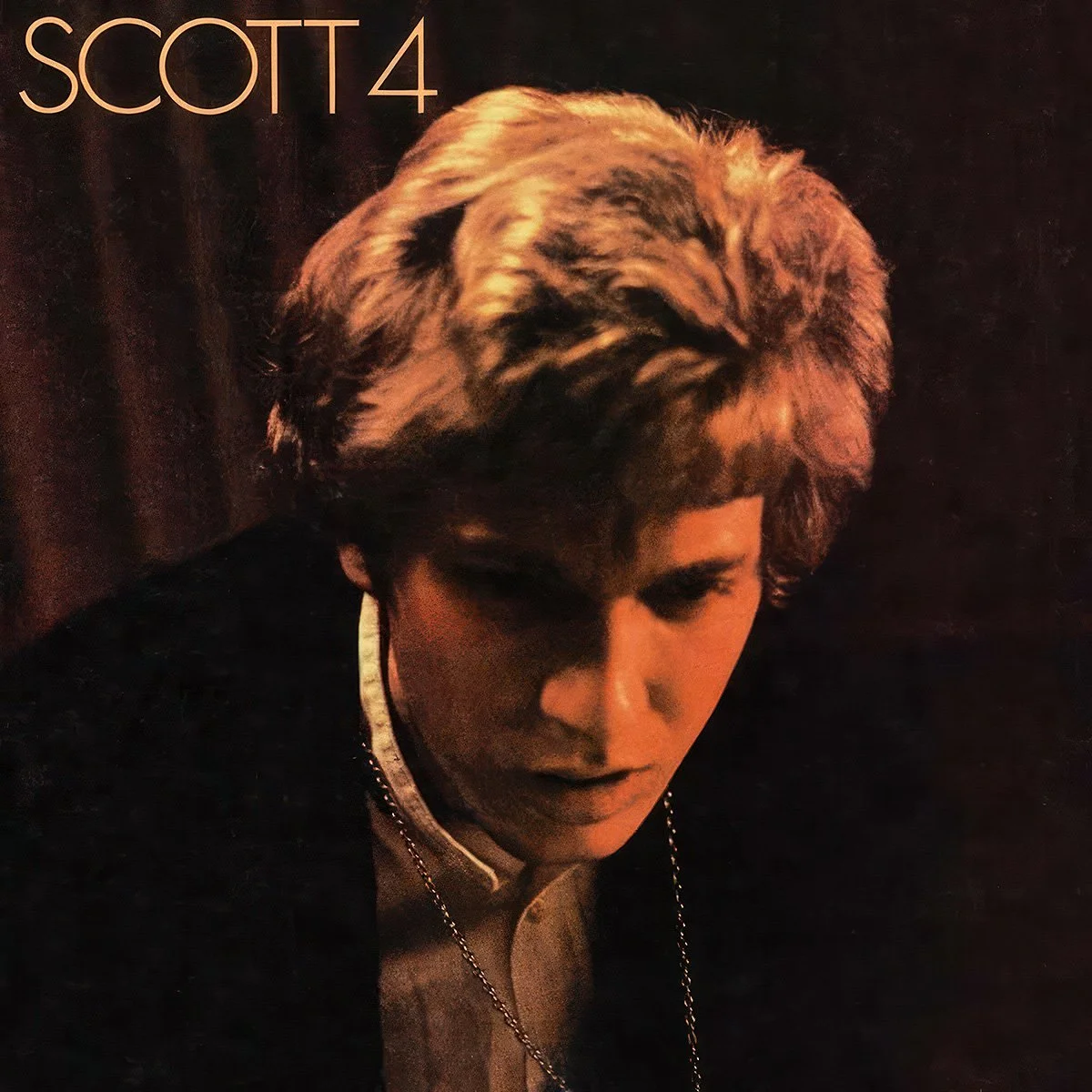
Scott 4
Scott Engel
Released: 7 November, 1969. Label: Philips / Fontana
Scott 4 was Scott Walker’s fifth solo album, and the only album he released under his birth surname. It was his first record composed entirely of original songs, opening with The Seventh Seal, inspired by Ingmar Bergman’s 1957 thriller about a medieval knight facing the personification of Death.
Scott 4’s other songs explore cityscapes, childhood innocence, women, the emotions of loneliness and despair and contemporary conflicts. Hero of the War is about a severely injured young soldier, back at home with his mother. The Old Man’s Back Again (Dedicated To The Neo-Stalinist Regime), references Soviet writer Andrei Vosnesensky’s 1964 poem, Antiworlds, and is directly influenced by the 1968 Warsaw Pact invasion of Czechoslovakia.
Scott 4 was recorded at London’s Olympic Studios, with orchestral arrangements by Peter Knight, Angela Morley and Keith Roberts.
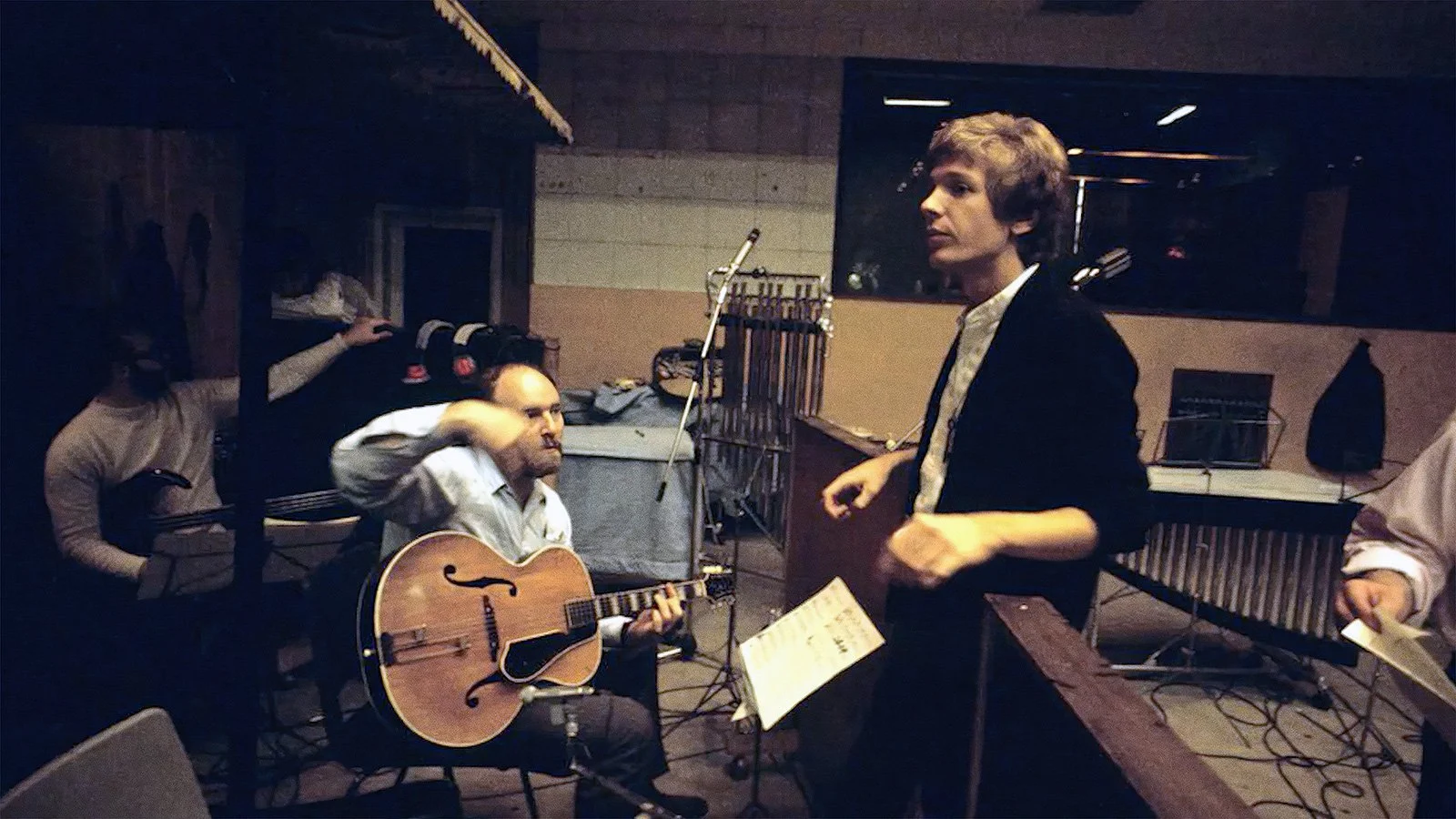
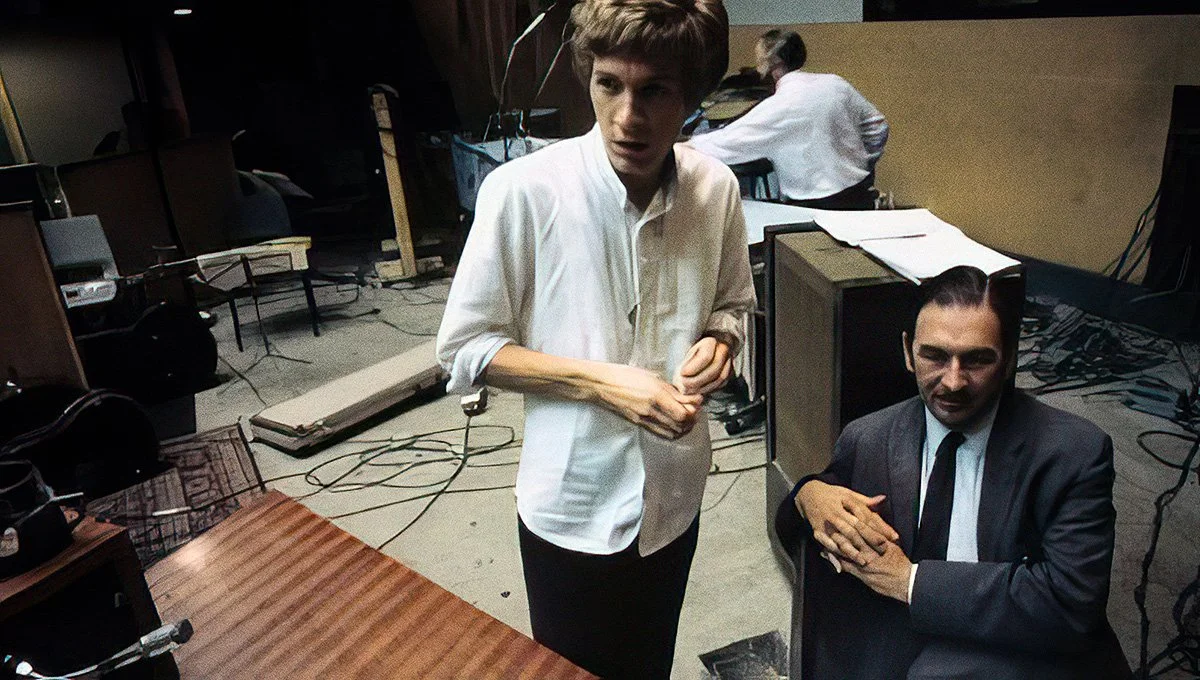
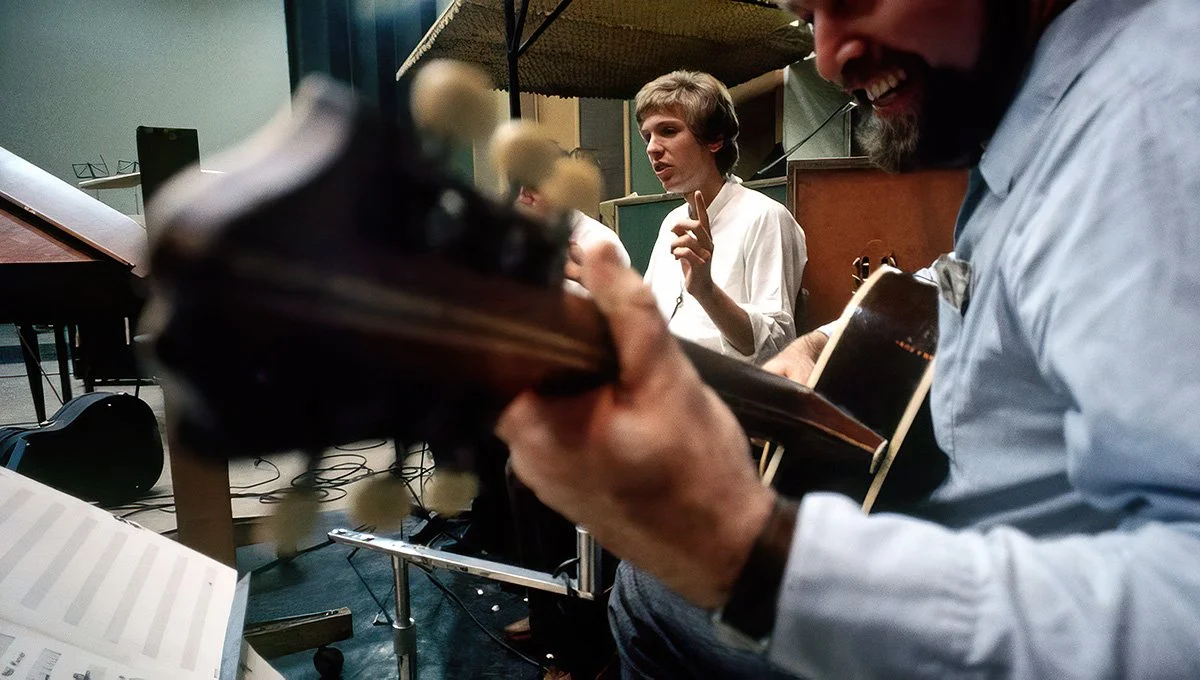
The album art includes photographs of Engel and the production team in the studio, war photography from the Antar Archive, a painting of Walker by P. St John Nettleton, and a quote by French writer Albert Camus: “a man’s work is nothing but this slow trek to rediscover, through the detours of art, those two or three great and simple images in whose presence his heart first opened”.
Walker did not do interviews around the release of this album. “If there has ever been a better album by a male singer, it certainly hasn’t come my way,” wrote Gordon Coxhill in the NME. Peter Jones of Record Mirror called the album Walker’s “best so far,” but added, “don’t bother with it at parties — it’s too individual.”
No singles were issued from Scott 4 and the album failed to chart in the UK. It was deleted soon after release. “I don’t know what happened there,” Walker said of the album in January 1970 to the Melody Maker’s Chris Welch. “It seemed to confuse a lot of people.”
Track Listing
The Seventh Seal 4:58
On Your Own Again 1:48
The World's Strongest Man 2:21
Angels of Ashes 4:22
Boy Child 3:38
Hero of the War 2:29
The Old Man's Back Again (Dedicated to the Neo-Stalinist Regime) 3:43
Duchess 2:51
Get Behind Me 3:14
Rhymes of Goodbye 3:04
-
All compositions by Noel Scott Engel
With accompaniment by Peter Knight (tracks: 1, 4, 6 & 7)
With accompaniment by Wally Stott (tracks: 2 & 5)
With accompaniment by Keith Roberts (tracks: 3, 8, 9 & 10)
Producer John Franz
Engineers Adrian Kerridge, Keith Grant
Designed John Constable
Recorded - Olympic Studios, London, 1969
Bass [Uncredited] - Dave Richmond
Sleeve Notes
A man's work is nothing but this slow trek to rediscover, through the detours of art, those two or three great and simple images in whose presence his heart first opened.
Albert Camus
Review
NME, 29 November 1969
by Gordon Coxhill
SCOTT ENGEL GIVES YOU SIMPLER MUSIC
As the lights (of Cincinnati?) fade for Scott Walker, welcome Scott Engel. A few months ago, Scott urged me to listen to Dion’s latest LP. “It’s the best pop album ever made,” he enthused. I listened and it would be difficult not to agree with Scott’s verdict… until now, for SCOTT 4 (Philips SBL 7913, 38s 7d) is released next week, and if there has ever been a better LP from a male singer, it certainly hasn’t come my way.
Engel-he’s discarded the Walker forever has achieved his aim: simpler, good music without condescension or sacrificing his own integrity.
THE SEVENTH SEAL opens Side 1, a Spanish-sounding opus that tells of death and the terrifying thought that God might not be hovering in the shadows to pluck us out of the fire. In the background, а male choir echoes the doom of the song.
The next two numbers, ON YOUR OWN AGAIN and THE WORLD’S STRONGEST MAN, are of broken love affairs, gentle reflections, and that fine Engel timbre that quivers and shakes but usually makes it. In the last-named song, melodic and plead- ing, he la-da-das into a fade-out ending, which probably means noth- ing but I thought I’d mention it.
Scott’s own favourite songs on this side are ANGELS OF ASHES and BOY CHILD. How do I know? Because those are the ones I had to play over and over again, and I’m still not sure about them. Ashes is again about death but a much more Soothing view than the first song. Boy Child, features a very attractive xylophone sound.
Side 2 and rumblings of BREL in the lyrics of HERO OF THE WAR a topical indictment of war anywhere. Death rears an even uglier head when THE OLD MAN’S BACK AGAIN, striking without mercy.
DUCHESS (and here is the strong Dion influence) is life, is the earth, is the air we breath. Or if you like, take it as a straightforward love song. Either way Scott’s nasal tones are in great form.
GET BEHIND ME would be an ideal single for Dusty Springfield or Cliff Richard. Make of that what you will, but this is a Scott you have- n’t heard before, a beat song with girl backing voices and a rasping guitar making lovely noises.
Finally, the sweeping to-and-fro melody of THE RHYMES OF GOODBYE, which says a lot more than its simplicity would have you believe.
I don’t think Scott has yet found his musical resting place, but to judge by SCOTT 4, he has outgrown his self-indulgent, two-fingers-to-the-world phase, and at last he’s hit on some fine music which a public can enjoy and of which he can justifiably feel proud.
Review
Record Mirror, 6 December 1969
by Peter Jones
SCOTT ENGEL: “Scott 4”.-The Seventh Seal; On Your Own Again; The World’s Strongest Man; Angels Of Ashes; Boy Child; Hero Of The War; The Old Man’s Back Again; Duchess; Get Behind Me; Rhymes of Goodbye (Philips SBL 7913).
All compositions by the aforesaid Noel Scott Engel the Walker tag has been dropped, once and for all. And a constantly-changing mood of arrangement has been ensured by using Peter Knight and Keith Roberts and Wally Stott.
First, let’s say that this is Scott’s best so far. There is an imagery and style about the lyrics that outweighs the sometime loss of melodic content. A very lengthy “Seventh Seal” builds well through a semi-martial beat and some superb film-score choral work almost a cathedral sort of sound.
“On Your Own Again” is slowly moody, with just guitar evocative Romantic thought . granite-grey is the mood. And lyrics. “World’s Strongest Man” is an expression of how he isn’t the strongest when “it comes to you” strings and wood-windy and cymbal-laden beat.
“Angels of Ashes” is similarly slow and emotional, but “Boy Child” moves even slower. A possible adverse comment this unrelenting lack of pace.
Still, “Hero Of The War” powers along more briskly, with some outstanding lyrics even by Scott’s own standards. Next track is dedicated to the Neo-Stalinist Regime: more imagery, needing a few plays to get through completely. Not SO struck on “Duchess”, which strays a bit in terms of construction. “Get Behind Me” is a good-idea song, and “Rhymes of Goodbye” seems very commercial indeed. Mood-listening, in short. Don’t bother with it at parties - it’s too individual.
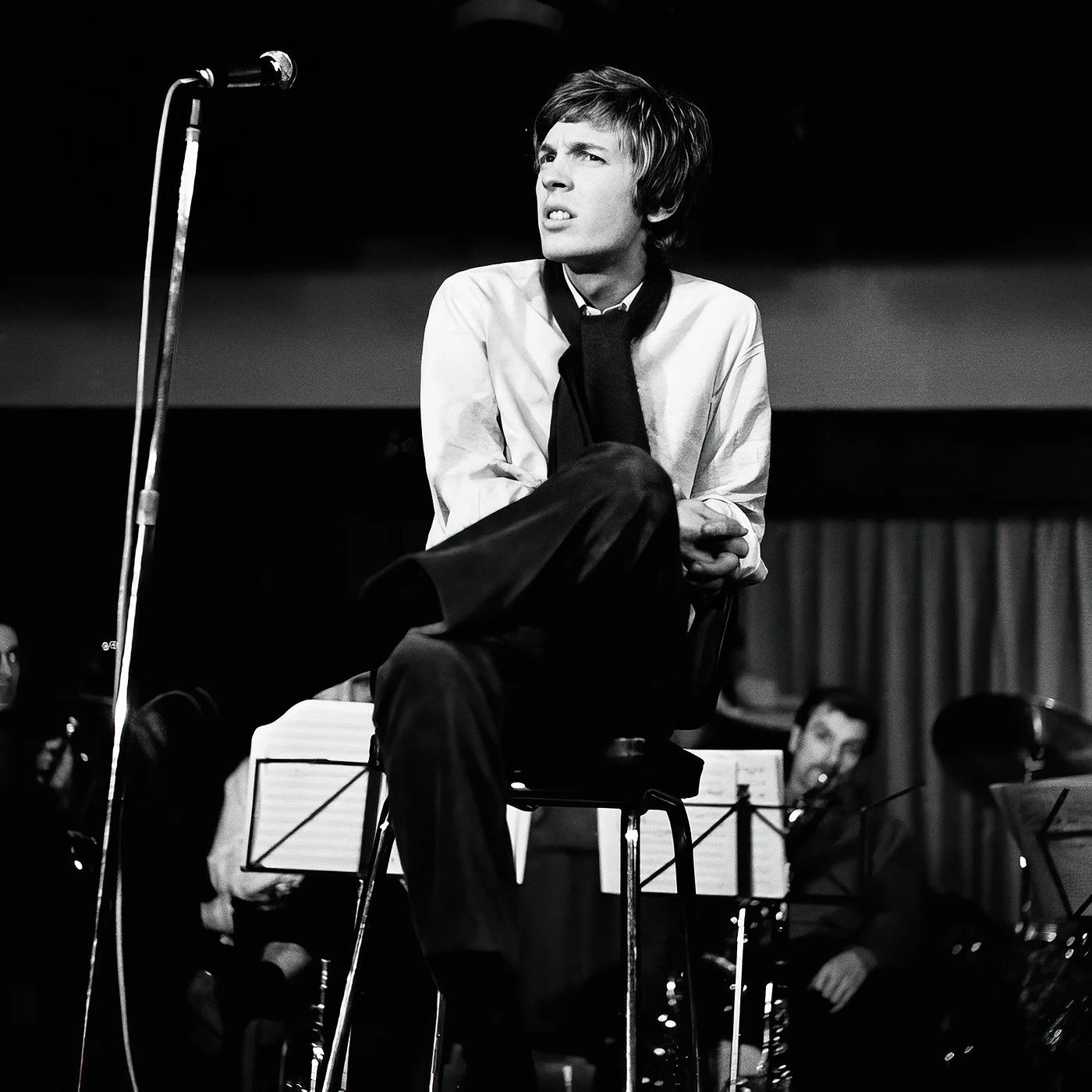
Scott Walker 1969 by Chris Walter
Scott 4’s “The Seventh Seal” was inspired by the Ingmar Bergman film. “It isn’t deliberate, but I am a film addict and it has influenced my work,” he told Mike Barnes in The Wire 346. “I can hear it in lots of ways, but it doesn’t register with me that I’m creating a scene or anything. I think there’s a lot of visualisation in my songs, a lot of imagery and sometimes I’ll be hitting one after the other.”
Interview
30 Century Man - Stephen Kijak, 20th April 2006
Excerpts from interview transcript
Stephen Kijak: So when you decided to make Scott 4, it was all your own compositions…
Scott Walker: Yeah.
SK: Was there a sense that this was an album that was more of a risk, that there was a lot riding on it?
SW: No, it was a gradual process, but I mean, the album before it (‘Scott 3’), it kind of shattered the fourth album because, I have a theory about it, I mean, you can take it for what it’s worth,
“but it was mostly written in 3/4, and I think it just didn’t lock onto anybody. And so by the time the fourth album came around, I think a lot of people thought, well, I’ll pass on that.”
SK: ‘Three’ was still a chart hit though. (It peaked at #3 on the UK charts – ‘Scott 4’, initially released under Scott’s birth name, Noel Scott Engel, in 1969, failed to chart at all.)
SW: Yes, yes it was. But there was a feeling in the air that it was going to change, and so I just kept riding on like I’m doing now.
SK: Now ‘Scott 4’ is looked at as one of the great albums of the period. Was it a real disappointment not to have it accepted at that time? Now that you’ve put an album out that was all your own?
SW: Funnily enough, it wasn’t for me because when I do something like that, or even when I’m doing stuff today, that’s always in the back of my head, that people are not going to like it. And so, I’m not so disappointed. I’m more disappointed if I don’t bring something off. I don’t like it, when the public fails to connect with an album, I’d rather that they liked it. But I always have that going on in my head.
SK: So was following that up with something like “’Til The Band Comes In” an attempt to be commercial again? Or are you just continuing forward?
SW: No, no, no. The signals were out really that I better try something different or else I would have to go into this situation, which eventually arrived, where I was making records with the company basically to see off of contracts because they actually thought some of these records were going to actually do something. I didn’t know, but at that time, it started to bother me, not because of the success or failure or anything, but the fact that I wasn’t going to be able to do any more albums like that (‘Scott 4’). That’s what really got to me. I wasn’t going to be able to have all that at my disposal.
SK: Are you talking about the CBS records?
SW: No, I’m talking about at Phillips at the closing stages, after the fourth record. I mean, “’Til the Band Comes In” was kind of a signal of “we’re getting off you as a writer, we want you to do something else.” And that’s when I started really imbibing a little too much and things like that. So… I forgot the question. You see, it’s still there.
SK: Were you actually not allowed to write anymore, or did you just kind of say, fuck it, if they don’t want me to, I’m not going to.
SW: I was asked not to anymore. John Franz, still acting as producer & musical director for Phillips Records, was a dear friend of mine, he came to me and he said, look, let them have a couple of albums that they want, and down the line, we’ll sneak in another one. It’s that old thing. And of course, it never happened, you see.
And so it got worse and worse, and I got worse and worse with imbibing. And the same thing happened at CBS. CBS gave me the impression that when I got over there, I’d be able to write again. And of course, that wasn’t the case either. They wanted to stick me with a producer, very, very nice people, but… Yeah. And so that ended that. And so I was just really working off contracts.
Interview
BBC 6 Music - Jarvis Cockers Sunday Service, 23rd July 2017
Excerpts of an interview with Jarvis Cocker
Jarvis Cocker: Before this interview started, we were talking about as I’ve been researching the songs, some of the lyrics online aren’t strictly correct.
Scott Walker: Exactly, because there’s all kinds of versions you can find. But I found a couple of mistakes because I mentioned in the song ‘Boy Child’, because I got a very good take of that, and that was done live, because the one word I left it there was the word ‘stays’, which should have been ‘strays’. Then there’s another song. I think it’s a song called ‘Duchess’ that I was scat singing a bit of that. So I would say ‘when you’re coming across’ the actual line was ‘as you come across’ and it didn’t happen often, but like I said, if I got a good take for the whole thing, I’d keep it.
JC: You mentioned, scat there, that’s something that, on ‘Scott 4’, there’s three songs that you end in a scat
SW: Scatting. Yeah.
JC: Which has always, intrigued me.
SW: Well, it’s just, there was kind of a space there to do it, you know, and I thought, we’ll fill it up. You know, with my jazz thing coming out.
JC: Is that you playing the bass? That’s got a very good bass line that.
SW: No, no, I can’t remember who did it. No, I can’t remember. I’m sorry.
JC: No, it’s okay. So that’s a great bass on that.
SW: That would have been a very fine bass player anyway.
JC: But we’ve got this, there’s a line in there, We’ve got:
“the crowds just gathered, their faces turned away, and they queue all day like dragons of disgust.”
Which, that’s a favorite phrase of mine. ‘Dragons of disgust.’ I’d like to see what they look like. But this is from the internet now. So then the next line.
“All the women whispering, wondering just what these young hotheads want of us.”
And then here it says:
“And ‘entrez vie’ he cries.”
But I, as I hear it
SW: V, yeah Andrei V
JC: That’s what I think. Yeah, it sounds like a name.
SW: Yeah it is, it’s Andrei Voznesensky. It’s meant to be Andrei Voznesensky. And so he was a Russian poet at that time.
JC: Right.
SW: So yeah, that’s what that meant. Did you get that off the internet?
JC: Yeah.
SW: Okay. It’s a nice word, anyway, ‘entrez vie’.
JC: Maybe that’s what we’re doing at the moment.
SW: Maybe that’s what I should have sung, you know.
JC: So tell me a bit about Andrei V. I’ve not heard of him.
SW: Oh, no, this time…
“By the time the fourth album rolled around, I was interested in all things Russian. In fact, I went on my own to Russia.”
And there’s a fabulous story which I won’t go into now because it goes on for about an hour. Every time I tell it to the people, they go, oh my God, so I’ll just leave that hanging. But, oh yeah, so all things Russian. So I was reading like, so Solzhenitsyn had been published there. So I was reading a lot of that. I was reading, all the way up the Yevtushenko, listening to a lot of Russian music, Shostakovich, etc… you know, although it’s not reflected in the record. And, so that and a lot of Russian history and that’s just part of that song.
JC: You’ve intrigued me now with your Russian story.
SW: I’ll tell you some other time when we’re off air.
JC: It’s incriminating?
SW: Yeah
JC: The poem Foggy Street by Andrei Voznesensky. By now, you know, I’m no good at pronouncing things as read by the person who translated it from Russian into English, Richard Wilbur. That’s taken from an album, but we got from the BBC. Archives ‘Anti Worlds’, the poetry of Andrei Voznesensky, the Andrei V mentioned in the lyrics to ‘The Old Man’s Back Again’. And in fact, this collection of poems, Anti Worlds, also gets mentioned in the lyrics of that as well. But I also wanted to go in and talk to Scott about other influences on his work. ‘The Seventh Seal’ basically kind of tells the story of the Bergman film. Is Bergman like an important filmmaker for you?
SW: Yeah. Before I came here, I’d seen lots of Bergman films, and I ran across it accidentally. I used to go to a film theatre on Hollywood Boulevard. I can’t remember the name again, but they used to show, late night movies, you know, like stacks of them, you know? And you go and you sit there practically all night. And late night ‘The Virgin Spring’ came on, and so on, ‘The Virgin Spring’. And it was it was dubbed. And I’d never seen anything like it, you know. And I was about 16 or something like that. So from then on it kind of took off. I started going to the art houses and watching his films.
JC: And what was it that kind of grabbed you about that?
SW: Well, I like the, photography first of all, it’s fantastic. And he claims that he was copying Kurosawa, and you can see a lot of that there, you know? And, so I was fascinated by that. And, just the time that everyone was allowed to do things, you know, in European films, you know. But even in Hollywood, in those days, things were being cut pretty much in the atmosphere of the time. I like those.
JC: you’re listening to a Scott Walker special edition of the Sunday Service today. The next thing I talked to Scott about was the arranger of that track.
You talked about Wally Stott, one of the arrangers on your record. And being able to work with these people, I guess, who could tell you how to get sounds, I wonder how that process worked.
SW: Yes. Well, I was bringing all kinds of things in as examples for him. You know, I remember bringing in for ‘Boy Child’ the ‘gon gon gon gon gon gon’ thing at the beginning, that cimbalom thing that goes on. I’d had that all written out and I brought it in, and I know I’d been listening to Bartok and. But of course, Bartok took that from folk music, so he’d taken that from, you know, from another source. So that’s how that particular song had started.
JC: But would you sometimes go to them with an idea of, of a mood or something, and then they would tell you how you could achieve that with, with the instruments, you know, within the orchestra.
SW: Yeah, of course. Or they’d simply do it, you know, and I turn up and then I’d see how it was done. Like I said, there were countless examples of, I mean… actually… Wally and I just, we didn’t get on that well really, you know. I got on a lot better with Peter Knight and I think Wally considered me to be a bit of an upstart, you know, because I was always pushing. I was always… well… I was quite demanding and he was used to coming in and doing sort of, Harry Secombe records, You know. John would say ‘take this away’ and he’d go away, do the arranging and come in. He was not used to having people interfere with the with the process.
JC: I wonder whether in some ways that was nice for him, that you were actually taking an interest in it.
SW: Well, it was, but I think the conflict worked in our favor because, he… to my knowledge, he’d never done better arrangements than he did for me. You know, so I think the conflict kind of helped. There were a lot of difficult things going on in his life anyway. You know, he eventually would transition, and things like that were happening, so perhaps I wasn’t as understanding as I might have been. But anyway, we were getting results and he… it’s funny because when we did the first record with the Brel stuff, he was very prudish about the language. You know, he was very… ‘I really don’t know if I want my name on the record’ because it’s, you know, he’s saying this, you know, it was… he was very… So finally, he decided, ‘well, I will put have name on it.’ So we put the album out and the album went to number one, of course, the records we did together after that he was glad to have his name on.
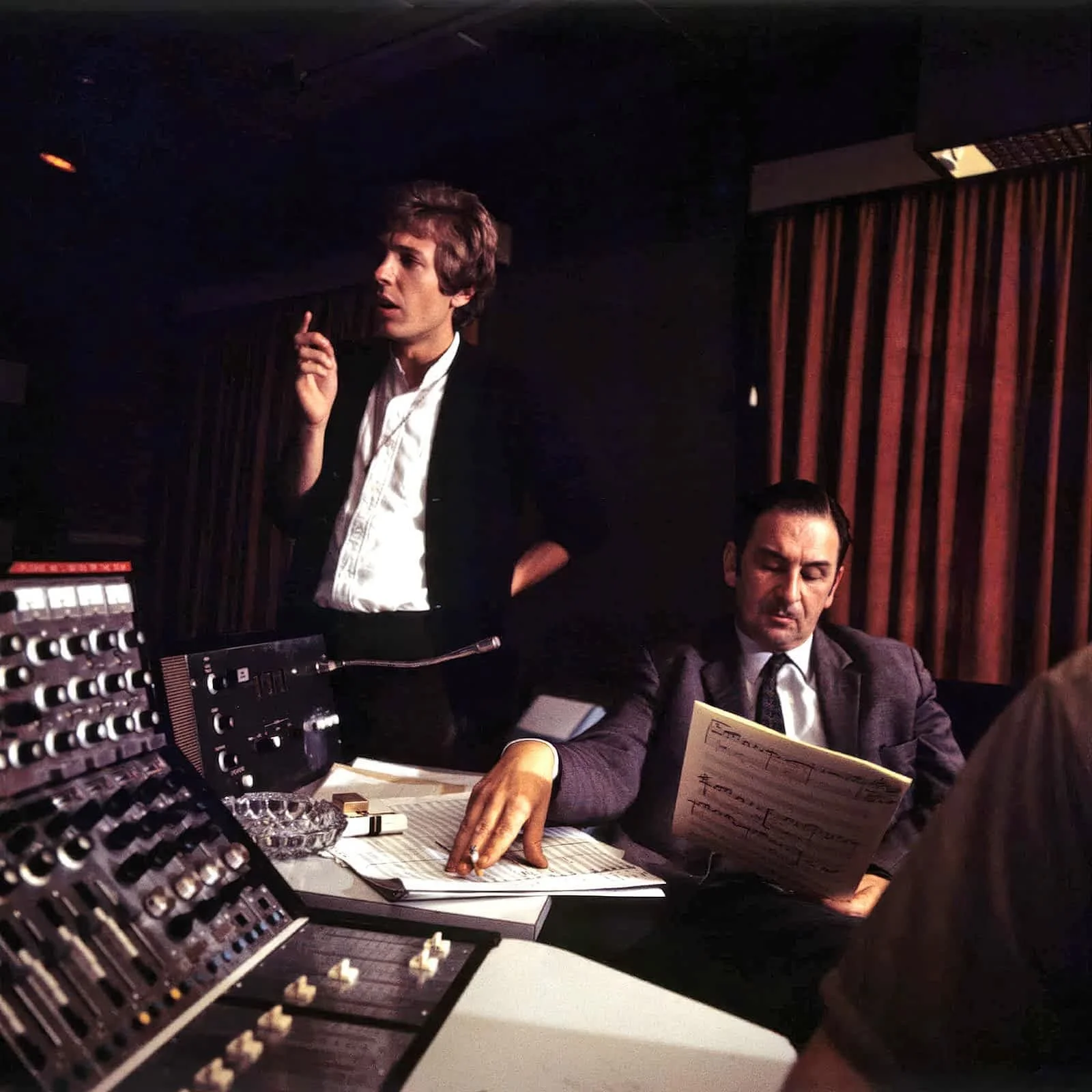
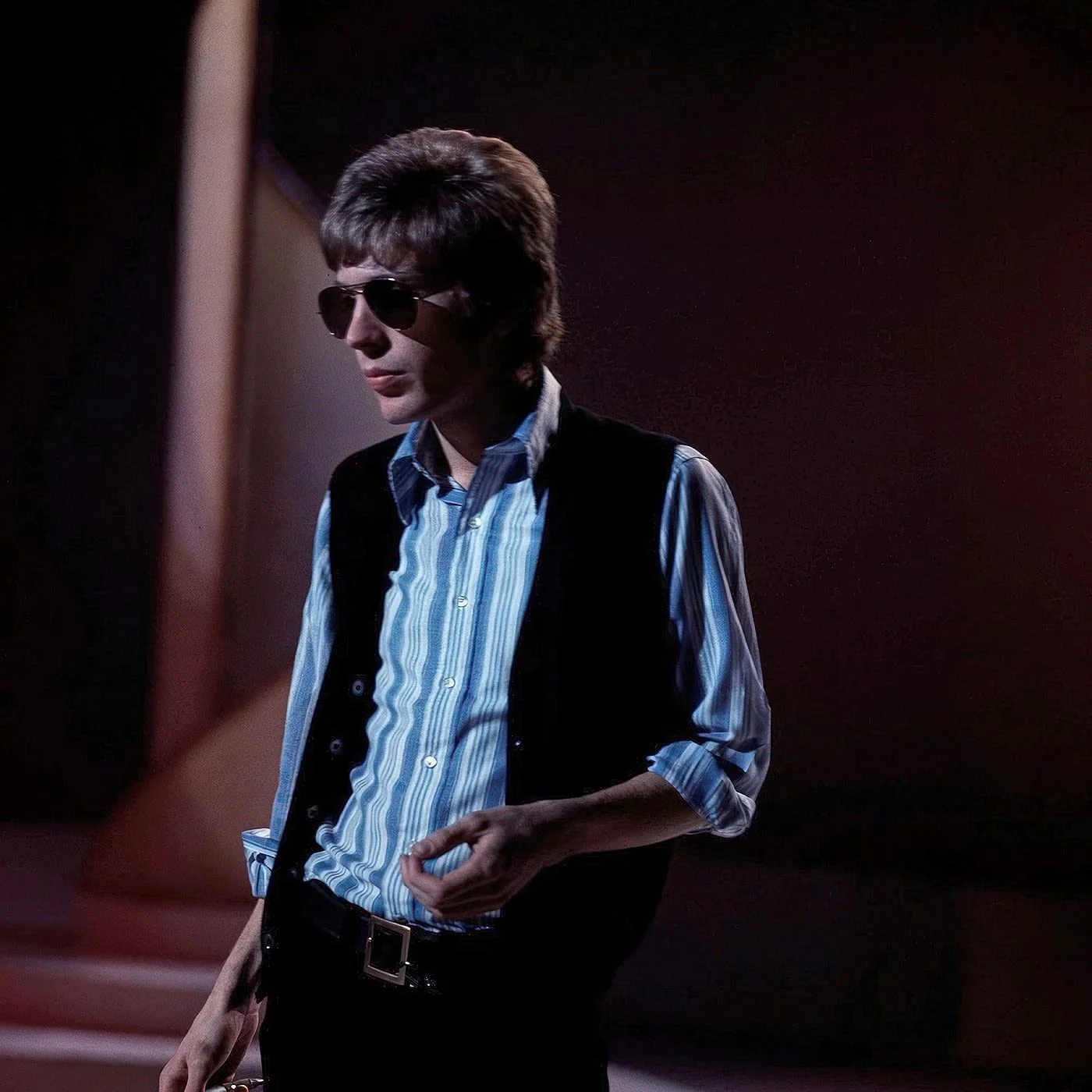
Top: Scott Walker & John Franz 1970. Photo by Dezo Hoffman. Above: Scott Walker by Michael Putland 1970