
Nite Flights
The Walker Brothers
Released: February, July 1978. Label: GTO
Nite Flights is the Walker Brothers' sixth and final album, released in July 1978 by GTO Records. Unlike their previous two albums, which mostly featured cover songs, this release is composed entirely of original material—two songs by Gary Walker and four each by Scott and John Walker. The album marks a sharp shift from the group's usual mainstream style, incorporating elements of art rock, new wave, and experimental music. It is widely seen as a major artistic turning point for Scott Walker, foreshadowing his later avant-garde career.
Despite its significance, Nite Flights was largely overlooked by critics and listeners at the time. The band's lack of interest in touring and GTO Records' financial struggles led to the Walker Brothers losing their contract and disbanding by the end of 1978.
The album was recorded in February 1978 at Scorpio Sound Studios in London. Structurally, it is divided into three sections, with each member contributing their own songs and vocals. Critics and the band members themselves have described it as more like three solo projects combined, rather than a cohesive group effort.
The album's standout tracks are the first four, all written and performed by Scott Walker. These marked his return to songwriting after his 1970 solo album 'Til the Band Comes In, showcasing a darker tone and hinting at the experimental direction he would later pursue in his solo career.
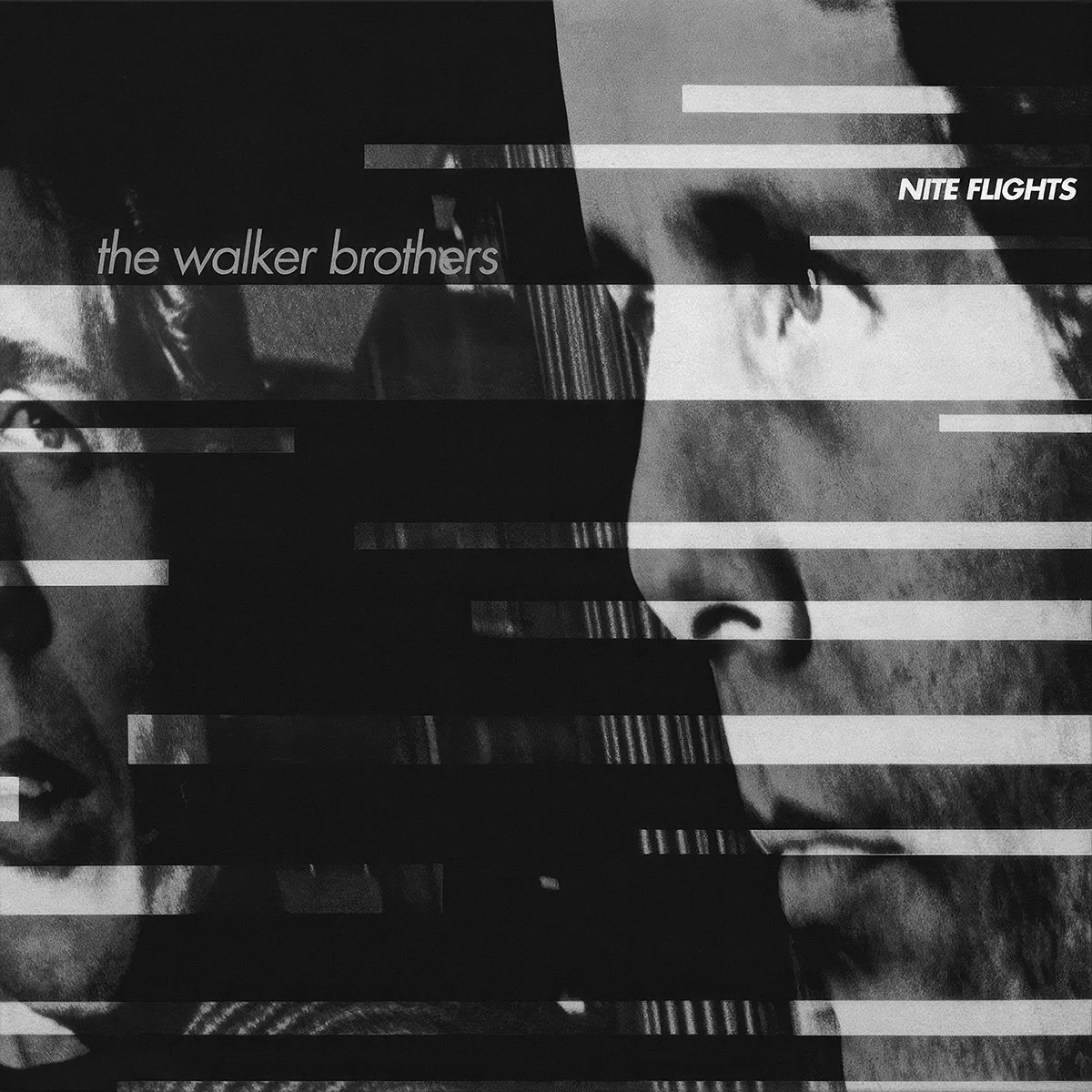
The cover art was created by Hipgnosis. After Nite Flights, the Walker Brothers disbanded shortly following its release.
Track listing
Shutout
(Scott Engel) 2:46Fat Mama Kick
(Scott Engel) 2:57Nite Flights
(Scott Engel) 4:25The Electrician
(Scott Engel) 6:10Death of Romance
(Gary Leeds) 3:44Den Haague
(Gary Leeds) 4:03Rhythms of Vision
(John Maus) 2:55Disciples of Death
(John Maus) 3:49Fury and the Fire
(John Maus) 3:58Child of Flames
(John Maus) 3:14
Credits
Producer – Dave MacRae, Scott Walker
Recorded By – Dennis Weinreich
-
Producer – Dave MacRae, Scott Walker
Recorded By – Dennis Weinreich
Keyboards, orchestrations and conducting, production, mixing - Dave MacRae
Backing vocals, mixing, recording - Dennis Weinreich
Arranged By – The Walker Brothers
Conductor, Orchestrated By – Dave MacRae
Engineer [Assistant] – Steve Parker
Mixed By – Dave MacRae, Dennis Weinreich, Scott Walker
Soprano saxophone - Ronnie Ross
Tenor saxophone - Alan Skidmore
Saxophone - Chris Mercer
Rhythm guitar - Jim Sullivan
Guitar - Les Davidson
Drums - Frank Gibson, Jr.
Drums - Peter Van Hooke
Bass - Mo Foster
Bass - Dill Katz
Percussion - Morris Pert
Backing vocals - Joy Yates and Katie Kissoon
Recorded At – Scorpio Sound
Mixed At – Scorpio Sound
Sleeve, Photography By – Hipgnosis, Walker Brothers
Sleeve design - Hipgnosis
Words By, Music By – S. Engel (tracks: 1 to 4), G. Leeds (tracks: 5 & 6), J. J. Maus (tracks: 7 to 10)
Excerpts From
The Impossible Dream:
The story of Scott Walker and The Walker Brothers
by Anthony Reynolds
Dennis Weinreich: “I remember Scott arriving at the studio in his orange Volkswagen Beetle,” he says. “He had a white pork-pie hat on. Real low over his eyes, all the time. He never took it off. Constantly playing with it. So he talked to me about making records and stuff and he said to me, ‘We need to work out how to record the vocal. Because the thing that pisses me off is that, when I’m ready to sing, I’m ready to sing right now. And I need to be able to perform once and that’s it’. So, I got this idea of [Scott’s voice] sitting very, very compressed on top of the record without a huge amount of dynamic. I felt, from listening to him talk, that he had a natural dynamic, that it wasn’t based on level. It was based on this intensity he had in his voice.”
Scott and Weinreich hit it off immediately. “I told Scott that once we had found a vocal sound, we’d keep it for the album and when we’re ready to go! And then I’d modify it for the song. I said, ‘But when you’re ready to go, I’ll be ready to go’.”
Big Jim Sullivan and Alan Parker were also involved. Sullivan was glad to get the call and noted that the Walkers set-up was much more bohemian than it had been when he’d first encountered them back in 1965…
“I just got the sense that they were going to do whatever it was they wanted to do,” he says. “It was much more experimental than it had been back at Philips.”
Weinreich remembers everyone being open to new approaches and technology. “Big Jim had a Roland guitar synth, one of the first,” he grins. “It was kind of a weird thing, it looked like a Les Paul, kinda, and I remember it being delivered, taken out of the box. I’d never seen such a thing! Nobody really knew how to use it but we had a lot of fun messing around with it.”
Big Jim Sullivan: “I remember I plugged the guitar into the amp and it was set up in such a way that it started feeding back and the lead was crackling. I went to fix it and they said, ‘No! Leave it like that, it sounds great’. I didn’t go mad with effects, as I can recall, maybe some phasing. When I played on ’em, there was not much else going on. No strings, not much at all. So, I just tried to use my imagination. There was only a guide vocal, bass, drums, and perhaps keyboards here and there … And I don’t think the drums and bass were the finished article either.
“It was a bit different to working with ’em in the 60s. They were a bit looser now. Some of the things they’d ask me to do, you know, ‘Improvise! Go crazy! Make something up …’.”
Dennis Weinreich: “Scott came up with basslines, musically he came up with everything.
The blending of his and John’s voices was magnificent. You know, when you double-track somebody, you record a voice and then you say, ‘Ok, we’ll put the other voice over now’ and it’s always loose and you have to say things like, ‘Don’t say any S’s, only say the S’s on the first track’, because otherwise you just get a big ‘schh’, you know, it’s all funny-sounding, the overlap and all. But you never had to say that with John. If he was putting a harmony to Scott or the other way round, you never had to do that. They had something really quite special in that they knew how each other sang.”
As the recording progressed it became obvious that not only did Scott know what he was doing but that he had chosen the right personnel to help him realise that vision. “The guitar solo on ‘The Electrician’ is just scrumptious,” says Weinreich. “Big Jim [Sullivan] had ‘been there, done that’, but he still performed with energy and passion. Everybody did. Most of the time with session players, you’d struggle to extract a performance out of it. They could play it but could they perform it? The band who played on Nite Flights had passion.”
30 Century Man Interview
20 April 2006
by Stephen Kijak
SK: At what point leading up to “Nite Flights” did those four songs click? I read that you told the guys ‘Just be as self-indulgent as you want. This is our last chance.’ Were these songs you were just holding onto and going, God, one day I'm going to get to write these? Or was it the timing, was something in the air?
SCOTT: It was something the air, but it really was a situation where I did say that exactly what you said, the company's closing down, literally, the company's closed, (GTO Records, mainly a pop and disco label, was sold to CBS in 1978 and slowly started to wind down operations, just as the Walker Brothers were finishing work on what would be their final album “Nite Flights”) so let's go for it. Just write anything you want. And so when we knew that, then we settled down. And it took us a while to get into that. I mean, to get into that kind of groove.
I think it took us just to get those songs down about six months just to settle to where that was going to work. But then it all started coming back to me, and then I started thinking, well, I can write. I do this again.
SK: It must've been really liberating. You didn't have that label pressure so you could pull from different influences that would never have worked before. What were some of those things? You were listening to some pretty radical classical music at the time, right?
SCOTT: Yeah, but I can't remember what I was listening to then. That's the problem!
SK: I read that (György) Ligeti was a favorite.
SCOTT: Ligeti I always listened to Ligeti, so maybe there was something there then, but there's nothing specific.
SK: Eno and Bowie just freaked out on this record, they couldn't believe it. They feel like there was some real convergence in music at that time. The two of you seemed to be zoning in on something simultaneously. Do you remember listening to “Heroes” and thinking, this is a direction I could go in?
SCOTT: We heard all of that. We heard everything that was going on like that. And Oh, it's a tremendous record. Of course. So yeah, it was just in the air.
SK: The Walker Brothers actually went on the road for the last time, right after “Nite Flights”. Why didn't you play any of that new material?
SCOTT: Well, nobody wanted to hear it. That's the thing. I mean, the tour, if I recall the tour was sort of a parting shot for everyone to make some money,
I think. I mean, that's how far things had gone. So we knew that whatever public was there, nobody was going to want to hear that.