
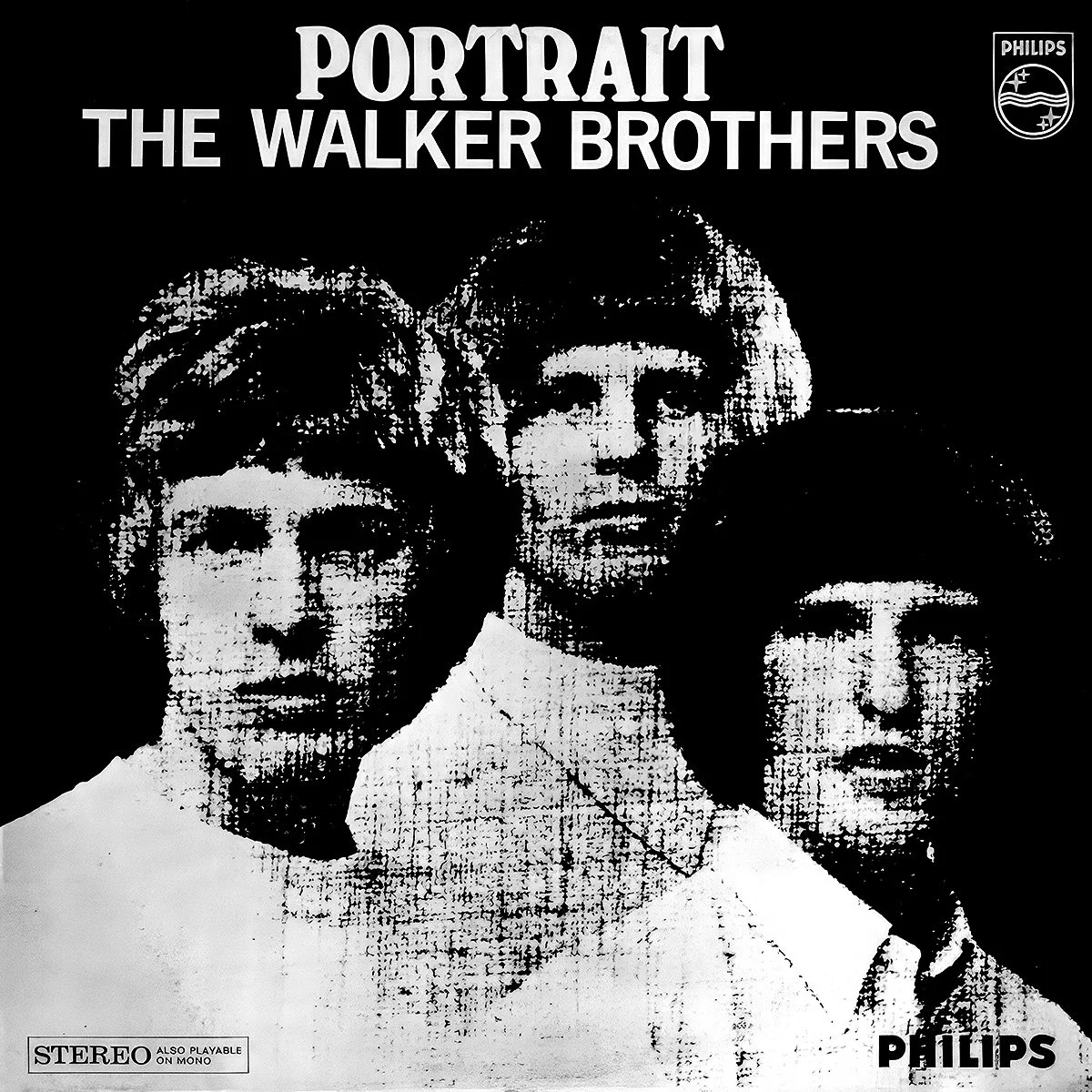
Portrait
The Walker Brothers
Released: August 26, 1966. Label: Philips
Portrait is the second album by The Walker Brothers. It comprises cover versions of contemporary songs and two originals: I Can See It Now, co-written by Scott Engel and producer John Franz and Saturday’s Child, a solo Engel composition.
Portrait begins with In Your Room, an English reworking, by lyricist Lee Pockriss, of the Argentine song El Amor, written by Joaquin Prieto, and sung by his brother, actor Antonio Prieto, from the 1966 film De Profesión Sospechosos (Professional Suspects). The group cover jazz standards including George Gershwin’s Summertime, Willard Robison and Dedette Lee Hill’s Old Folks and Lil Armstrong and Don Raye’s Just For A Thrill. Leiber and Stoller compositions Where’s The Girl? and Take It Like A Man sit alongside versions of contemporary hits, like People Get Ready, a hit for The Impressions, written by Curtis Mayfield.
The musical arrangements are directed by Reg Guest and Ivor Raymonde, and produced by John Franz. Cover photography is by Dezo Hoffmann and the sleeve notes written by NME journalist, Keith Altham. Potted biographies of the three band members also sit on the sleeve, with Walker being described as “the existentialist who knows what it means and read Jean Paul Sartre…[he is] the Loner who haunts the late night London scenes and immerses his mind in the unfathomable depths of modern jazz”.
Portrait spent four weeks at number 3 in the UK charts and 22 weeks in the UK top 40.
Track listing
In My Room
(Joaquin Prieto; Paul Vance and Lee Pockriss (English lyrics)) 2:34Saturday's Child
(Scott Engel)Just for a Thrill
(Lil Armstrong, Don Raye) 3:36Hurting Each Other
(Peter Udell, Gary Geld) 2:47Old Folks
(Willard Robison, Dedette Lee Hill) 3:13Summertime
(George Gershwin, Ira Gershwin, Dubose Heyward) 4:31People Get Ready
(Curtis Mayfield) 2:40I Can See It Now
(Scott Engel, John Franz) 3:00Where's the Girl
(Jerry Leiber, Mike Stoller) 3:14Living Above Your Head
(Jerry Leiber, Mike Stoller) 2:44Take It Like a Man
(Kenny Vance, Marty Sanders, Jay Black) 2:31No Sad Songs for Me
(Tom Springfield) 3:41
Credits
Producer - John Franz
Music Director - Ivor Raymonde, Reg Guest
Liner Notes - Keith Altham
Photography - Dezo Hoffmann
Drums, Vocals - Gary Walker
Guitar, Vocals - John Walker
Vocals, Guitar, Keyboards - Scott Walker
Reg Guest
On Mrs. Murphy - “It's very uncommercial for the time and it's courageous really when I think about it. Because they're paying me to make hit records and here are Scott and I doing this and the only cover I've got is that Scott likes it. That's why it is interesting, you could just go out on a limb a little bit. This is the quality he had of unusualness.”
On Scott’s reclusive image - “He doesn't do it on purpose. I'm sure he hasn't done a damn thing to encourage it. Some people might invent that to get attention. He used to be embarrassed by the crowds outside the studio”
Scott on Reg Guest
“I’m writing surrealist songs and using surrealist arrangements. Gil Evans type things. For instance we are doing a recording at an Odeon theatre using an enormous pipe organ! I’m working with Reg Guest and Johnny Franz.
“Reg is obviously brilliant, and one of the most underrated arrangers in the country. If only I could write music like that — he knows exactly what I’m thinking. It’s the fault of so many arrangers today who profess to hate what they are doing in pop. But he believes in what he’s doing.”
“We’ll have lyrics that will be as strange as the arrangements — very Dylan Thomas and Kafka. The songs may be autobiographies — lyrics about my apartment, because I never get out of my room, and about scandals and rumour mongers.”
Interview
Melody Maker, 3 September 1966
by Chris Welch
We talked about the Walkers’ latest album Portrait which includes some of the finest songs Scott has recorded, including his tender treatment of ‘Old Folks’.
“I wish the things we are doing now could have been included on the LP,” said Scott. “However we have to do things in a certain span of time and as time goes on our ideas get better and better, or worse and worse depending on your view point. And the things we are doing now are the most different you could imagine.
“I’m writing surrealist songs and using surrealist arrangements. Gil Evans type things. For instance we are doing a recording at an Odeon theatre using an enormous pipe organ! I’m working with Reg Guest and Johnny Franz.
“Reg is obviously brilliant, and one of the most underrated arrangers in the country. If only I could write music like that — he knows exactly what I’m thinking. It’s the fault of so many arrangers today who profess to hate what they are doing in pop. But he believes in what he’s doing.”
“At the moment we are excited about the new things. You know, Portrait is old fashioned in comparison with what we’re doing now. I can’t listen to it. I don’t listen to myself singing anyway.”
“I thought John’s tracks were excellent, and it’s given John a lot more confidence and shows people he doesn’t need any crutches. His voice has a very light, ethereal quality.”
When Scott first came to England, did he have preconceived ideas which way his musical policy would develop?
“I always had these ideas in my mind and now I’ve got some money I can do these things. I’m going to make recordings like paintings.
“If you notice on our big production type records, there isn’t one individual instrument coming through. We try to make the whole thing, voices and instruments an entity, and make each record sound like a performance.
When you’re doing a painting, you don’t concentrate on one eye, you bring in the whole face.”
“We’ll have lyrics that will be as strange as the arrangements — very Dylan Thomas and Kafka. The songs may be autobiographies — lyrics about my apartment, because I never get out of my room, and about scandals and rumour mongers.”
What were Scott’s tastes in vocalists?
“I’m wild about Astrud Gilberto… Astrud Gilberto is the epitome of subtlety and warmth.
“Blossom Dearie sent me a very nice letter. She wants me to come across and sing with her. She’s such a send-up! I was going to do a boat trip at one time. It was a Caribbean cruise type scene with Ronnie Scott and Stan Tracey.
“I would love to have gone, but I couldn’t do it anyway. It would have been a vacation and doing a bit of singing as well. The whole thing would have been a jazz holiday. But probably the only reason they called me was because they couldn’t get Mark Murphy. “I remember him from the States, and I love him because I can appreciate his mind. I know what he’s thinking when he’s singing and phrasing.”
Scott demonstrated by singing a few bars from ‘On Green Dolphin Street’ a la Murphy — in strange contrast to the din of Tamla Motown piped from speakers above our ears.
“I pride myself on standards,” said Scott stretching his legs, and refusing a cigarette. “I know the whole book and lots of numbers nobody knows like ‘Old Folks.’ There are so many beautiful standards to draw from. I go to Johnny Franz’s house and he plays piano for me while I sing. He’s a marvellous musician — we do a duo!
“Yeah I know millions of standards. It’s a lot of fun. We do my favourite song ‘Once Upon A Summertime’ and get very stoned and compliment each other.”
Interview
New Musical Express Summer Special, Summer 1966
by Keith Altham
HEAVILY DISGUISED as a member of a longhaired beat group, an American balladeer has infiltrated the British beat scene and emerged victoriously among the top pop faces devoted to folk, soul and beat music.
Scott Engel, the leading singing Walker Brother, has a fine range, good vocal control and an ability to interpret a lyric sensitively, giving depth and resonance to his voice, which usually only come with a greater maturity.
Scott is a product of the Tony Bennett, Frank Sinatra and Andy Williams school and might stand as well on his own as with a group. He has some very definite views on his future as a solo singer.
“Solo is a word a long way off,” said Scott, when I spoke to him in his St John’s Wood hotel. “I came to Britain with two other guys and I owe them something. We broke big as a trio and we’ll stay together as a trio for a year or two. What happens after that is up to the individual.
“I tried being a solo artist before and things didn’t work out too well. Eddie Fisher took me in tow and I did three major TVs in the U.S. before his romance with Elizabeth Taylor snarled things up – I’m in no hurry to repeat that mistake.”
Although working as a solo artist does not appeal to Scott for the present, in his social life he is very much a loner. He follows the ideas and attitudes of the French novelist Jean Paul Sartre – probably one of the ‘loneliest’ writers in the world.
WORRIER
“I’m a born worrier,” admits Scott. “I turn in on myself for explanations and reasons. Sometimes when I’m worked up over something, it’s marvellous to have a comedian like ‘The Leeds’ around, but other times I want to be out on my own. Privacy of mind and person is very important to me at such a time. I’m constantly surprised by the fans who write in to me and appreciate the fact that I am a singular kind of person.
“I’d hate to be thought of as some kind of knight in shining armour on a white charger. Fortunately, the fans don’t seem to see me like that. I get thousands of sympathetic letters saying how they understand me and would like to help. That’s very nice; it makes me feel good. I suppose there’s something a little pathetic about me which generates sympathy.”
The Walker Brothers as a group are largely dependent upon Scott for their financial and business transactions. This one-man organisation status proved a little bit too much for Scott when it came to producing records, and so six months ago he brought to England his friend, John Stewart, and they formed Alec Noel Productions Ltd. Those names are their own middle names, Scott’s being Noel.
“John and I produced Gary’s record ‘You Don’t Love Me’,” said Scott. “One or two other artists, like Johnny B. Great and Johnny and the Hawkes, will also record for us. Record production is something that I hope to go into much more deeply when our scene as the Walker Brothers has cooled a little and I have more time. I’m fortunate in working with John Stewart, for he thinks and works in a similar style to myself. I got much of my knowledge from men like Sonny Bono, Jack Nitzsche and Phil Spector, whom I watched working in America.”
INFLUENCE
Of all the singers who influenced Scott, and of whom he speaks most favourably, the name of Jack Jones occurs most often.
“I don’t count myself in his class,” says Scott, “but I am working on my own, studying breath control and phrasing, so that I can sing in the relaxed manner of artists like Jones. Just to be able to put the kind of styling into a song that Sinatra does in ‘A Very Good Year’, for example. That would mean a lot to me.”
Like most Americans, Scott is a ‘kidder’ when it comes to talking about his close friends, like ‘Brother’ Gary, whom he always refers to as ‘The Leeds’, This is not because he thinks so little of them. On the contrary: “If you can’t insult your friends – who can you insult?” asks Scott.
On a more serious note, Scott will tell you that his show-business career concerns him passionately and that before he does a show he works himself up into a pitch of almost nervous exhaustion. His face visibly whitens, the hands clench and unclench and he becomes ‘Scott Engel the worrier’ once more.
“But when I hit that stage and the footlights come up at me it’s like a bell ringing in my ear,” says Scott. “I snap out of it in a second. You see, I’m an entertainer at heart.”
Interview
Rave, June 1966
by Mike Grant
“I’ve never consciously worked on the image of being alone,” Scott told me. “I refuse many interviews because I haven’t the time or I’m in the wrong mood. If I wanted to trade on this ‘lonely young man’ bit I’d grab all the publicity I could, wouldn’t I? People just have to take me as I am.”
“This business is a vast forest — it warps your sense of values,” says Scott. “I fight it but it changes me.”
“One of the things I appreciate are the letters from the fans,” says Scott. “I don’t want anyone to think of me as a knight in shining armour. I’m not tall, good-looking Scott Walker, the teenage idol — I’m tall, skinny, funny-looking Scott Engel, the person.”
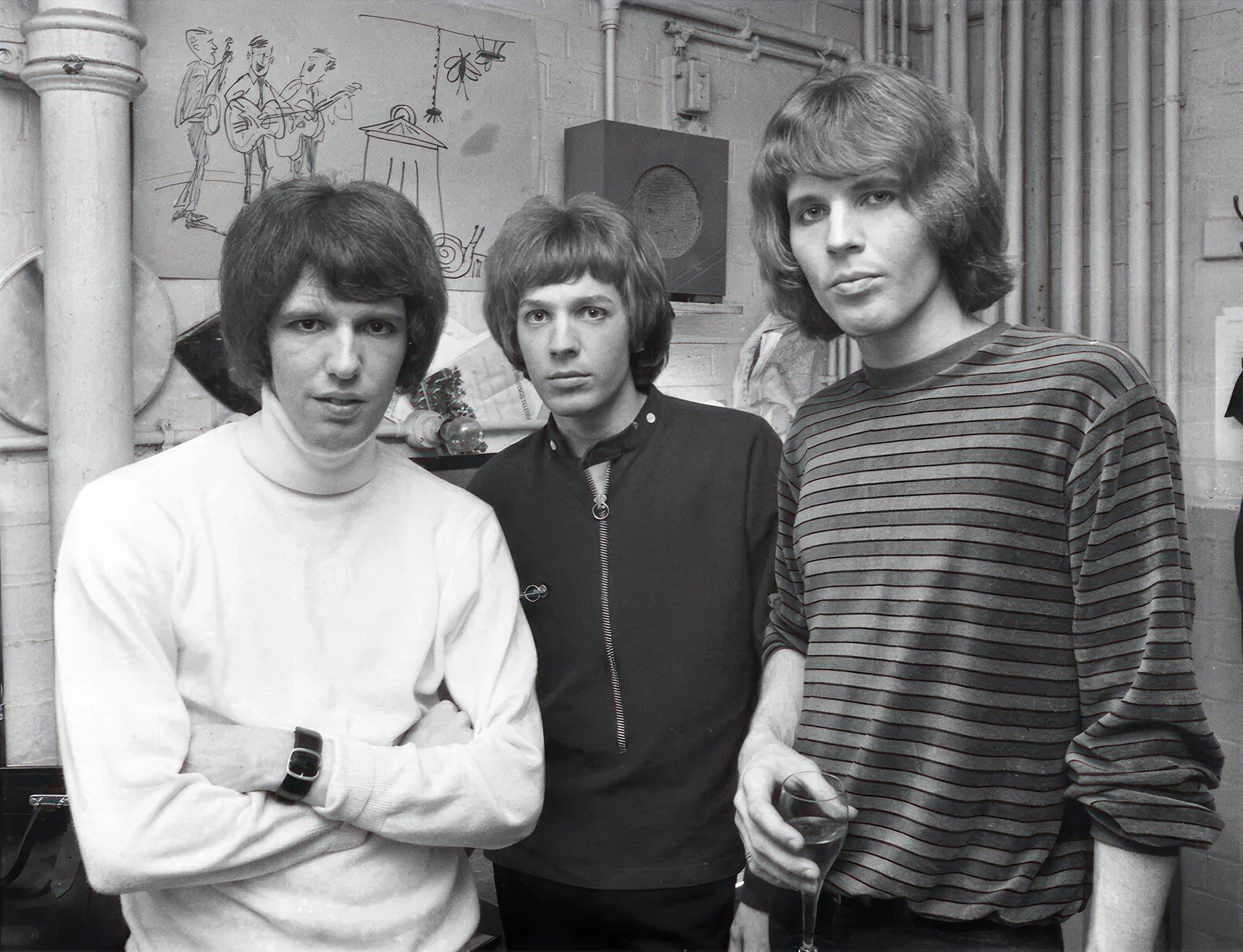
The Walker Brothers, Backstage Coventry Theatre, 1st May 1966. Photo Coventry Telegraph Archive
Interview
Disc, 20th August 1966
By Bob Farmer
When Scott Walker walks off a stage and into his self-imposed seclusion, the last people he wants to socialise with are John Maus and Gary Leeds!
“I know a lot of people look on them as long-haired morons. They’re not. I don’t get along socially with them simply because I don’t want to. We just have nothing in common.
“I want to talk about music — jazz mainly and art.”
The self-centred loner? Hardly. Hear what else Scott has to say about his “brothers” and the 64,000-dollar subject of splitting to go solo.
“Even if we don’t get on together socially, I could never think of going solo and leaving them stranded. I’ll only go solo when I can become a big record producer and jazz singer and the boys have settled into entertainers on their own. I think we’ve been through too much together to split up before that stage comes.’
And when will that be?
“If we continue to make the right decisions, we’ve got two more years as strong-selling pop people. Then, I think, the party will be over for the Walker Brothers as such.”
And what a ball it has been. Yet, with Scott, you get the feeling that he’ll never be content to sit back and sunbathe in the rays of his remarkable success.
“Right. I haven’t had too many highlights because I’m never satisfied - or ever will be.
“I just don’t feel like a star at all. The only way that might happen would be to become something like Sinatra because then you become genuinely respected. I want creative respect - not to be screamed at.”
It doesn’t mean to say that Scott dismisses his fans as a necessary evil.
“I hate the ones who take the line ‘We’re your fans so respect us because we put you where you are.’ It’s the sickest thing I’ve ever heard. Then there are the ones who get me thrown out of apartments because they hang around and cause complaints from my neighbours. This [sorry, dear reader, but the site is a secret] is the fifth flat I’ve had in a year.
“The fans I like are those who make an attempt to understand me.”
But how do you understand such a secretive, suspicious person? Is that sad, serious loner image so accurate?
“I’m not a sad person,” explains Scott, “but I do like to be by myself. I’m just not social, I most effort suppose. The most effort I’ll make is to go and watch jazz at Ronnie Scott’s. I don’t get out much, otherwise. I’m most un-healthy.
But when I walked down Carnaby Street the other day with a big hat, I said to myself that I’d see if I could walk from one end to the other without being spotted. But my hat blew off and they started chasing me. So I stay home. I don’t have any really close, intimate friends and this is the way I want it.
“In any case, I’m not a humorous person. I take things too seriously - believe in being on my guard against all people.”
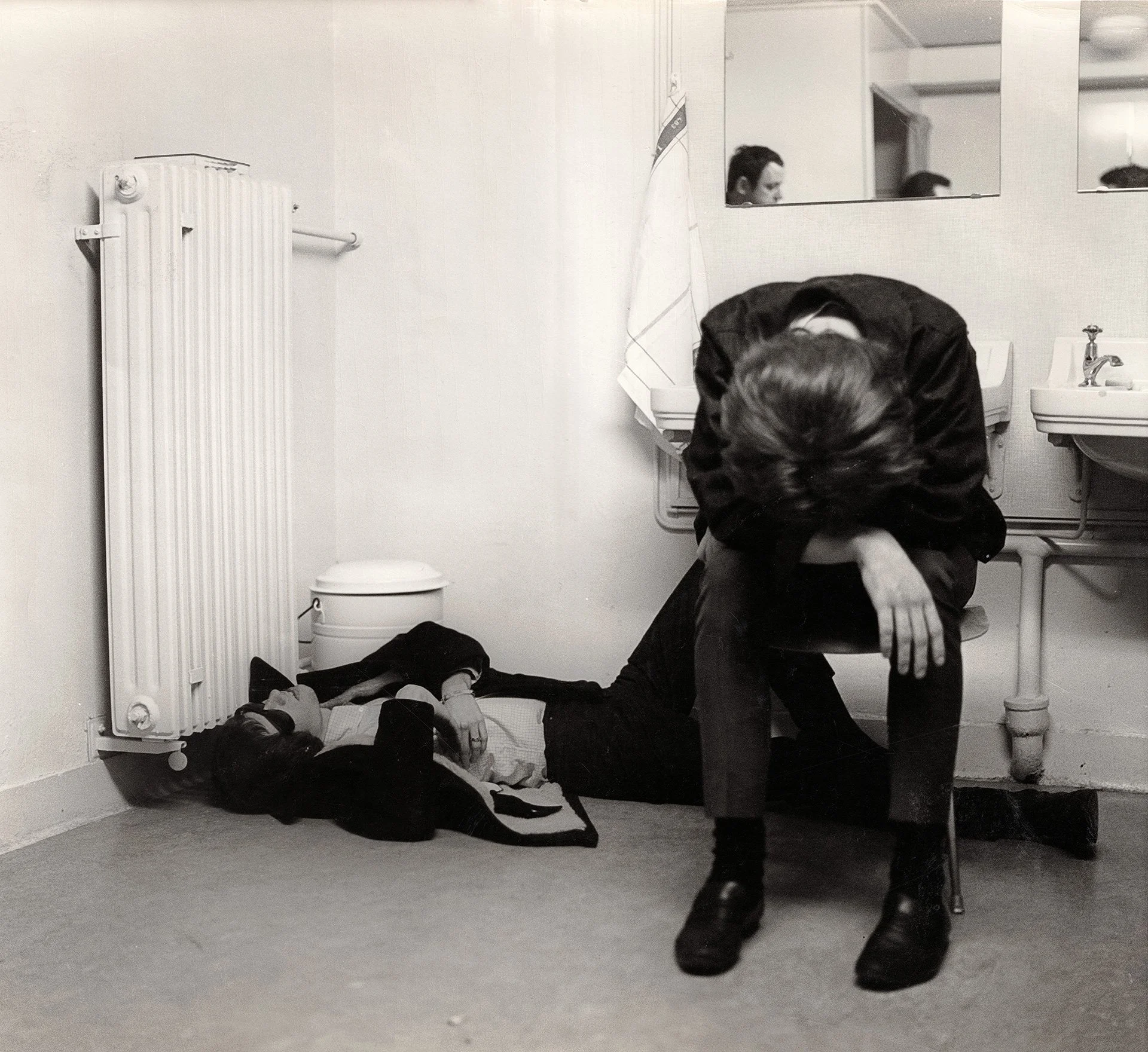
The Walker Brothers, Backstage Brussels 1966. Photo by Herman Selleslags