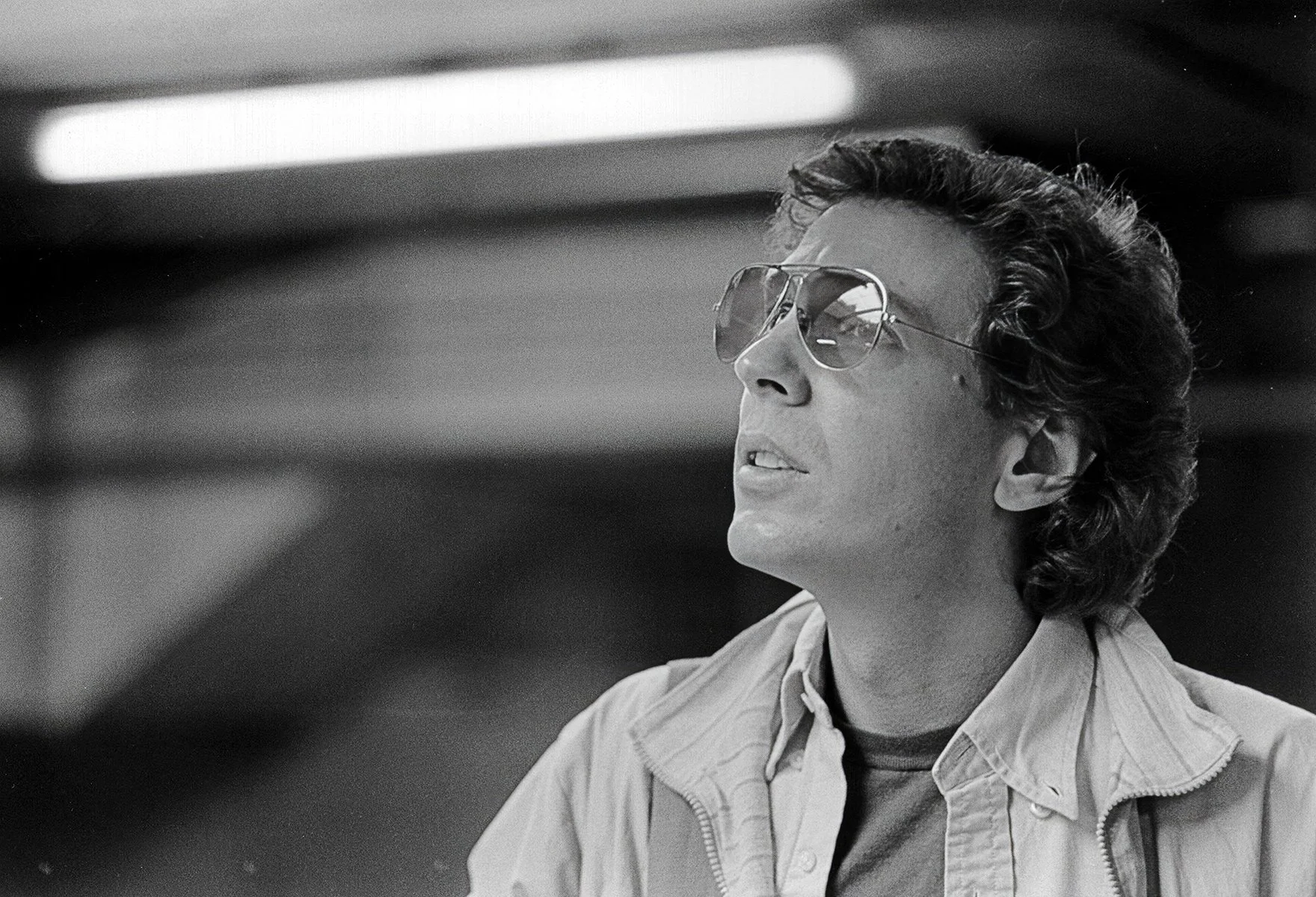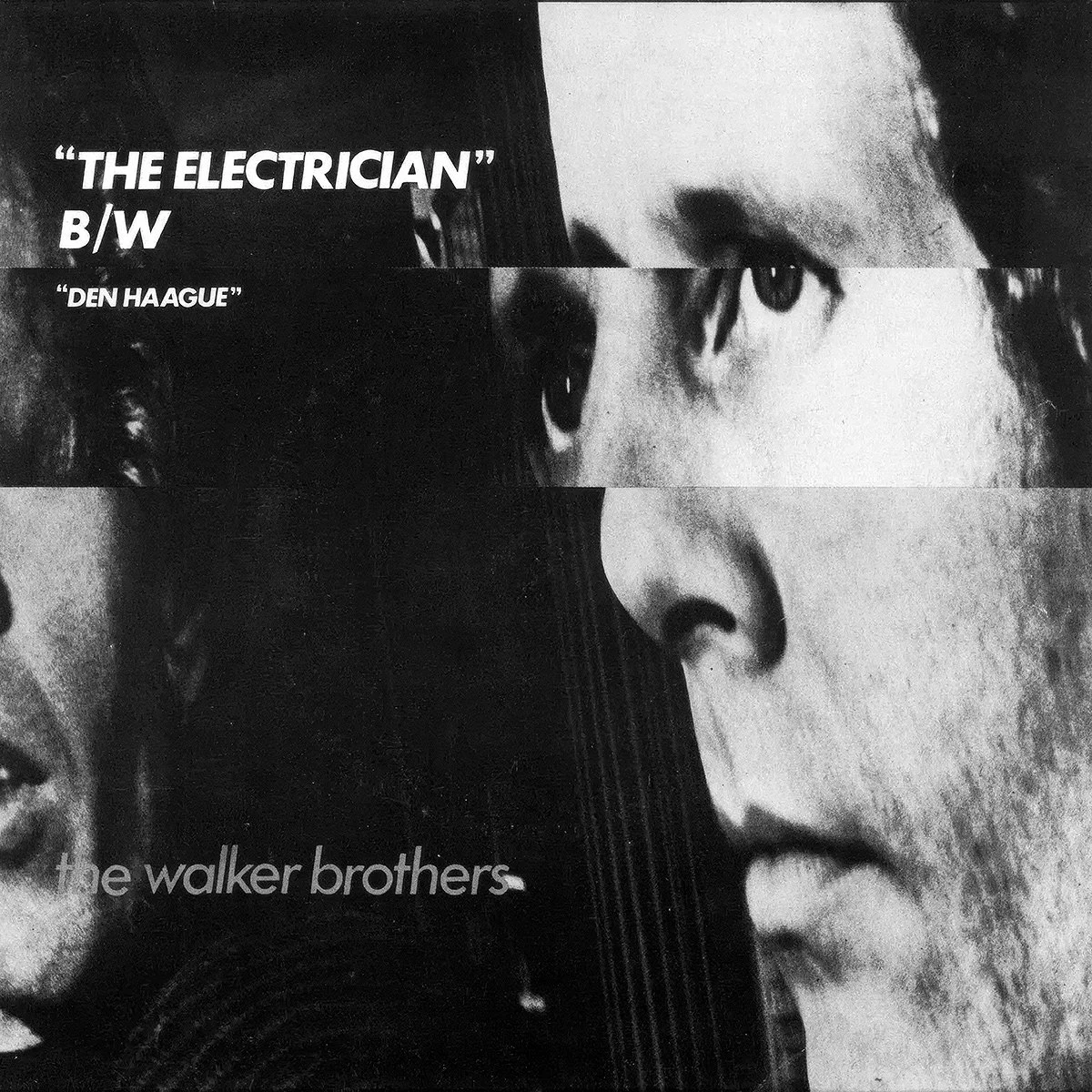
UK Picture Sleeve: GTO GT 230. Front
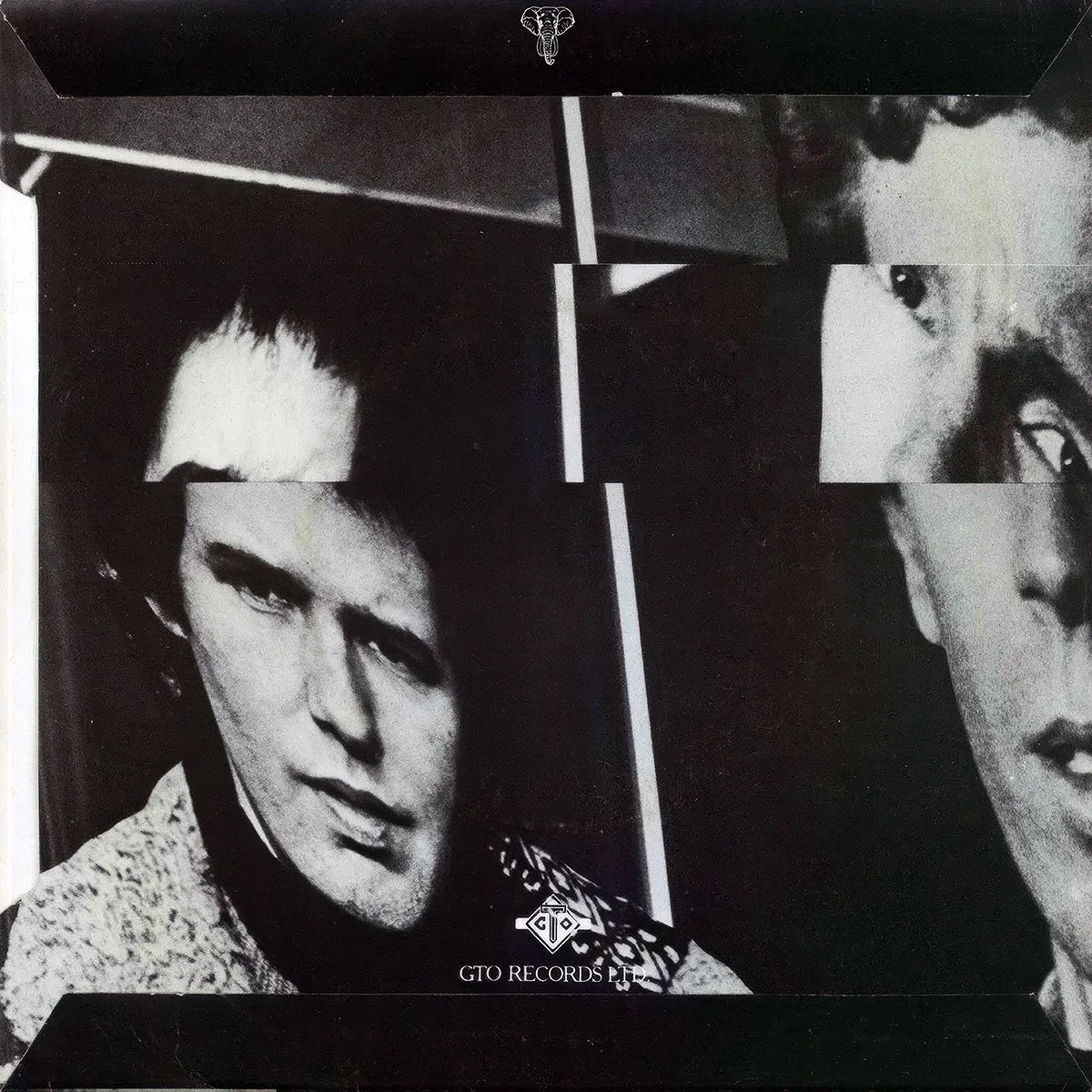
UK Picture Sleeve: GTO GT 230. Back
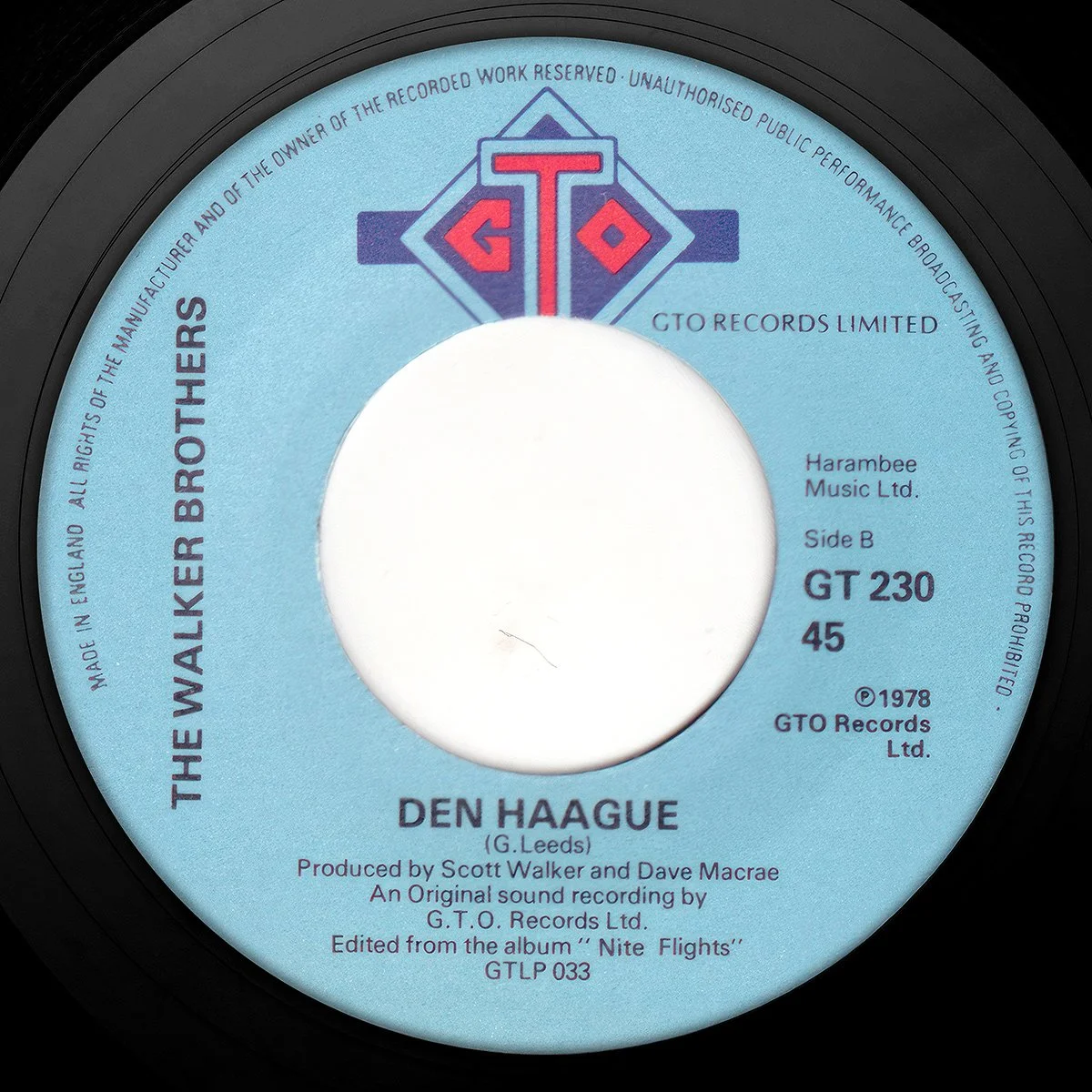
First UK Release: GTO GT 230. Side A
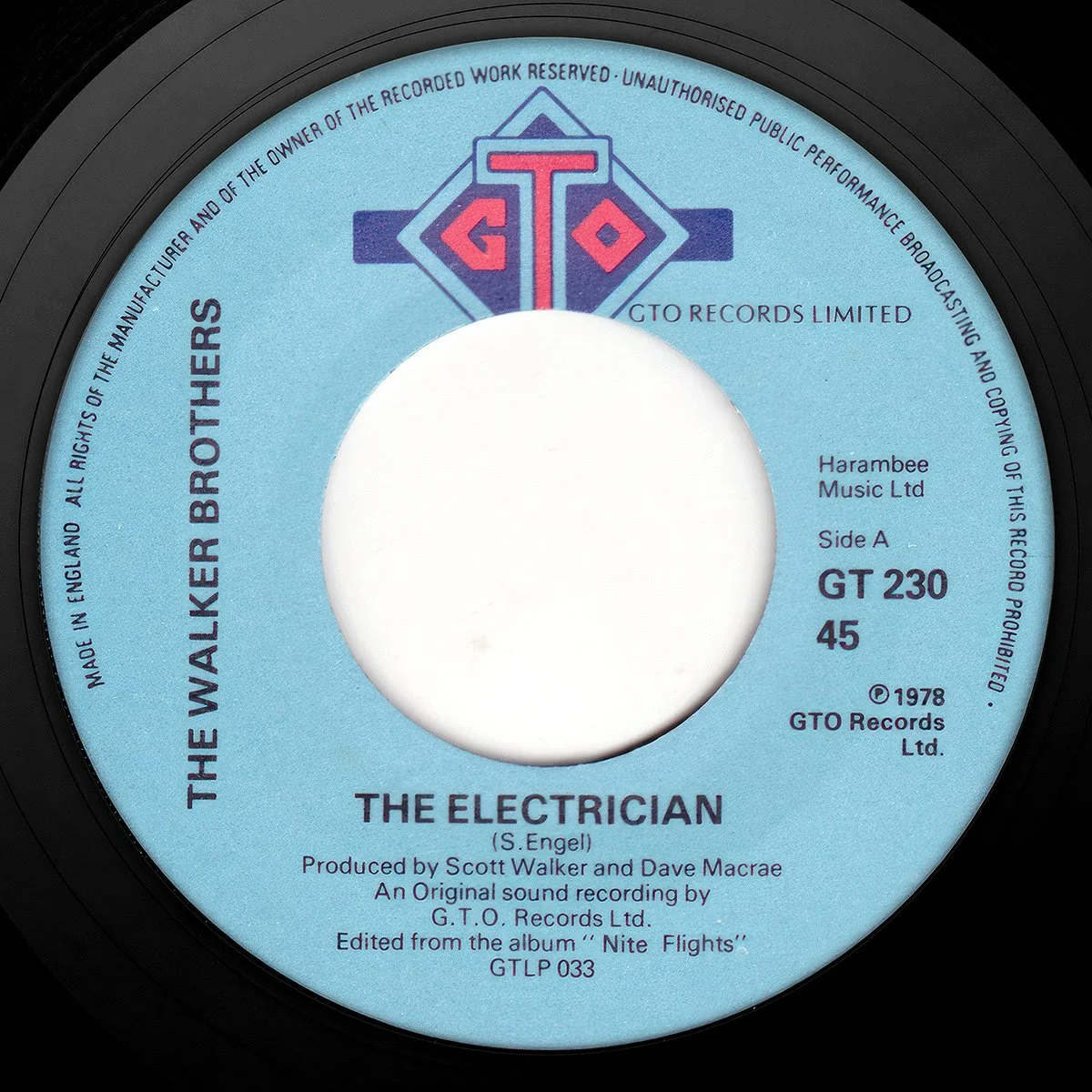
First UK Release: GTO GT 230. Side A
A The Electrician
B Den Haague
by The Walker Brothers
Released: August 18th, 1978. Label: GTO
The Electrician is the fourteenth single by the Walker Brothers, and their last before their split in late 1978. Written by Scott Walker, it is the opening track of their final album, Nite Flights, opening with low synthesiser stings and a repeated bass note. Inspired by the torture of CIA dissidents, its tone marks a radical shift from the rest of the Walker Brothers’ 1970s output. “When lights go low,” the lyrics, “There’s no help, no”.
Produced by Dennis Weinreich, the track builds to include orchestral strings, reminiscent of the arrangements in the group’s 1960s hits, and a classical guitar solo by Big Jim Sullivan, a prolific session musician who had also played on The Sun Ain’t Gonna Shine Anymore and Make It Easy on Yourself. The track returns to the synthesisers and bass of its opening for its ending.
The B-side is a John Walker composition, Den Haague, which also features on the Nite Flights album.
The single did not chart.
Credits
A. The Electrician 3:32
Written By Scott Engel
Producers Scott Walker, Dave MacRae
B. Den Haague 4:03
Written By Gary Leeds
Producers Scott Walker, Dave MacRae
Interview
Radio BFBS Germany, Night Flight. 1984
byAlan Bangs
Scott's visions of the future
Alan Bangs: We heard Scott Walker and Sleepwalkers Woman, and before that, The Walker Brothers and Scott Engel composition The Electrician. The Electrician, came from The Walker Brothers’ album Nite Flights, which was released in 1978, and the track that we’ve just heard, Sleepwalkers Woman, is from your most recent solo album Climate of Hunter, which has just been released. Is there six years between the period of composition of those two pieces?
Scott Walker: Yeah, six years of, working towards it, the second composition.
Alan Bangs: At the same time, they sound to me almost as if they’re coming very much from the same place.
Scott Walker: No, it’s very, very different. One is a political song, and the other is very different still.
Alan Bangs: Can you elaborate on that a little bit?
Well, I won’t elaborate on the second, but the first one, is, um, having to do with, if I can remember correctly—six years is a long time—the Americans sending in these people to train torturers in South America. The Electrician was what it was all about. I imagine these lovers in a conversation, and the other one is totally different from that. If you listen to the words of The Electrician, it really explains itself.
Alan Bangs: Where were you when you wrote the first one, The Electrician?
Scott Walker: I was in a flat in Fulham above a very noisy restaurant, but late at night, no one could hear me, so I could work like that.
Alan Bangs: You mentioned that The Walker Brothers in their time were very successful. Was it the result of that success that you were able, these last six years, to take the time that you obviously needed to make this record? In other words, what have you been living on between those two records that we’ve just heard?
Scott Walker: Well, not a lot, but that’s part of the business. The ‘60s were a rough time for everybody, not a lot of groups got paid. Generally speaking, if they went on, they made their money up in the 70s, but we never really made our money back. And, old friends and up to about last summer—management and anything—keeps you going. Publishers that pay you when they should, and that sort of thing. Somehow you get through, like everybody else does.
Alan Bangs: Perhaps we can talk in a minute about some of the things that you might have seen or read a little more specifically, but before that, I mean, was it a conscious decision on your part after The Walker Brothers had gotten back together and made a couple of albums to then stop and do something else, to have time for yourself again?
Scott Walker: No, what had happened—are you talking about the ‘70s Walker Brothers?
Alan Bangs: Yeah, yeah.
Scott Walker: This company we were with, GTO, was dissolving, and I was a producer on those albums. And on the Walker Brothers albums too, I was a co-producer in the early days—but this was a different thing. It was all in my lap. So I said to the other guys,
“This is going to be the last album, so everybody just get as self-indulgent as you want, just do what you want to do,” and that’s how that came about.
Alan Bangs: And so after that, from this album, Bir signed you. You say that you said to the others, “become as self-indulgent as you wish to be.” I’m sure that’s not to be taken entirely seriously. On the other hand, the album was split very much between the three of you. The first four songs on the first side were yours; the first and second were credited to Gary Leeds, and the other four came from John Walker. Was that again a decision to separate the three of you very much? Because it does sound like that; it’s like three different people just sharing the same album.
Scott Walker: Well, John’s on all of my tracks. I’m not on his, because that’s the way he heard it. That wasn’t a conscious decision to separate any. I mean, only because, when I was writing Night Flights, I had him in mind above me all the time. So, it might have been a subconscious decision.
Alan Bangs: Let’s go back again for a minute to the point where that album was made and completed. You said that GTO was in the process of dissolving at the time, and that was the main reason why you then were not able to record afterwards. But I’m sure if you’d really wanted, at that stage, to get back into recording more quickly than you finally did, it would have been possible. I can only assume, therefore, that there must have been some other reason for not getting back and recording earlier. Isn’t that the case?
“Well, the reason was I had gone through just a spate of making a lot of bad records, and I had to pull myself together to try to get back to a state that I was in when I was making my good records. Not that I could ever achieve that same state, because you’re younger then, but I had to, make at least… if this is going to be my last record a final good record. Anyway, so for me, it was good.”
Scott Walker