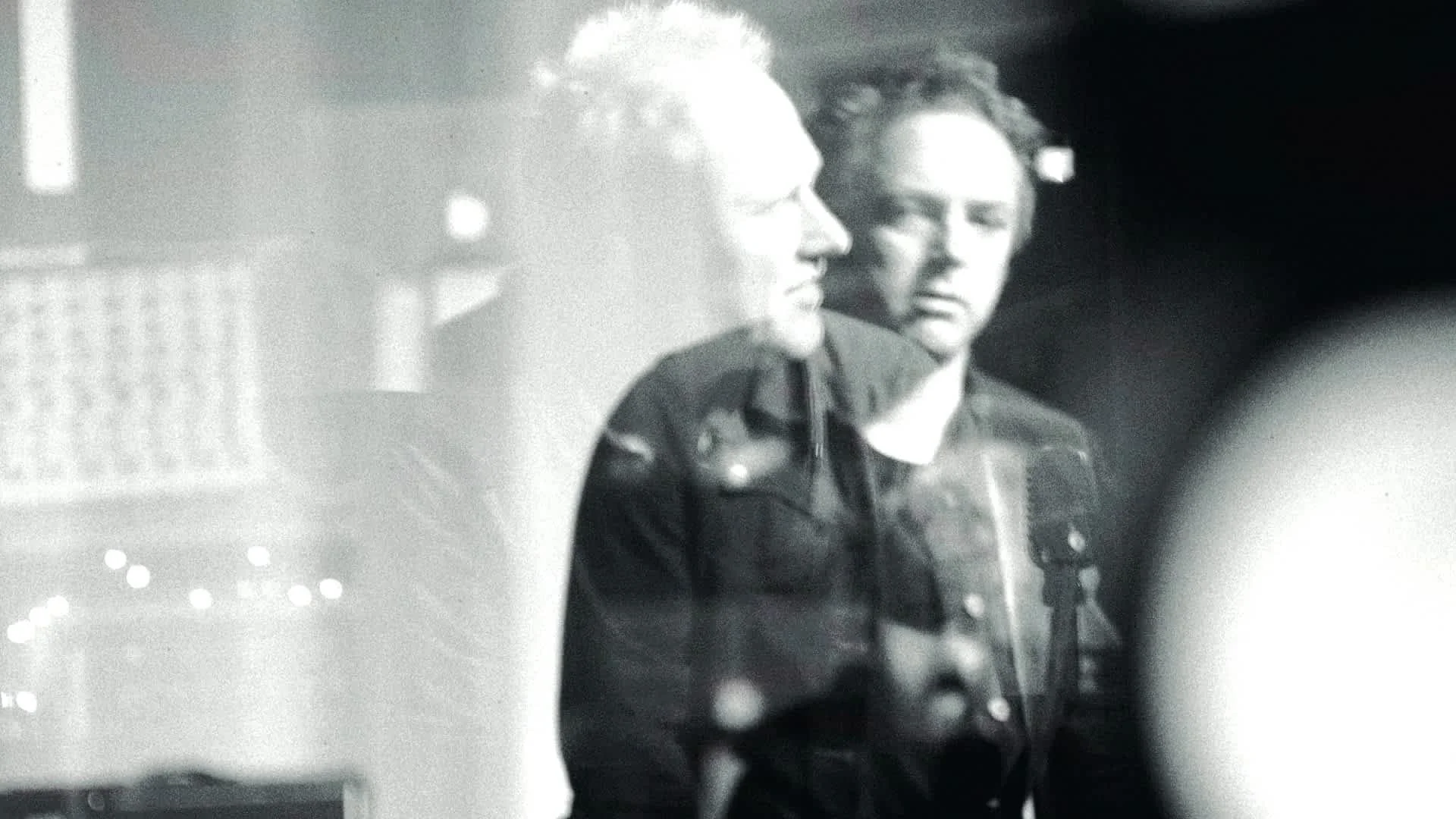
Spontaneity in the Studio, with guitarist James Stevenson
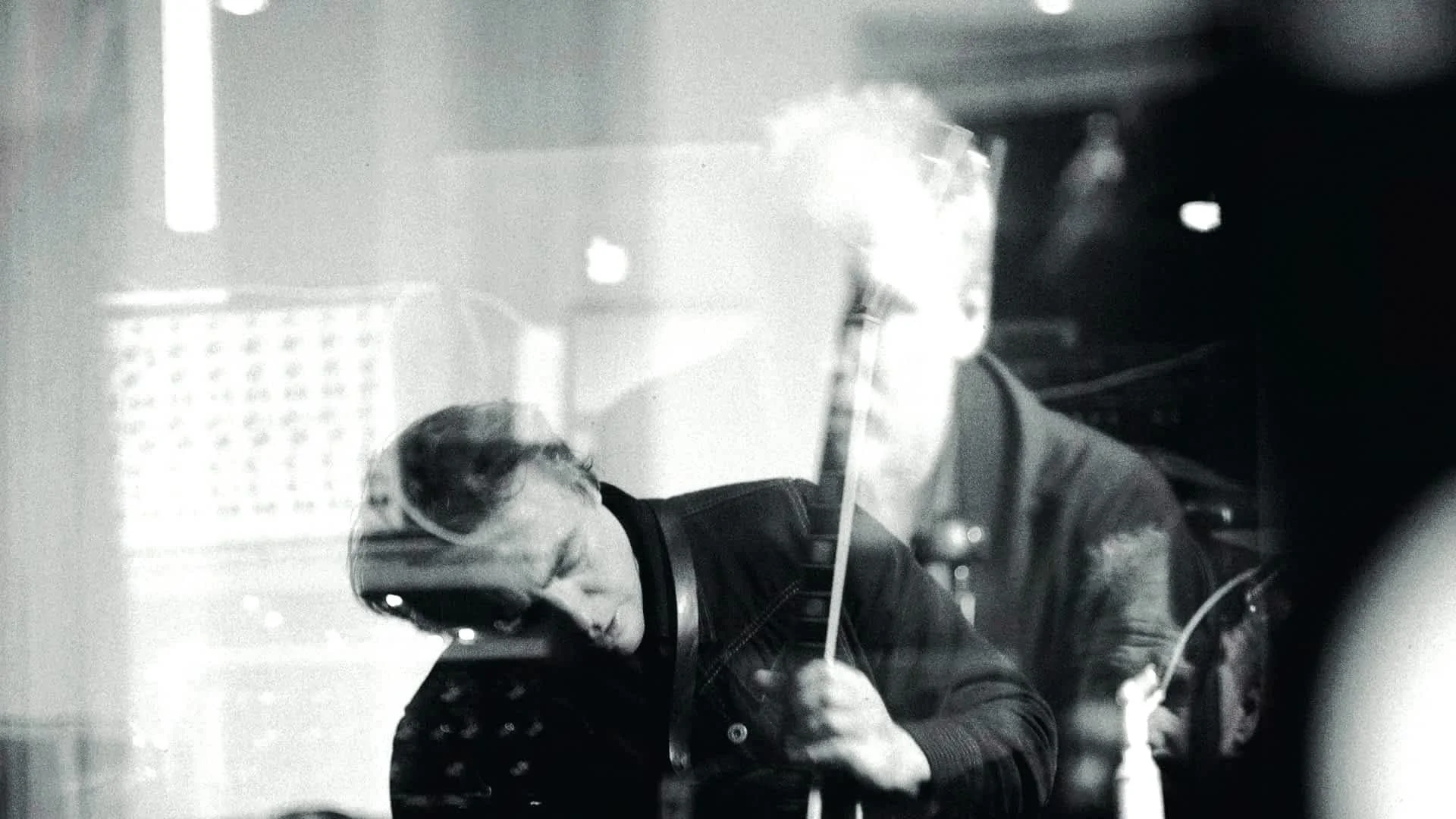
Audio Transcript
Peter Walsh in conversation with James Stevenson
Peter Walsh So, I'm talking to James Stevenson, guitarist extraordinaire, who played on a lot of Scott's recordings. James, we've known each other for a long time, haven't we?
James Stevenson Actually, 40 years this year, Pete. Can you believe that?
PW Is it 40 years? My God.
JS 1986, yeah, so 39 years, sorry.
PW That's right, absolutely. And I've produced and worked with you on numerous projects you've been doing, numerous bands you've been involved with: Gene Loves Jezebel, The Alarm, International Swingers. I mean, you've done loads of stuff and we've...
JS Both my solo albums.
PW Both your solo albums, yes.
JS So, we know how we work together in the studio.
PW We do, we do. And we've become great friends as well. So, it's great to talk to you about the work we did together with Scott. And I'd wanted to get you into the studio with us for a long time. And do you remember how it happened?
JS I think you were working on Tilt.
PW Right.
JS And we must have been doing something together. And you told me about this recording and this new album you were doing with Scott Walker. And I was intrigued. And of course, you know, I still thought of him, you know, as this American crooner, you know, who sang The Sun Ain't Gonna Shine Anymore and all that stuff. I didn't realise he'd gone down this very, very kind of avant-garde path. And after you'd finished the record, you sent me one of the tracks that you'd done, which is called Patriot.
PW That's right. Yeah.
JS And it just absolutely blew my head off. And especially the way you'd recorded the real orchestra on it.
PW Right.
JS And ‘cause - it sounded like a power chord when it came in, which I just thought was incredible. And then - you said that you'd like to get me to work on it because, at some stage, ‘cause you had, I think there were a lot of very serious session musicians who were all sight readers, and I think your angle was that you wanted to get, sort of, a bit of rock and roll in it somehow!
PW Well, yeah, I mean, there were two quite different kinds of musicians that we would get into the studio to record with Scott. So as you say, there were the sight readers, the ones that you could just put the music up in front and we had it all scored out. And I mean, not that you can't read music. I know you can read music, but more in a sort of rock and roll way, chords and stuff.
JS I can read a chord chart, that's about it Pete. I could work something out if you gave me a few hours. I’ve never been able to sight read.
PW And I think harmonically speaking, a lot of Scott's music was so complex that it had to be scored and written down for the musicians to read. From a purely technical perspective, and to help the workflow in the recording process. But what I thought with getting you involved, and I spoke to Scott on numerous occasions, was to get someone in who could respond to the music and the atmospheres without actually reading it from a score. So it was more of an instinctive response to what we were looking for. You would know roughly what we wanted, but it was up to your interpretation.
JS There was actually quite a lot of spontaneity, Pete, I think, with Scott, with me. You know, he would say … and if you're there and you’re sight reading, in a way, the part’s already been written out for you. So your creative input is sort of limited: it's limited to what's on the score. Whereas Scott would say things to me like … well, the first time I ever walked into that studio in Acton …
PW Kore Studios, yep.
JS … yeah the first thing he said to me, after shaking hands with me and after you introduced us, he said, James, I just want to let you know, I don't want to hear anything that sounds like a guitar.
PW Ha ha ha!
JS I was like, Okay!?! Ha ha!
PW Deep breath!
JS But he would say things like, you know, I want this to sound like a kettle exploding. I want the guitar to sound like that. Or, you know, something. And then you'd have to interpret what he said. And, you know, there were certain things - he'd like you to bring lots of weird instruments. So I had a baritone guitar, a Fender Bass Six, that he really liked. And then I had that Echoplex, which you can vary the tape speed as you're mucking about and playing with it. And he liked all those kind of things, and funny ... Did we ever use that funny … remember that funny cat pedal?
PW There was a thing called a funny cat, James, and I've actually prepared a few little samples here for you to have a listen to. I mean, certainly, I had primed Scott and told him that you were not only a great friend of mine, but the proud owner of a huge guitar collection, which included multiple sets of different pedals, and pedals that you'd never heard of before. One of which was the funny cat, there was the psychedelic machine…
JW Oh, God, I loved that one.
PW Do you remember that? And of course, the Echoplex. But you just mentioned the funny cat here. And I was going through the multitracks the other day, and I thought we'd come up on this funny cat thing. So this was taken from Zercon.
JS Oh, he didn't, um ... There's no credit for the funny cat on the record.
PW No, I don't think … I'm not sure why we didn't credit that because that would be a name that would really have kind of made him laugh.
JS He likes things like ... He liked things like that.
PW Exactly. But let me just play you this funny cat. And you can tell me if it is, in fact, the funny cat, which I think it is. Here you go. Stand by.
05:45 - Listening to Zercon “Funny Cat” guitar
Wait for it. It's got like a whole sort of envelope filter thing going on.
There you go. There you go!
JS Yep. That's it.
PW Does that sound like the funny cat?
JS It's usually a bit more extreme than that.
PW Yeah. Well, if I turned it up, it would be.
JS Ha ha ha!
PW And of course, it's all in the mix, mate.
JS Yeah. ‘Course it is.
PW So and I've also got the funny cat with something which is called a “B guitar”, okay.
JS Oh that must be the baritone guitar.
PW No, it's actually … On the track listing, it's listed as Bee, as in B-E-E. And when I play it, you'll see what I mean.
JS Oh!
PW Have a listen to this. And I think it is the Bee.
JS Is this on Zercon as well?
PW Yeah, yeah. This is the bumblebee guitar, I think. What we call bumblebee guitar. Here you go.
06.33 – Listening to Zercon “Bumblebee” guitar
How’s that. You'd have to be a good reader to play that, James.
JS That's a loop, isn't it?
PW No!
JS Oh really?!
PW That's you playing, mate! I think there's two takes. And it's called “JS Bee guitar”. So I think there's a whole load of like horns playing at the same time, so you don't quite hear it very close …
JS You know what, Pete, I can't really work out what that is, ha ha.
PW It's very good, isn't it?
JS It is good, yeah.
PW But I think it's you. Ha ha!
JS Ha ha ha! Sounds like the sort of thing I did when I was working with Scott.
PW Exactly. So you played on a couple of Scott's albums and the first one was on The Drift, 2005; second one was 2012, Bish Bosch, yeah?
JS Yeah, yeah.
PW And I think you played on three tracks on each album.
JS I did.
PW And I mean, it was a huge variety of sound that you provided. A lot of it was textural, sort of atmospheric work with the volume pedal: clean, reverb-y sounds. And then you did quite a few, like, distorted sort of lead type riffs.
JS Yeah … I mean, I was listening to, um, Corps de Blah. And also Don't Bump His Head.
PW Yep.
JS And there's the riff there. I played them on a baritone guitar. And they're almost, like … I think Mark must have come up with the actual riffs, I don't think I created them …
PW Mark Warman. Yeah.
JS Yeah. But they, um, they're like, they're almost like metal riffs. Da na na na…
PW Exactly.
JS They could almost be off a Metallica album.
PW Yeah, yeah.
JS Sometimes there would be stuff like that, and other times it would just be, you know, a massive wash of noise that would just pad out everything in the mid range somewhere.
PW Totally. Yeah. I mean, those riffs, you know … I mean, Scott composed those riffs.
JS Oh, Scott was it, yeah.
PW So they're part of the composition. And, um, we would have, you know, they would have been in the demos, and then Mark would have transcribed them, and then eventually we got them played. And I - going through the multitracks, I saw that you had - actually you're co-credited with Hughie Burns on a lot of the stuff, and that was because we actually doubled it. So, so there's Hughie - Hughie is sometimes on the left and you're on the right, you know?
JS Yeah, yeah.
PW So, I've actually got one of those, James, here, that I can play very quickly, so you can - so everyone can hear it. But this was the one from See You Don't Bump His Head that you're talking about.
09:21 – Listening to See You Don’t Bump His Head guitar riff
JS Right.
PW Could be on a James Bond film. That's the one, yeah?
JS Yeah, yeah, ha ha ha!
PW Which is kind of weird ‘cause it's got … Another characteristic of Scott's music is it has its kind of own internal sense of tempo. ‘Cause I remember …
JS Absolutely.
PW I remember you recording that. And even though the song was actually working to a click, he wanted you to play it in a certain way, so it sounds a bit stiff - but it's definitely not in the tempo of the song, you know. So it's quite - I should imagine that's quite difficult. A lot of it, what you're doing, is out of the box, and probably quite difficult to execute. Did you find that, with Scott?
JS No, no, I don't think so. Not really. I mean, with Scott’s stuff, there was like such a mad juxtaposition of things, you know, like suddenly there'd be a riff like that, and then he'd say, you know, something completely different. Like, I want this to sound like, you know, you're cutting through a big slab of beef with your guitar or something.
PW Yeah.
JS And then, and there's some other noises that I've heard that sound actually sound like sort of knives being sharpened, but I actually think it's my guitar.
PW Yeah, yeah. Yep. I've got one of those here, James. Ummm, let me just see …
There you go.
10:51- Listening to See You Don’t Bump His Head guitar effect
JS Oh, that might …
PW How's that? That one is, I think … you were using an e-bow, weren't you?
JS Maybe.
PW That's a kind of an e-bow against the strings, kind of, almost using it like a plectrum, you know? Whatever. That was in See You Don’t Bump His Head.
How did you find working with Scott? Did you find that it was … I mean, you were in the studio most of the time, next to the amplifiers. So what was he like as a communicator?
JS Yeah. I mean, he had his ideas. I mean, a lot of the time he would sort of speak through you, wouldn't he? And you would kind of interpret what he wanted and then you'd speak to me in the studio from the control room.
PW Yep.
JS Um, he was quite introverted in some ways. I mean, I can remember once, you know, the time I sort of started to get to know him and open up to him … because he lived in Chiswick, didn't he?
PW That's right.
JS And he'd lived there for a long, long time, like, you know, 30 years. And I grew up in Chiswick. So we started talking about that and we sort of had that in common. So it was something we had in common that was completely outside music. Um, so, you know, that, in a way, that was a kind of a bonding thing.
But he never, ever had a problem … When he said, I don't want to hear anything that sounds like a guitar, you know, he didn't care if that offended me or not. He just knew what he wanted. And, um, I had to interpret it the best I could.
And I think quite a lot of the time, you know, you'd say, well, what about this? And I'd say, well, what about this? We'd play him something and a funny noise. And he'd be like, that'd be great for this other track. You know? Um, so, it kind of could be a bit like that, but it was … the thing is, communicating with Scott wasn't difficult. It was interpreting what he wanted. Um, and that was, there was sort of an art to that really.
PW Absolutely, yeah.
JS Yeah. It was the total opposite…. ‘cause I'd played on that Tricky album, Maxinquaye. And Tricky would be like, just play whatever you want.
PW Right, right.
JS And then he would like take out the little bits he liked. Whereas Scott, he was really specific in what he wanted.
PW That's right. I mean, there was a fair amount of placement, wasn't there, sort of, reacting ... I mean, even though he didn't want it to sound literal and he didn't want it to, you know, he didn't want like an answer to every lyric, or some kind of sound that would reflect what he was singing about - but there was definitely … obviously you're not going to put a huge great big blast of something whilst he's singing.
And I remember at the time there was no vocals. So there was just this little keyboard doing the melody. So whenever you heard the keyboard, you kind of knew you had to shut up, you know?
JS Ha ha ha. Yeah.
PW Um, but also … with all the pedal thing, I remember him as being very sort of, um, he was like a kid in a sweet shop, you know. He'd want to play with them. He'd want to hear them all. He'd want to, you know, you've got them all laid out on the floor in the studio area, and he'd be on his knees, like sort of twiddling knobs.
JS And I can remember that. It was like that in Metropolis, when we worked in Metropolis.
PW Exactly. Yeah. He was like, so into the process and inquisitive in a way, you know? So, wanting to get the best out of every particular thing you had, you know?
JS Yeah.
PW And, I guess what a lot of people would want to know is, how do you feel with what you played? And when you listen to it now, are you proud of it? Is it like … Because you've had such a long career and played with so many different people …
JS Oh, well, I'm just proud to have played on those records.
PW Yeah.
JS You know, I mean, they're, you know, they're challenging to listen to in some ways and you have to … when you were making or recording the records, or the songs, you know, sometimes you would think, what is going on here? What is … and then it would all kind of come together when he put the vocal on it and a few other things.
PW It's weird, you know, James. I haven't listened to that stuff for a long time. And I always remember you saying to me once, before we worked on that stuff together, talking about Patriot, you said you listened to it one night and it scared you to death, you know? And, I remember when you said that, I thought, God, I wish I could listen to Scott's music like other people do. Like they haven't heard it before. And, sort of, make a …
JS It's just too subjective for you probably.
PW It's too subjective. But the funny thing is, I haven't listened to Bish Bosch or Drift for a number of years. And before our call now, I listened to it yesterday and I'm sort of … You know, if someone asked me that question about, how do I feel about my contribution, I mean … some of the mixing work on it, even though I say it myself, I'm just amazed at how it all fits together.
JS Exactly. It was the same with the instrumentation as well.
PW Yeah. It's like a jigsaw puzzle, how it all clicks into place.
JD Absolutely.
PW And when you have got that sort of distance from it and you hear it for the first time again - I mean, it happened to me yesterday. I was thinking, oh my God, this is insane. And, you know, just the sound of every instrument. Going through all the multitracks looking for your guitar sounds here, I was just - it was painstaking work, but really, to get these kinds of things, they don't just come like that, you know, you've got to search for these sounds.
And he was … one thing that I would say was good: he had an energy to push people into, you know, that one extra take. Let's look at the sound one more time, you know? And, and then we get it.
JS A bit like you, Pete!
PW A bit like me, James, yeah.
JS Ha ha ha ha!
PW Well, maybe, yeah, exactly. But listen, I said I'd come back to it, James, but you know the Echoplex: maybe you could just let us know, let everyone know what it is and how it works.
JS Oh, I mean, it's quite a standard piece of kit, really. They were made from the late 60s through to the mid 70s. And it's basically, you know, an analogue tape delay machine. It's got a vari-speed on it so that you can change the sound - the speed of the tape, and therefore the speed of the delay and the intensity of the delay as you're actually playing.
PW Right. So you actually play into it and it records it and then plays it back later. Is that … As a delay, yeah?
JS Exactly. Yeah. So, I mean, you know, there's lots of - most tape delays, you know, analogue tape delays, do do the same thing. Like, you know, the Roland 501 is another favourite of mine. Really, really great machine.
PW Yep. I remember Charlie from Simple Minds used to use that all the time when we were recording together.
JS Ahh - and even the humble WEM Copicat can be good for mucking about with. So, yeah, I don't know what it is about tape, but it's, you know, it's definitely got its own sonic qualities, which we all love.
PW Well, we used it a lot, James, on Drift. And it was a sound, a gadget. It was a go to thing for Scott at that time. I mean, he really loved it. He'd say to me, “make sure James brings in his echo thingy,” you know.
JS Ha ha ha.
PW And going through it the other day, I did pick out a couple of things. And it's incredible. I mean, it's one thing having one, but it's another thing knowing how to get the best out of it.
JS And well, that's with any pedal, you have to muck about with them for a bit. And they're all different. I mean, they're all analogue tape delays, but they all do different things, and the controls and... And yeah, you have to get to know it. It's like guitars and amps. You have to be able to sort of auralise what this Fender Strat is going to sound like through this Blackface Fender Super Reverb. You have to know what that combination sounds like. And then you can think, well, I could apply that to this track and that sound will work. You can't be mucking about trying things out because that's just, well, it wastes a lot of time! In the studio as well.
PW Well, and you're a genius at doing that. And it also leaves you, once you can get to these sounds quickly, it leaves time and energy to be spontaneous when you're playing, you know.
JS Yeah, that's true.
PW So I think that's what Scott loved in having you in the studio, because I mean, in actual days, if you count the days you came in, you know, maybe it was what, three or four …
JS It wasn't much time.
PW It wasn't much time. But you left us with, like, so many noises. And, you know, stuff. And I think, when you'd gone, I would sit through and make composites of them all and maybe move a few around and stuff, but …
JS But one time, Scott, he wanted me - with the Fender Bass Six (he loved that guitar for some reason) - he made me...
PW … well, because it went down lower, James, than a normal guitar.
JS Yeah, yeah. Well, it's tuned like a normal bass, but...
PW Oh, is it? Okay. Sorry. Ha!
JS And he, um … Obviously, it has two higher strings.
PW Yep.
JS But he made me tune every string a semitone apart. Can you remember that?
PW Yeah yeah, yeah.
JS And then instead of strumming it with a pick, he just like: on the 1 of every bar, he made me just hit it with my hand. You remember that? And it just made - I mean, it sounded like a dying elephant! In the track, it just sounded amazing. So I mean, he definitely had that kind of vision, didn't he?
PW Totally, totally. I mean, just listen to these - the Echoplex guitars at the beginning of Clara. I think the brief was, we need this to sound like birds. On the beginning of Clara. It's incredible. I had a tape rewinding, which, if you have tape rewinding and you push the tape against the heads of the tape machine, you get this kind of “weuweuweu” as the tape's going back. So I had that. And then I think we got some birds samples in, but we also got you to do your interpretation of birds on your Echoplex. And have a listen to this. Have a listen to this.
21:46 – Listening to Clara intro
There you go.
JS Ha, ha. Yeah you could see it there - there goes the speed of the tape.
PW There it is. And that's the Echoplex. Isn't that incredible? And it sounds like birds when you mix them with real birds, you know?
JS It does.
PW Oh. And then they slow down. Going half speed.
JS They're geese, those ones.
PW They're the geese, yeah. So there you go. And here's another one, James, that we didn't use. So this will be interesting. Have a listen to this.
JS Ohhh.
PW Ha ha, that's great, isn't it?
JS I like that one.
PW And then this is from the song Jessie. We've got the Echoplex guitar, which I used to fade in and out of the track, actually in between the vocal. Here you go. It's basically just amp noise, isn't it?
22:47 – Listening to Jesse echoplex guitar
JS Can't hear it.
PW Don't you? I'll turn it up.
JS Oh yeah.
PW You know. And, then at the end we stretched it and it turned into this.
JS Wow.
PW Yeah, I gave that a time stretch.
JS Well, he didn't want to hear anything that sounded like a guitar!
PW He didn't.
JS And there you go, that’s what you got!
PW And that certainly doesn't sound like a guitar.
We've got about five minutes left. You've worked with a band called Holy Holy, which is, for want of a better word, a … it's not really a tribute band, is it? It's got Tony Visconti in it and Woody Woodmansey, and I know that Bowie was a huge fan of Scott's. Do you see any similarities in the music?
JS I mean, I … definitely, if you listen to Bowie's later stuff, particularly, you know, there's tracks like, If You Can't See Me that are in quite strange time signatures, but they're very, very Scott influenced. You know, so it's obvious he was a fan of Scott's later stuff. And I think he listened to it quite intently. And Tony said that, you know, it was one of the things that David listened to a lot. And, when Tony told him that one of the guitarists in Holy Holy played on the Scott Walker records, apparently David was really, really impressed.
PW Yeah, I'm sure he was! I'm sure he was. And of course, vocally, they're not worlds apart, are they? They're both got these amazing, deep baritone voices. Maybe Scott's is deeper. But yeah, I mean, it's interesting: there are a lot of artists out there who do claim that Scott was a huge inspiration, you know?
JS Yeah, well, you know, the thing … in a way like Bowie - maybe Bowie's more extreme in a way - but, you know, the way he changed all the time. You know, I mean, he started out really as a crooner, a pop singer, and ended up making a record like Bish Bosch.
PW Yeah.
JS Which in a way, Bowie - when he, you know, moving on through his career, you know, all the Ziggy stuff, and then on to, Young Americans, and then later and later, and Heroes, and Low, you know, and then later albums like Heathen, and right up to Black Star and everything… Yeah, you know, very massive transition of styles and music.
PW Yeah, I mean, if you think about it, both taking these characters … you know, like that Zercon character that Scott used for Bish Bosch. And then you’ve got Ziggy Stardust. It's both these sort of alter egos, isn't it? I'm not saying Zercon was anything like Scott, because I didn't quite - well, I guess I didn't understand Zercon as much as I did Scott, but they're both these characters that turned into these huge kind of musical projects in a way. I always thought Zercon should be on its own, a separate project, really, it shouldn't have been part of Bish Bosch, it should have just been released as a record on its own, you know.
JS Yeah, well, it is 21 minutes long or something, isn't it?
PW Exactly, yeah.
Well, listen, there ain't never going to be the chance again to work with him, so we've got these wonderful recordings and memories that we both share on this, and I'm just so happy that I could get you involved in the project.
JS Oh, and I'm so happy that you did, Pete. It’s really great to hear those little snippets, of some of the things that – those noises that I made, that I'd sort of forgotten about.
PW I mean, I’ve played you the - we're calling them noises - There's a lot of played stuff there as well, which you can listen to on the albums. But I think, you know, just it's so great that we got the chance to work with someone together on Scott's music, and ...
JS Yeah, yeah, absolutely.
PW ... and share it, you know, so thanks very much for doing it and bringing all your gear down, like hundreds of amps and guitars and pedals.
JS I love doing it.
PW I know you do.
JS I love doing it. Any excuse.
PW Yeah, so, you know, onwards and upwards. We've got the music all out there to listen to, so, you know. And the memories are just as clear, but it's been great talking to you, ‘cause …
JS Thanks, Pete, and you always.
PW … it does bring back memories of those days in the studio, Scott twiddling the knobs, just one more mate, you know, and all that.
JS Ha ha ha. Okay, nice one, Pete.