
A few words from Peter Walsh on bassist, John Giblin
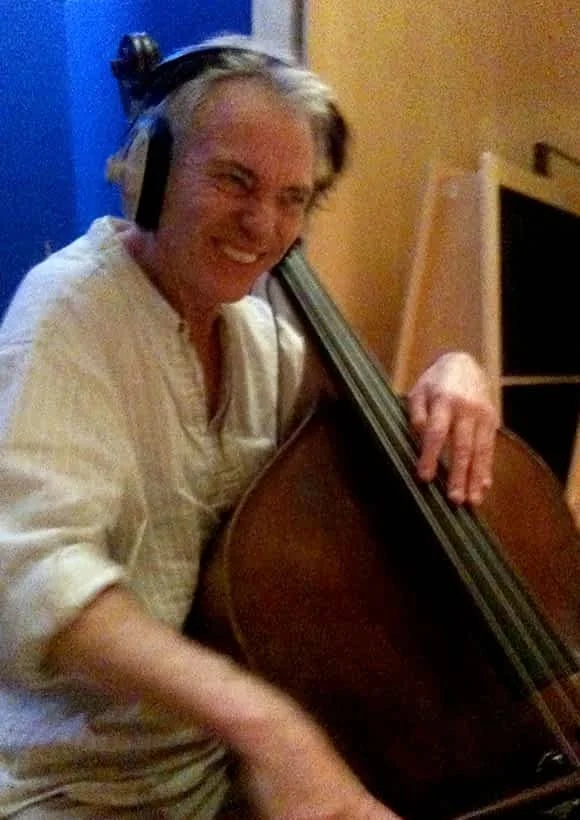
John Giblin 26.2.52 - 14.5.23
I first met John in 1980 at Utopia Studios, London, during one of my earliest sessions as an engineer. Donovan was recording what would become Neutronica, and into the room walked John - tall, softly spoken, with a quiet enthusiasm for vintage guitars and black labradors.
I was in luck. All you had to do was plug John in and he sounded incredible, producing a deep, rich tone and the kind of precision playing that made recording effortless.
You could rely on him completely. If he wasn’t satisfied with a take, you knew there was a good reason, and he would play a few more until he felt he had given his best performance. Whatever take we ended up with, it always had a great feel - never forced or overthought, just right. He was a true perfectionist.
It was precisely these qualities that appealed to Scott a decade later, when I invited John to RAK Studios to play on Tilt. Surrounded by musicians of equal sensitivity - Ian Thomas, Alasdair Malloy, and Louis Jardim - we found that elusive magic everyone hopes for in a recording. It’s especially clear on Bolivia, where John, with little more than a handful of coins and a berimbau to play along with, laid the foundation for what became an extraordinary piece of music.
Despite his incredible technique, John never played to impress - he played exactly what the track needed and more importantly, what Scott wanted. He could play a single note across a passage and make it feel alive, shifting, essential.
Sharing a similar frequency range to Scott’s voice, John understood how to add weight without getting in the way. In Scott’s music especially, where space and balance are everything, this was invaluable.
But John and Scott connected in another way too - as musicians. Scott, a bassist himself, seemed to live those parts through John. I remember observing him while we were recording - eyes closed, quietly playing “air bass,” as though part of him wanted to swap places.
John never arrived empty-handed, there was always a carefully chosen collection of instruments and amplifiers, each with its own story. Among our favourites was a custom upright Alembic electric bass paired with a 1960s Ampeg Portaflex, a combination that found its way onto The Drift and Bish Bosch, leaving its unmistakable imprint on both.
Over the years John became a good friend of mine and I shared his love for black labradors, a bond that extended from studio conversations into everyday life. Around the time of The Drift, I bought a puppy from him. I already had one, named “Drum” , and John, with quiet conviction, insisted I needed another. I didn’t argue.
No prizes for guessing the new puppy’s name.
Peter Walsh March 2026